

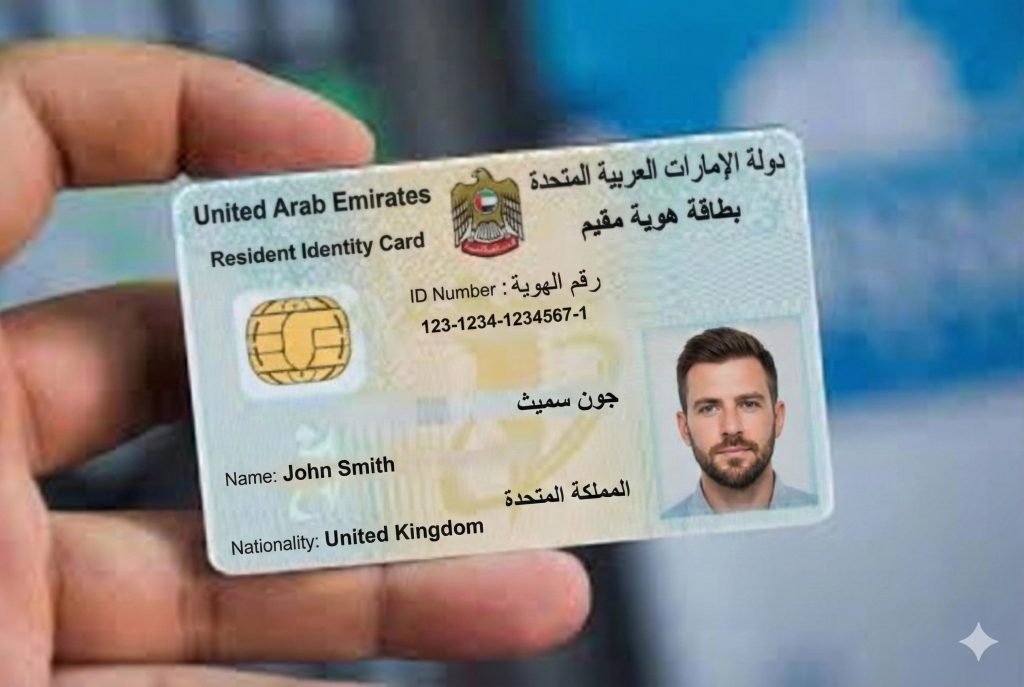
A step-by-step guide for anyone hired by a UAE employer: which authority issues what, the verified government fees, the two separate 60-day deadlines, and what changes if you are already in the country.
To get a UAE work visa, your employer first obtains a MOHRE work permit, then applies for your entry permit and residence visa through GDRFA in Dubai or ICP in the other emirates. You complete a medical test and Emirates ID biometrics, and the visa is issued digitally. The employer pays: Article 6(4) of Federal Decree-Law No. 33 of 2021 prohibits employers from charging workers the fees and costs of recruitment and employment.
The official target for the whole chain is 5 working days under MOHRE’s Work Bundle, and the work permit costs AED 250 to AED 3,450 depending on the employer’s classification. This guide walks through each step, the fees we could verify against official sources in September 2026, the deadlines that trigger fines, and the mistakes that stall applications. For a visual map of who acts at each stage in Dubai, see our Dubai employment residence visa process.
Work Permit vs Work Visa: What Is the Difference?
A UAE work permit is issued by MOHRE and authorizes a specific employer to employ you. A work visa (employment residence visa) is issued by GDRFA or ICP and authorizes you to live in the UAE. You need both, and the permit always comes first.
People search for the two terms interchangeably, but they are separate documents from separate authorities. The work permit is the labor side of the file, held by the Ministry of Human Resources and Emiratisation (MOHRE). The residence visa is the immigration side, held by the General Directorate of Identity and Foreigners Affairs in Dubai (GDRFA) or the Federal Authority for Identity, Citizenship, Customs and Port Security (ICP) everywhere else.
| Work permit | Work visa (residence visa) | |
|---|---|---|
| Issued by | MOHRE (mainland) or the free zone authority | GDRFA Dubai, or ICP in the other emirates |
| What it authorizes | Employment with one named employer | Legal residence in the UAE |
| Standard validity | 2 years | 2 years, renewable |
| Government fee | AED 250, 1,200 or 3,450 by employer category | ICP: AED 100 per year plus application and service fees |
| Proof you hold it | Digital record in the MOHRE system and app | Emirates ID (no passport sticker since April 2022) |
Validity figures come from the UAE Government portal’s work permits page and its page on the residence visa for working in the UAE. Cancelling one cancels the practical basis for the other, which is why a job change or termination always touches both files.
Which work permit type do you need?
MOHRE issues 13 work permit types, and the standard two-year permit to recruit a worker from abroad is only one of them. Others cover transfers between employers, residents on family sponsorship, part-time work, short missions, juveniles, students and freelancers.
Most people reading this need the standard recruitment permit or the transfer permit. If your situation is different, our guides to the temporary and mission work permits, including the full list of all 13 MOHRE permit types, the part-time work permit, and the juvenile work permit for under-18s cover each one.
Who Issues What: The Authorities Involved
Four authorities touch a standard mainland work visa: MOHRE for the work permit and labor contract, GDRFA or ICP for the entry permit and residence visa, ICP for the Emirates ID, and the emirate’s health authority for the medical test.
Your employer, or the PRO it hires, deals with almost all of them. Your own in-person tasks are limited to the medical test and biometrics.
| Stage | Dubai | Abu Dhabi, Sharjah and northern emirates |
|---|---|---|
| Work permit and labor contract | MOHRE | MOHRE |
| Entry permit and residence visa | GDRFA Dubai | ICP |
| Emirates ID and biometrics | ICP | ICP |
| Medical fitness test | DHA-approved centers | Department of Health centers in Abu Dhabi; EHS-approved centers elsewhere |
| Free zone employers | The free zone authority issues the work permit in place of MOHRE and files the residence application on your behalf | |
ICP confirms that for employers covered by the labor law, residence for employment is issued through the Work Bundle, and a MOHRE work permit is a required document.
Step-by-Step UAE Work Visa Application Process
The standard sequence has eight steps: offer approval, work permit, entry permit, entry to the UAE, medical test, Emirates ID biometrics, contract signature, and digital residence visa issuance. MOHRE activates the work permit at the end, and only then can you legally start work.
Step 1: Approve the job offer in the MOHRE system
Your employer issues the job offer electronically and you approve it before any permit is filed. According to the UAE Government’s description of the employment process, workers in professional levels 1 to 3 approve by signature and levels 4 and 5 may approve by fingerprint.
What actually happens: the approval usually reaches you as a one-time password or a UAE PASS confirmation. It is consent to that offer’s terms, not a two-year commitment. Our guide to the MOHRE OTP consent step explains what it authorizes and why you should never share the code with a recruiter.
Step 2: The employer obtains the MOHRE work permit
MOHRE checks the employer’s license, quota and compliance record, then issues the permit. A company with unpaid salaries in the Wages Protection System or suspended work permits cannot proceed, which is the most common hidden reason a hire stalls at this stage. Our guide to company visa quota explains how quota is assessed.
Skilled roles usually need attested degree certificates at this point. Start the MOFA certificate attestation chain before you accept the offer, because the home-country legs can take weeks.
Step 3: GDRFA or ICP issues the entry permit
With the work permit approved, the employer applies for your employment entry permit. ICP states the holder must enter the UAE within the 60-day validity period of the entry permit from its date of issuance, and that validity may be extended.
If you are already in the UAE, your employer files a change of status instead, and you do not need to leave. That route is covered further down.
Step 4: Enter the UAE
Entering the country starts a second, separate clock. ICP requires that a foreigner’s stay does not exceed 60 days from the date of entry for completing residence procedures, after which overstay fines apply to the applicant.
Step 5: Medical fitness test
You attend a government-approved medical center for communicable-disease screening. The test must be done inside the UAE, and the result is sent electronically to the immigration file.
Centers and tiers differ by emirate, and express tiers cost more. Our guides to the UAE visa medical test and the medical fitness certificate cover what is tested and what happens after an unfit result.
Step 6: Emirates ID application and biometrics
The Emirates ID application is filed with the residence application. ICP requires everyone aged 15 and over to complete fingerprints and signature at an ICP service center.
What actually happens: you receive an SMS with the appointment, the capture takes a few minutes, and the card is delivered after the visa is issued. Book it straight after the medical, because appointment slots slip in peak season and the 60-day clock keeps running.
Step 7: Sign the employment contract
You sign the offer a second time on arrival, and that signature creates the binding contract registered with MOHRE. The registered terms must match the offer you approved in Step 1. Our guide to MOHRE labor contract registration covers the deadline, and UAE labor contract types explains fixed-term contracts.
Step 8: Residence visa issued digitally, then work permit activated
GDRFA or ICP issues the residence visa electronically. There is no passport stamp: ICP stopped issuing the residence sticker on 11 April 2022 and made the Emirates ID the proof of residence.
MOHRE then activates the work permit. That activation, not the offer or the entry permit, is the legal start of work. You can track progress through our guide to the UAE visa status check; Dubai visas are tracked through GDRFA, not ICP.
The Two 60-Day Deadlines That Catch People Out
There are two separate 60-day clocks. The entry permit is valid for 60 days from its date of issue, which is your deadline to enter. A fresh 60 days then runs from your date of entry, and every in-country step must be finished inside it.
Many older guides, including the previous version of this page, describe a single 60-day window. ICP’s service terms set out both clocks. Mixing them up leads people either to rush unnecessarily or, worse, to assume they have more time after entry than they do.
| Clock | Starts | Deadline for | If missed |
|---|---|---|---|
| Entry permit validity | Date the entry permit is issued | Entering the UAE | Permit lapses unless extended; employer re-applies |
| Residence completion | Your date of entry | Medical, biometrics, contract, visa issuance | AED 50 per day overstay fine on the applicant |
The AED 50 daily fine is listed in ICP’s service fines for the entry visa. If you are already carrying fines, our overstay fines guide explains how to check and settle them.
UAE Work Visa Costs and Fees in 2026
The verifiable government fees for a two-year work visa start at about AED 950 for a Category 1 employer in an ICP emirate: AED 250 for the work permit, AED 400 for the residence permit, and AED 300 for the Emirates ID. Medical, insurance and service-center charges come on top, and the employer pays all of it.
We have not repeated the “AED 3,000 to AED 7,000” totals that circulate online, including in the earlier version of this guide, because no official source publishes a total. The table below lists only fees we could trace to MOHRE or ICP, and flags where you need to confirm the figure yourself.
| Fee | Amount | Source and notes |
|---|---|---|
| MOHRE work permit, 2 years | AED 250 (Category 1), AED 1,200 (Category 2), AED 3,450 (Category 3) | MOHRE, Cabinet Resolution No. 18 of 2022; set by the employer’s classification |
| Residence permit (ICP emirates) | AED 100 application + AED 100 per year + AED 100 smart service | ICP; AED 400 for a two-year visa |
| Emirates ID (resident) | AED 100 per year of residence + AED 100 smart service | ICP; AED 300 for two years; urgent service AED 150 extra |
| Change of status inside the UAE | AED 500 | ICP; only if you are already in the country |
| Entry permit and residence visa in Dubai | Set by GDRFA Dubai | Confirm on the GDRFA service card before filing |
| Medical fitness test | Varies by center and tier | Confirm with the approved center in your emirate |
| Health insurance | Varies by plan | ICP lists a valid UAE health insurance policy among entry permit conditions |
Sources: MOHRE’s announcement of the establishment classification system, ICP’s residency permit service, and ICP’s Emirates ID issuance service.
Decision point: the work permit fee varies fourteen-fold between the cheapest and most expensive employer category for an identical permit. That is the employer’s cost, not yours, but it explains why some smaller companies are slower to hire. If anyone asks you to reimburse any of these fees, including through salary deductions, that breaches Article 6(4) of the labor law and is a MOHRE complaint ground.
How Long Does a UAE Work Visa Take?
MOHRE’s official Work Bundle target is 5 working days across 5 steps, down from 30 working days across 15 steps. In practice most hires take two to four weeks end to end, because attestation, medical turnaround and appointment availability sit outside the official clock.
The 5-working-day figure comes from the UAE Government’s work permits page and describes the whole bundle, not the work permit alone. No official source publishes a per-step processing time, so treat any step-by-step day count you see online, including the ranges below, as experience rather than a service standard.
| What usually adds time | Typical effect | How to avoid it |
|---|---|---|
| Unattested degree for a skilled role | Weeks, before Step 2 can finish | Start attestation before accepting the offer |
| Employer blocks (WPS arrears, no quota) | Application cannot start | Ask HR to confirm quota before you resign elsewhere |
| Biometrics slot availability | Days, inside the 60-day entry clock | Book immediately after the medical |
| Name spelling mismatches | Rejection and re-filing | Match every document to the passport spelling |
| Regulated professions (healthcare, education, legal) | Separate licensing before the permit | Start the professional license in parallel |
Applying From Inside the UAE
If you are already in the UAE on a visit visa or a cancelled residence, your employer can change your status without you leaving the country. ICP charges AED 500 for an in-country change of status, and the rest of the process is the same.
ICP requires the change of status request, for a fee of AED 500, after the previous residence is cancelled and the new visa is issued, or where violations need settling. Any overstay fines on your current status must be cleared first.
Watch your current visa’s expiry while the new file is processed. Our guide to changing visa status without leaving the UAE covers the order of operations, and entry permit vs residence visa explains which document you hold at each point.
Free Zone vs Mainland Employment
A free zone employer’s own authority issues your work permit in place of MOHRE, and files your residence application with GDRFA or ICP. The residence visa itself is the same document and lets you live anywhere in the UAE.
What differs is the fee schedule, the employment rules and where you complain. Each free zone publishes its own package prices, and the financial free zones (DIFC and ADGM) run their own employment laws. Confirm the exact fees with the free zone named on your offer letter.
On either route, you may only work for your sponsoring employer. Working for a second employer needs its own permit, such as the part-time permit linked above.
Other Routes: Green and Golden Visas
If you do not want your residence tied to one employer, two self-sponsored routes exist. ICP issues the Green Residence for five years and the Golden Residence for ten years, each at AED 100 per year plus application and service fees, subject to category-specific eligibility.
A Green or Golden visa holder still needs a work permit to be employed, but MOHRE issues a dedicated permit type for Golden visa holders. Compare the options in Green visa vs employment visa and our Golden visa eligibility guide.
Common Mistakes and How to Avoid Them
The costliest mistakes are starting work before the permit is activated, paying your own visa fees, and confusing the two 60-day clocks. Each has a defined penalty or a complaint route.
- Working before activation. MOHRE announced fines of no less than AED 100,000 and up to AED 1 million for employing workers without a proper permit, set out in Article 60 of the labor law. Working on a visit visa also exposes you to deportation.
- Paying for your own visa. Recruitment and employment costs belong to the employer under Article 6(4). A demand for payment, or for an OTP, is the clearest sign of a recruitment scam.
- Treating the entry permit as your whole window. The 60 days from entry is a separate clock; plan the medical and biometrics in the first two weeks.
- Leaving attestation late. It is the longest single delay for skilled roles and cannot be rushed from the UAE side.
- Assuming Abu Dhabi rules match Dubai. Immigration authority, medical centers and fees differ. Our guide to why Abu Dhabi work visas get rejected covers the Abu Dhabi-specific causes.
After Your Visa Is Issued
Once the visa is issued you can open a bank account, sponsor family if your salary qualifies, and change jobs later without an NOC in most cases. If the visa is ever cancelled, your grace period depends on your category, not a flat 30 days.
For family sponsorship, ICP requires a minimum monthly income of AED 4,000, or AED 3,000 plus employer-provided housing. See salary needed to sponsor your spouse for the documents.
| Residence category | Grace period after cancellation or expiry |
|---|---|
| Skilled workers, professional levels 1 to 3 | 90 days |
| Golden, Green and Blue Residence holders and their families | 180 days |
| Residence issued with a guarantor or host | 60 days |
| All other categories | 30 days |
Grace periods are set out in ICP’s residence cancellation service, which also sets an AED 50 daily fine from the day after the grace period ends. Our guide to the visa grace period after cancellation explains how to check yours, and changing jobs without an NOC covers transfers.
Your next practical step is usually a bank account: see how to open a bank account in Dubai. Health insurance must stay active for the life of the visa; our guide to mandatory health insurance for expats covers the emirate rules.
FAQ
What is the difference between a work permit and a work visa in the UAE?
A work permit is issued by MOHRE, or by a free zone authority, and authorizes one employer to employ you. A work visa is the residence visa issued by GDRFA in Dubai or ICP elsewhere, and authorizes you to live in the UAE. You need both, and the work permit is issued first.
How long does it take to get a UAE work visa?
MOHRE’s official Work Bundle target is 5 working days for the whole chain. In practice most applications take two to four weeks, because certificate attestation, the medical result and biometrics appointments add time outside the official clock.
How much does a UAE work visa cost, and who pays?
The employer pays. The work permit costs AED 250, AED 1,200 or AED 3,450 for two years depending on the employer’s MOHRE category. In ICP emirates, the residence permit adds about AED 400 and the Emirates ID AED 300 for two years, before medical, insurance and service charges; Dubai’s GDRFA sets its own residence fees.
How long is a UAE work permit valid?
A standard MOHRE work permit is valid for two years, matching the standard two-year employment residence visa. Short-term types such as the temporary and mission permits are shorter, and both the permit and the visa are renewed together before expiry.
Can I change from a visit visa to a work visa without leaving the UAE?
Yes. Your employer files an in-country change of status, which ICP prices at AED 500. Any overstay fines on your current visa must be settled first, and the medical test and biometrics follow as normal.
Can I start working before my work visa is issued?
No. Work may only start once MOHRE activates the work permit, which follows residence visa issuance. Employing a worker without a permit carries a fine of AED 100,000 to AED 1 million under Article 60 of the labor law.
What happens if I miss the 60-day deadline after entering the UAE?
If residence procedures are not completed within 60 days of your date of entry, ICP applies overstay fines of AED 50 per day to the applicant. This is separate from the entry permit’s own 60-day validity, which only governs when you must enter.
What is the grace period after my work visa is cancelled?
It depends on your category. ICP grants 90 days to skilled workers in professional levels 1 to 3, 180 days to Golden, Green and Blue Residence holders, 60 days where a guarantor or host is involved, and 30 days to all other categories.
What salary do I need to sponsor my family on a work visa?
ICP requires a minimum monthly income of AED 4,000, or AED 3,000 if your employer provides housing. You must also show adequate housing and proof of kinship, and family residence cannot run beyond your own visa.
How do I check my UAE work visa status?
Dubai residence applications are tracked through GDRFA Dubai, and applications in the other emirates through ICP’s smart services. The work permit side is visible in the MOHRE app or through your employer.
Official Sources
- UAE Government Portal: Work permits (permit types, two-year validity, AED 250 to AED 3,450, Work Bundle target)
- UAE Government Portal: Job offers and the employment process
- UAE Government Portal: Residence visa for working in the UAE
- ICP: Issuance of a Visa (entry permit validity, 60 days from entry, AED 50 daily fine)
- ICP: Issuing Residency Permit (Work Bundle, fees, change of status, family sponsorship income)
- ICP: New Identity Card Issuance (Emirates ID fees and biometrics)
- ICP: Cancellation of residency permits (grace periods by category)
- ICP: Cancellation of the residence sticker and the Emirates ID as the alternative (11 April 2022)
- MOHRE: New classification of private companies (Cabinet Resolution No. 18 of 2022, work permit fees by category)
- MOHRE: Amendment to the Employment Relationship Law (fines for employing workers without a permit)
- Federal Decree-Law No. 33 of 2021 on the Regulation of Labour Relations, consolidated (Articles 6 and 60)
- GDRFA Dubai: residency and entry permit services for Dubai
Information current as of September 2026. ICP fees and deadlines were checked against ICP’s live service pages in September 2026; MOHRE and UAE Government Portal figures were last checked in July 2026. GDRFA Dubai fees and medical test prices are not quoted because they vary by channel and tier. Verify with the relevant authority before proceeding.
This guide is general information about UAE administrative procedure, not legal or immigration advice. Free zone, government-sector and regulated-profession hires follow additional rules; confirm the requirements for your case with the issuing authority.