

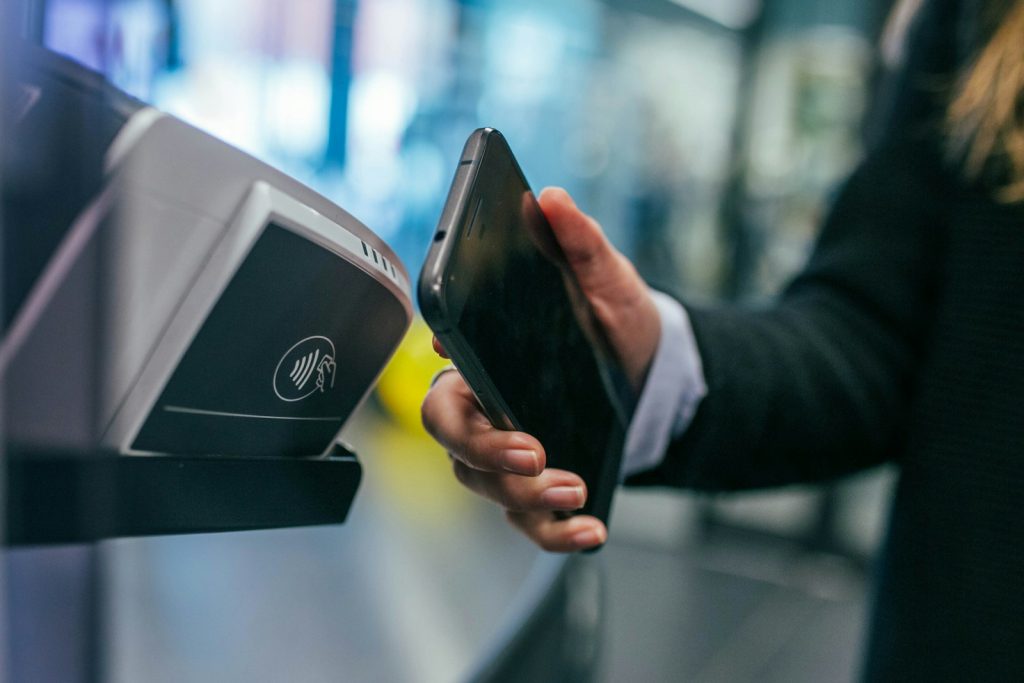
The Central Bank has built two payment systems of its own, and both now sit in ordinary residents’ phones and wallets. Here is what Aani and Jaywan actually do, what they cost, where the limits sit, and what neither of them will do for you.
Until recently, moving money between two UAE bank accounts meant an IBAN, a beneficiary setup and a wait, and paying by card meant routing the transaction through a network headquartered somewhere else. Both of those changed through the Central Bank’s Financial Infrastructure Transformation programme, which produced Aani for instant account-to-account transfers and Jaywan as the UAE’s own card scheme.
Aani lets you send up to AED 50,000 to a phone number or email address in under ten seconds, 24 hours a day, and 33 banks, exchange houses and payment providers are already connected. Jaywan moved to nationwide issuance on 20 July 2026, when the Central Bank announced that banks, licensed financial institutions and exchange houses had begun issuing the cards in phases.
This guide explains what each one is, what your bank can and cannot charge you for using them, the limits that are set by Aani versus the ones set by your own bank, and where these systems leave gaps that a card or an international money transfer app still fills better.
What Aani and Jaywan Actually Are
Both are run by Al Etihad Payments, a subsidiary of the Central Bank of the UAE, but they solve different problems. One replaces the bank transfer, the other replaces the plastic in your wallet.
What Is the Difference Between Aani and Jaywan?
Aani is an instant payment platform for sending money directly between UAE accounts using a phone number, email address or QR code, with no card involved. Jaywan is a national card payment scheme, a domestic alternative to Visa and Mastercard, that issues debit and prepaid cards through UAE banks and exchange houses. You can hold both at once and they do not compete.
| Aani | Jaywan | |
|---|---|---|
| What it is | Instant account-to-account payment platform | National card payment scheme |
| What you use | The Aani app or your bank’s own app | A physical or digital debit or prepaid card |
| Identifier | Mobile number, email, QR code or merchant tag | Card number, chip, contactless or wallet token |
| Speed | Under 10 seconds, 24 hours a day, 7 days a week | Standard card authorization speeds |
| Ceiling | AED 50,000 per payment at the platform level | Set by your issuing bank |
| Works abroad? | No, domestic and dirham only | Yes, through co-badging with global networks |
| Live since | October 2023, expanding by institution | Nationwide issuance from 20 July 2026 |
Aani: Sending Money by Phone Number
Aani removes the IBAN from a domestic transfer. You send to a proxy, meaning the recipient’s mobile number, email address or a scanned QR code, and the money lands in their account rather than in a wallet balance they then have to withdraw.
How Much Can You Send Through Aani?
Al Etihad Payments states that Aani supports payments of up to AED 50,000 at the initial stage, deliberately capped so users can get familiar with the platform. Your own bank may impose a lower limit on top of that, and several currently set per-transaction ceilings well below AED 50,000, so the number you can actually send is whichever is lower.
That distinction matters when a transfer is rejected. If AED 12,000 fails, the question is whether you hit the platform ceiling, which you did not, or your bank’s own daily or per-transaction cap, which you probably did. Ask your bank for its Aani limits specifically, because they are usually set separately from your normal local transfer limits.
What Aani Does Beyond Simple Transfers
- Proxy payments to a mobile number or email address, with no need to add a beneficiary or know their IBAN.
- QR code payments, both static and dynamic, so a small merchant can accept payment with a printed code rather than a card terminal.
- Request to Pay, where you send a payment request that the other person approves in their own app, which is the cleaner way to collect money owed to you.
- Split payments for shared bills.
- Merchant tags, a unique code identifying a merchant or sole proprietor, so customers can pay a small business without seeing its account details.
Al Etihad Payments has also flagged electronic direct debit authorization, instant direct debit payments and a fully digital end-to-end cheque as functions still to come. Until instant direct debit arrives, recurring collections in the UAE still run through the existing system covered in our guide to how a direct debit authority works in the UAE.
Who Is Connected to Aani
The participant list is broader than the retail banks, which is the detail most coverage misses. Exchange houses and a super-app are on it, so Aani reaches people who do not hold a conventional current account.
As listed by Al Etihad Payments, the participants are ADCB, ADIB, Ajman Bank, Al Ahli Bank of Kuwait, Al Ansari Exchange, Al Fardan Exchange, Al Hilal Bank, Al Khaliji France, Al Masraf, Arab Bank, Bank of Sharjah, Banque Banorient France, Botim, CBI, Citibank, Commercial Bank of Dubai, Dubai Islamic Bank, Emirates Islamic, Emirates NBD, FAB, Finance House, Habib Bank AG Zurich, Habib Bank Limited, HSBC, Lulu Exchange, Mashreq, Al Maryah Community Bank, National Bank of Umm Al Qaiwain, NBF, RAKBANK, Sharjah Islamic Bank, UAB and Wio.
That is 33 institutions. If yours is not on it, Aani will not appear in your app no matter how many times you update it, and the answer is to ask your bank when it plans to enroll rather than to reinstall anything.
What Actually Happens When You Enroll
The enrollment step trips people up because it happens in two places. Your bank enrolls you first, from inside its own app, and you choose which of your accounts to link to your registered mobile number or email.
Only then does the standalone Aani app work, and when you open it you select your account provider from the participant list and get redirected back to your bank’s app to authorize the link. If you skipped the first step, the Aani app will not find your accounts and will look broken.
You can link accounts at more than one institution, provided each of them enrolled you using the same mobile number or ID. Payments are authorized with biometrics or a PIN each time, so the transfer is not a one-tap action once you are set up.
What Aani Costs
Al Etihad Payments is explicit that fees are determined by the licensed financial institutions and payment service providers offering the service, not by Aani. Most participating banks currently offer Aani transfers at no charge, but that is a commercial decision each institution makes and can change.
Check your bank’s schedule of charges rather than assuming, and check it again if you switch banks. Our guide to the rules on closing and moving a UAE bank account covers what else moves with you.
Where Aani Fits Against the Alternatives
Aani is not always the right tool. It beats a local bank transfer on speed and beats a wallet on where the money ends up, but it does nothing for anyone sending money out of the country.
| Use case | Best option | Why |
|---|---|---|
| Paying a friend back in dirhams | Aani | Under 10 seconds, no IBAN, works at weekends |
| Sending money to your home country | An exchange house or transfer app | Aani is domestic and dirham only |
| Paying a small trader or freelancer | Aani QR or merchant tag | No card terminal needed and no account details exchanged |
| A large one-off payment above AED 50,000 | Conventional bank transfer | Above the platform ceiling |
| Buying something you may need to dispute | A card | Cards carry a chargeback route; a push payment does not |
| Collecting money someone owes you | Aani Request to Pay | The payer approves in their own app, so nothing is mistyped |
The fifth row is the one worth internalizing. An Aani transfer is a push payment that you authorized, so it does not carry the card-network dispute rights explained in our guide to the chargeback and Central Bank dispute process. Paying an unfamiliar seller by instant transfer removes your best recovery route.
Jaywan: The UAE’s National Card Scheme
Jaywan is the domestic network through which UAE card transactions can be routed, authorized and processed, rather than being sent to a global scheme. The name comes from Emirati Arabic for a precious pearl, a reference to the pre-oil pearling economy.
What Is a Jaywan Card and Who Issues One?
Jaywan is the UAE’s own debit and prepaid card scheme, operated by Al Etihad Payments. On 20 July 2026 the Central Bank announced the official commencement of nationwide issuance by banks, licensed financial institutions and exchange houses, with cards being rolled out in phases over the following months. Credit cards are not part of the initial launch.
Two card types are available now. Debit cards issued by participating banks work like any other debit card against your account, and prepaid cards can be loaded with a fixed amount, which makes them usable by people who do not hold a conventional bank account at all. Al Etihad Payments has said credit cards would follow only if there is sufficient demand.
Does a Jaywan Card Work Outside the UAE?
Yes, but through a partner network rather than on its own. Al Etihad Payments has signed co-badging agreements with Visa, Mastercard, Discover and UnionPay, so a co-badged Jaywan card routes domestic transactions through the UAE network and international ones through the global scheme printed alongside it. A Jaywan card without a co-badge is intended for local and GCC use.
The cards are accepted at point-of-sale terminals, e-commerce platforms and ATMs, support contactless tap-to-pay, and work in digital wallets. Al Etihad Payments has integrated Jaywan with Samsung Wallet and stated plans to extend compatibility to other wallets.
Why the UAE Built Its Own Card Scheme
The stated rationale is that routing domestic transactions through global networks meant paying scheme fees offshore and depending on infrastructure the UAE does not control. Keeping domestic processing onshore reduces that dependence and, according to Al Etihad Payments, lowers the cost of card acceptance for merchants.
For a consumer the practical consequences are modest and mostly indirect. You get another card option, a rewards and offers program delivered with travel, retail, hospitality and lifestyle partners, and, if merchant acceptance costs genuinely fall, less pressure for small businesses to impose card surcharges or insist on cash.
What This Means for Your Fees and Your Rights
Neither system changes the consumer protection framework you already sit inside. Both are operated by a Central Bank subsidiary and delivered to you by an institution the Central Bank licenses, and the Retail Payment Services and Card Schemes Regulation is the instrument that brings card schemes and retail payment systems under that supervision.
Practically, that means three things. Your bank or payment provider remains your counterparty and your first point of contact, so an unauthorized Aani payment or a disputed Jaywan transaction is reported to them, not to Al Etihad Payments, which says the same thing in its own guidance.
Second, the fee is your institution’s to set and disclose, which is why two banks can offer the identical Aani service at different prices. Third, if the institution will not resolve a complaint, the escalation route is the financial ombudsman, covered in our guide to escalating a UAE bank or insurance complaint to Sanadak.
The Limits and the Gaps
Neither system is a universal replacement, and being clear about what they do not do prevents the more expensive mistakes.
Aani Is Domestic and Dirham Only
Al Etihad Payments states plainly that Aani payments are currently limited to domestic transfers between accounts held at UAE licensed institutions, in dirhams. It has said it continues to explore connections with overseas instant payment platforms, but that is a stated intention rather than a live service.
If you are remitting money abroad, none of this applies and the comparison you need is our guide to sending money from the UAE. If an inbound transfer is what you are waiting on, see receiving international transfers to a UAE account.
Instant Means Irreversible
The speed that makes Aani useful is also its main risk. A payment that settles in under ten seconds into someone else’s account cannot be recalled by you, and recovering it depends on the recipient’s cooperation or their bank’s willingness to act.
Al Etihad Payments’ own guidance tells users to verify the beneficiary before initiating a payment and to check the authenticity of anyone sending a Request to Pay. Treat an unexpected Request to Pay the same way you would treat an unexpected invoice, and never approve one because the sender’s name looks familiar in a notification. Our guide to common UAE scams and how to report them covers the patterns.
If a transfer does go wrong, the mechanics of a failed or returned payment are set out in what happens when a UAE money transfer fails or is returned, and a wrongly charged fee is covered by the refund rules when a bank charges you in error.
Rollout Is Uneven, and That Is Expected
Both systems are being deployed in phases, so what your neighbor can do is not necessarily what you can do. Aani onboarding has run institution by institution since October 2023, and Jaywan issuance is explicitly phased over the months following July 2026.
We could not obtain a published, institution-by-institution list of which banks have issued Jaywan cards or on what timetable, and Al Etihad Payments does not publish per-bank Aani transaction limits. Both are questions only your own bank can answer for your account.
Frequently Asked Questions
Is Aani free to use?
Al Etihad Payments does not set the price. It states that fees and charges for accessing and using Aani are determined by the licensed financial institution or payment service provider offering it, and the same applies to any support charges. Most participating banks currently do not charge for Aani transfers, but check your own bank’s schedule of charges, since a bank can introduce a fee without any change to Aani itself.
What is the maximum Aani transfer?
AED 50,000 per payment at the platform level, described by Al Etihad Payments as an initial-stage limit set so users can familiarize themselves with the service. Your bank can apply a lower per-transaction or daily ceiling on top, and several do, so the effective maximum is whichever limit is lower. Ask your bank specifically about its Aani limits, which are usually configured separately from your standard local transfer limits.
Can I use Aani to send money to my home country?
No. Aani is currently limited to domestic transfers in dirhams between accounts held at UAE licensed financial institutions and licensed payment service providers. Al Etihad Payments has said it continues to explore links with overseas instant payment platforms for cross-border transfers, but no such service is live, so international remittances still go through an exchange house, a bank or a transfer app.
Which banks support Aani?
Al Etihad Payments lists 33 participants, including ADCB, ADIB, Emirates NBD, FAB, Mashreq, HSBC, Citibank, Dubai Islamic Bank, RAKBANK and Wio, alongside exchange houses such as Al Ansari Exchange, Al Fardan Exchange and Lulu Exchange, and the Botim app. If your institution is not on the list, Aani will not appear in your app, and the only fix is for that institution to enroll.
Do I need the Aani app, or can I use my bank’s app?
Either, depending on your institution. Some banks have built Aani functions directly into their own apps, so you never open the standalone Aani app at all. Where they have not, your bank enrolls you and selects which accounts are linked, and you then download Aani from the App Store or Google Play, register your mobile number, choose your provider and authorize the link back in your bank’s app.
What is a Jaywan card?
Jaywan is the UAE’s first national card payment scheme, operated by Al Etihad Payments, a Central Bank subsidiary. It issues debit and prepaid cards through banks, licensed financial institutions and exchange houses, giving the country a domestic alternative to routing every card transaction through a global network. Nationwide issuance was announced on 20 July 2026 and is being rolled out in phases.
Can I use a Jaywan card abroad?
Yes, if your card is co-badged. Al Etihad Payments has agreements with Visa, Mastercard, Discover and UnionPay, so a co-badged card processes UAE transactions through Jaywan and international ones through the partner network. A Jaywan card issued without a co-badge is designed for local and GCC use, so check which network logo appears on the card before you travel with it.
Is there a Jaywan credit card?
Not at launch. The scheme started with debit and prepaid cards, and Al Etihad Payments has said credit cards would be added if there is sufficient demand. If you are choosing a credit card in the meantime, the market comparison in our guide to bank accounts for expats is the more useful starting point.
Do I have to take a Jaywan card?
No. Issuance is being rolled out by banks and licensed institutions in phases, and holding a Jaywan card is a customer choice, not an obligation on you. Whether your bank offers you one, and when, is its decision under the phased rollout, and we could not obtain a published per-bank issuance timetable.
Can I reverse an Aani payment sent to the wrong person?
Not unilaterally. Aani settles in under ten seconds and the funds land in the recipient’s account, so recovery depends on that person returning the money or their institution intervening. Report it to your own bank or payment provider immediately, since they are your counterparty and the only party who can raise it through the network. This is the main reason to verify the proxy before you send rather than after.
Does using Aani or Jaywan affect my credit report?
Neither is a credit product. An Aani transfer moves money you already hold, and a Jaywan debit or prepaid card draws on your own account or a preloaded balance, so nothing is reported as borrowing. Your AECB credit report reflects loans, cards and other credit facilities rather than payment activity of this kind.
Official Sources
This article references the following official sources:
- Al Etihad Payments – Aani overview, AED 50,000 limit, sub-10-second settlement, and the full participant list
- Al Etihad Payments – Aani FAQs on fees, enrollment, multiple linked accounts, security, and the domestic-only restriction
- Central Bank of the UAE – Al Etihad Payments launches Aani, press release, 16 October 2023
- Central Bank of the UAE – Inauguration of Jaywan and commencement of nationwide card issuance, press release, 20 July 2026
- Al Etihad Payments – Jaywan scheme overview, debit and prepaid card range
- Al Etihad Payments – Jaywan questions answered: card types, international acceptance, EMV and tokenization, merchant cost
- Al Etihad Payments – Co-badging with global networks and digital wallet integration
- CBUAE Rulebook – Retail Payment Services and Card Schemes Regulation
This guide is for general information and is not financial advice. Information is current as of August 2026. Aani transaction limits, fees and availability are set by each licensed financial institution and payment service provider, not by Al Etihad Payments, and can change without notice, so confirm the current terms with your own bank. Jaywan issuance is being rolled out in phases and no published institution-by-institution timetable was obtainable at the time of writing. The participant list quoted here is as published by Al Etihad Payments and is expanding. Report any unauthorized payment to your own bank or payment service provider immediately.