

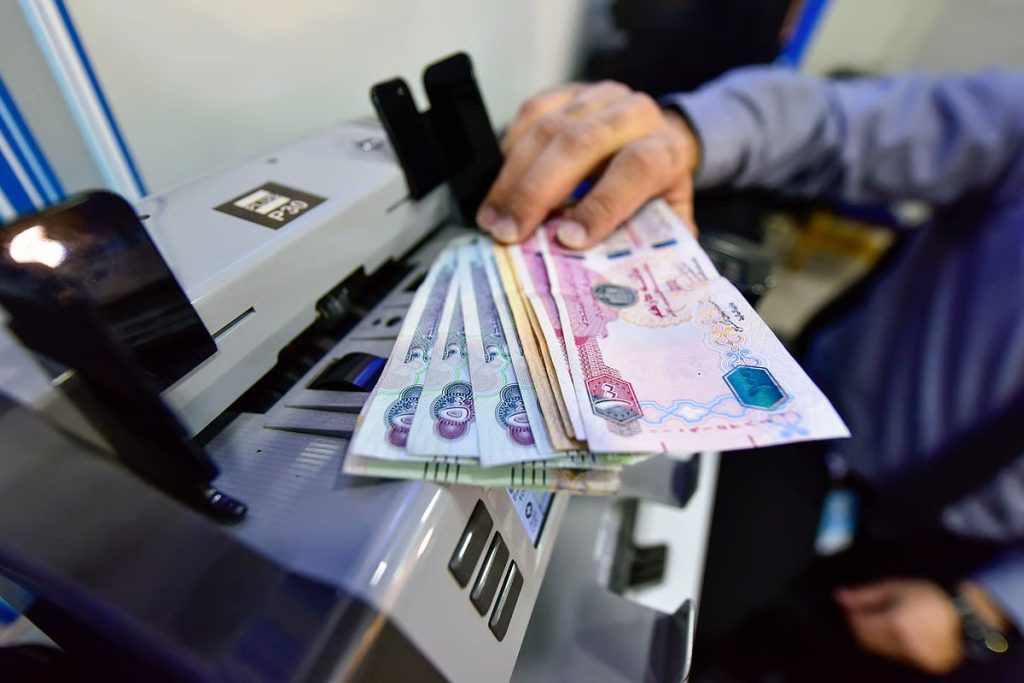
Practical guide to official remittance channels, real costs, required documents, and compliance rules for expatriate workers in the UAE
Outward personal remittances from the UAE reached AED 183 billion in 2024, making the country the world’s second-largest source of cross-border money transfers after the United States. Nearly every expat in the UAE sends money home — yet the difference between a well-chosen transfer method and a poorly chosen one can cost hundreds of dirhams per year in unnecessary fees and unfavourable exchange rates. This guide covers the regulated channels available, what each actually costs, and how to avoid common mistakes.
Below you will find a breakdown of every legal method for sending money out of the UAE: licensed exchange houses, bank wire transfers, digital remittance apps, and registered hawala providers. We cover required identification documents, Central Bank of the UAE (CBUAE) regulations you need to know, fee structures across different channels, and the compliance risks of using unregulated services. All information references official CBUAE rules and verified institutional sources.
Key Takeaways: Sending Money from the UAE
- All remittance services must be licensed by the Central Bank of the UAE (CBUAE) — using unlicensed channels violates Federal Decree-Law No. 20 of 2018 on Anti-Money Laundering.
- Exchange houses remain the most-used channel, handling over 80% of personal remittances through companies such as Al Ansari Exchange, Al Fardan Exchange, and Lulu Exchange.
- Digital remittance apps are the cheapest option for small transfers, with average costs of approximately 4.4% versus 12% at banks and 5.5% at physical exchange houses, according to World Bank data.
- Bank SWIFT transfers suit large one-off payments but carry flat fees of AED 25–75 per transaction plus exchange rate margins of 0.2–5%, depending on currency.
- A valid Emirates ID is mandatory for any money transfer from the UAE — most providers also require your passport.
- Transfers of AED 3,500 and above trigger enhanced due diligence requirements under CBUAE anti-money laundering rules.
- Wise received its CBUAE licence in October 2025, joining established fintech providers like Remitly, e& money, and Al Ansari’s mobile app in expanding digital options from the UAE.
How UAE Money Transfers Are Regulated
Every entity offering remittance services in the UAE must hold a licence from the Central Bank of the UAE under exchange business regulations. The CBUAE issues licences in multiple categories: Category A covers currency exchange only, Category B adds remittance services, Category C includes wage protection system (WPS) salary payments, and a newer Category D covers digital-only remittance operations. Companies operating without the appropriate category licence face enforcement action including licence revocation and fines.
Anti-money laundering obligations are governed by Federal Decree-Law No. 20 of 2018 on Anti-Money Laundering and Combating the Financing of Terrorism, which applies to every person and business conducting money transfers in the UAE. In practice, this means all providers must verify your identity (KYC), record the purpose of each transfer, screen transactions against sanctions lists, and report suspicious activity. In 2024 alone, the CBUAE imposed penalties on 20 exchange houses and revoked the licence of one money transfer firm for AML non-compliance.
What Transfers Above AED 3,500 Require
Under Article 27 of CBUAE regulations, all international wire transfers of AED 3,500 or more must carry complete sender and beneficiary information: full names, account numbers (or unique reference numbers), and the sender’s identification details including address, ID number, and date and place of birth. Transfers below AED 3,500 still require sender data to be attached, but providers are not obligated to verify it unless there is suspicion of illicit activity. For self-service kiosks operated by exchange houses, the CBUAE caps individual transactions at AED 3,500 and imposes a monthly limit of AED 10,000 per customer.
Five Legal Channels for Sending Money from the UAE
Expatriate workers in the UAE have five regulated options for outbound remittances. Each carries different cost structures, speed, and suitability depending on the amount you send, how often you send, and the destination country. Below is a comparison followed by detailed breakdowns of each channel.
| Channel | Typical Cost (on AED 735 / ~$200) | Speed | Best For |
|---|---|---|---|
| Exchange house (branch) | ~5.5% total (fee + FX margin) | Same day to 1–2 business days | Cash-based senders, wide corridor coverage |
| Exchange house (app) | ~3–5% total | Minutes to same day | Regular senders with smartphone access |
| Bank SWIFT transfer | ~6–12% (flat fee + FX margin + possible correspondent charges) | 1–3 business days | Large amounts (AED 10,000+), property or tuition payments |
| Digital remittance apps (Wise, Remitly, e& money) | ~1–4.5% total | Minutes to same day | Small-to-medium frequent transfers, transparent pricing |
| Registered hawala provider | Varies (often low flat fee) | Same day | Specific corridors where formal banking is limited |
Channel 1: Licensed Exchange Houses
Exchange houses remain the backbone of UAE remittances. Companies like Al Ansari Exchange (with over 260 branches), Al Fardan Exchange, Lulu Exchange, Al Rostamani Exchange, Sharaf Exchange, and Wall Street Exchange are licensed by the CBUAE and collectively handle the majority of personal outbound transfers. They offer branch-based and app-based services, covering dozens of destination countries with both bank-deposit and cash-pickup delivery options.
Costs at exchange houses consist of two components: a flat transfer fee (typically AED 10–25 for common corridors like India, Pakistan, or the Philippines) and an exchange rate margin built into the conversion rate. The margin is where costs add up — the rate you see at an exchange house is always less favourable than the mid-market rate, often by 1–3%. For small, regular remittances (AED 500–2,000 per month), exchange houses offer a reasonable balance of cost, convenience, and reliability. In early 2024, the Foreign Exchange and Remittance Group (FERG) approved an optional 15% increase in branch-based remittance fees, roughly equivalent to an extra AED 2.50 per transaction. App-based fees were expected to remain the same or decrease to maintain competitiveness.
Channel 2: Bank Wire Transfers (SWIFT)
UAE banks — including Emirates NBD, First Abu Dhabi Bank (FAB), Mashreq, ADCB, and Dubai Islamic Bank — process international transfers via the SWIFT network. This channel works well for large payments (property purchases, tuition fees, investment transfers) where regulatory compliance documentation and high transfer limits matter more than saving on fees. For Bangladeshi senders the channel decides the tax treatment as well as the fee, because the home exemption only reaches money brought in through a bank: see what Bangladeshis in the UAE still owe Dhaka.
The cost structure is layered. Banks charge a flat service fee per outgoing transfer (approximately AED 25–75 depending on the bank and channel — online is cheaper than branch). On top of this, correspondent bank charges may apply (AED 40–400 or more), particularly when the transfer routes through an intermediary bank. The exchange rate margin is typically 0.2–5%, with major currencies (USD, GBP, EUR) receiving tighter spreads and less-traded currencies (NPR, PHP, BDT) carrying wider margins. For a transfer of AED 3,675 (~$1,000), total bank costs can range from AED 50 to AED 300+ depending on corridor and currency. World Bank data from 2024 puts the average cost of remitting $200 through banks globally at approximately 12% — more than double the cost at exchange houses.
Channel 3: Digital Remittance Apps
The fastest-growing segment. Wise received its CBUAE licences (Stored Value Facilities and Retail Payment Services) in October 2025 and is preparing to launch direct-from-UAE services. Other active digital platforms include e& money (the CBUAE-licensed super app from e&, formerly Etisalat), Remitly, Al Ansari Exchange’s Send Money app, AlfaPay by Al Fardan Exchange, Lulu Money, Xoom (PayPal), Botim, and Western Union’s digital app.
Digital apps typically offer rates closer to the mid-market exchange rate and charge transparent, lower fees — often a flat amount or a small percentage displayed before you confirm the transfer. According to World Bank pricing data, the average cost of sending $200 via mobile-based services is approximately 4.4%, compared to 5.5% at physical exchange houses and 12% at banks. For workers sending AED 500–3,000 monthly, using a regulated digital app instead of a bank transfer can save AED 200–600 or more per year. However, digital apps currently handle only an estimated 15% of total UAE outbound remittances — well below the global average of 52% — suggesting significant room for growth.
Channel 4: Registered Hawala Providers
Hawala is a traditional trust-based money transfer system, and the UAE is one of the few countries that formally regulates it. The CBUAE maintains a Hawala Providers Register and requires all hawala operators to register, comply with AML/CFT laws, maintain bank accounts for settlement, and keep transaction records. As of recent CBUAE data, approximately 149 hawala providers were registered in the UAE, with roughly 95% operating in the mainland.
Registered hawala providers serve corridors where formal banking infrastructure is limited in the receiving country. If you use a registered provider, your transaction is documented and regulated. However, using an unregistered hawala operator is illegal under Federal Decree-Law No. 20 of 2018 and can result in fines or imprisonment — regardless of the legitimacy of the funds. The CBUAE has fined hawala operators for AML non-compliance and actively monitors this sector.
Channel 5: Cash Pickup Services
Global operators like Western Union and MoneyGram, as well as their local exchange house partners, offer cash-pickup transfers where the recipient collects physical cash at an agent location abroad. This suits recipients without bank accounts, particularly in rural areas. Fees tend to be higher than bank-deposit transfers — both in the flat charge and the exchange rate margin. Speed is often the advantage: many cash-pickup services deliver funds within minutes. However, for regular monthly remittances, the cumulative cost difference versus a digital bank-deposit transfer can be substantial over a year.
Documents Required for Sending Money from the UAE
All money transfer providers in the UAE are required to perform Know Your Customer (KYC) verification before processing transactions. The specific documents depend on the channel and amount, but the core requirements are consistent across banks, exchange houses, and digital platforms.
| Document | Required At | Notes |
|---|---|---|
| Emirates ID (original) | All providers — banks, exchange houses, apps | Must be valid and unexpired. Digital copies may not be accepted for in-branch KYC. |
| Passport | Banks (always); exchange houses (often, especially for first registration) | Must have a valid UAE residence visa stamped or linked. |
| Beneficiary details | All providers | Full name, bank account/IBAN, bank SWIFT/BIC code (for bank transfers), phone number (for wallet/cash pickup). |
| Purpose of transfer | All providers | Family support, savings, tuition, property purchase, etc. Required by CBUAE AML rules. |
| Source of funds documentation | Large transfers (thresholds vary by provider) | Salary certificate, employment contract, bank statements. Typically requested for transfers above AED 35,000–50,000 or unusual patterns. |
| Proof of address | Some banks, some digital platforms | Utility bill (not older than 3 months), tenancy contract, or bank statement showing UAE address. |
For digital apps, initial KYC typically requires visiting a branch in person with your original Emirates ID. UAE Exchange, for example, requires customers to present their original Emirates ID at any of its 150+ branches before activating online transfer services. Once KYC is complete, subsequent transfers are processed digitally without branch visits — though providers may request updated documents periodically or when your Emirates ID approaches expiry. If a transfer stalls or comes back, the Central Bank sets a two-business-day duty on the sender, explained in what to do when a UAE money transfer fails or is returned.
Step-by-Step: How to Send Money from the UAE
The process varies slightly depending on whether you use an exchange house branch, a mobile app, or your bank. Here is the general workflow that applies across all regulated channels.
Step 1: Choose Your Provider and Complete KYC
Where: Exchange house branch, bank branch, or digital app
What you need: Original Emirates ID, passport (for first-time registration)
What happens: The provider verifies your identity, records your personal details, and creates your customer profile. Digital apps may allow photo-based ID submission, but most require at least one in-person visit.
Step 2: Gather Beneficiary Information
What you need: Recipient’s full legal name (exactly as it appears on their bank account), bank account number or IBAN, bank name and branch, SWIFT/BIC code (for bank transfers), and mobile number (for wallet or cash-pickup transfers).
Spelling mismatches between the sender’s instructions and the recipient’s bank records are a leading cause of delayed or returned transfers. Verify every detail before submitting.
Step 3: Compare Rates and Total Cost
Where: Provider’s app, branch display, or comparison tools like the World Bank Remittance Prices Worldwide database
What to check: Do not compare exchange rates in isolation. The total cost has two parts: the transfer fee (flat or percentage) and the exchange rate margin (the difference between the mid-market rate and the rate you receive). A provider advertising “zero fees” may embed a larger margin in its exchange rate. Always compare the total amount the recipient will receive after all charges.
Step 4: Initiate the Transfer
Where: Bank online banking, exchange house branch or app, digital remittance app
What you provide: Send amount, beneficiary details, purpose of payment, and funding source (cash at branch, bank account debit, or debit card)
What happens: The provider processes the transaction, screens it against sanctions lists, and issues a receipt or reference number. For bank SWIFT transfers, a SHA (shared charges) or BEN (beneficiary pays) instruction determines who absorbs correspondent bank fees — select SHA to avoid unpredictable deductions from the recipient’s amount.
Step 5: Track and Confirm Delivery
Timeline: Digital apps and exchange house transfers to major corridors (India, Philippines, Pakistan) typically arrive within minutes to same-day for bank deposits. Bank SWIFT transfers take 1–3 business days. Cash-pickup services can be near-instant.
Keep your receipt and reference number. Ask the recipient to confirm arrival. For SWIFT transfers, your bank can provide a SWIFT tracking reference (UETR) to trace the payment through the correspondent banking chain.
Real Cost Breakdown: Exchange House vs Bank vs App
To illustrate the real-world difference, here is what sending AED 3,675 (~$1,000) to India looks like across three channels. These are approximate ranges based on publicly available fee schedules and market rate observations — actual costs vary daily.
| Cost Component | Exchange House (branch) | Bank SWIFT (online) | Digital App |
|---|---|---|---|
| Transfer fee | AED 10–20 | AED 25–75 | AED 0–15 |
| Exchange rate margin (vs mid-market) | ~1–2.5% (AED 37–92) | ~0.5–3% (AED 18–110) | ~0.3–1.5% (AED 11–55) |
| Correspondent/intermediary charges | None (included) | AED 0–400 (variable) | None (included) |
| Estimated total cost range | AED 47–112 | AED 43–585 | AED 11–70 |
| Delivery time | Same day to 1 day | 1–3 business days | Minutes to same day |
Note: These figures are illustrative ranges. Actual costs depend on the specific provider, destination country, currency pair, payment method, and market conditions at the time of transfer. Always check the live total-received amount before confirming any transaction.
The bank SWIFT range is wide because of correspondent bank charges — these are unpredictable and can be zero (if your bank has a direct relationship with the recipient’s bank) or substantial (if the transfer routes through one or two intermediary banks). This is why banks are generally poor value for small regular remittances but acceptable for large, documented transfers where compliance trail matters.
Common Mistakes When Sending Money from the UAE
Several errors can delay transfers, increase costs, or trigger compliance problems. Based on how exchange houses and banks process transfers in practice, these are the issues that cause the most problems for senders.
Mistake 1: Comparing Only the Exchange Rate
A provider offering a rate of 22.50 INR per AED may appear better than one at 22.45 — but if the first charges AED 25 in fees and the second charges zero, the total received amount tells a different story. Always compare total-received figures, not headline rates.
Mistake 2: Sending to Mismatched Beneficiary Names
If your mother’s bank account is under “Fatima Ahmed Mohammed” but you enter “Fatima A. Mohammed,” the transfer may be held or returned. Banks in receiving countries increasingly use automated name-matching systems. Use the exact full legal name as registered with the recipient’s bank.
Mistake 3: Letting Your Emirates ID Expire
An expired Emirates ID blocks all money transfer services — both at exchange houses and through banking channels. If your Emirates ID is approaching expiry, renew it before your next transfer rather than risking a disruption to your regular remittance schedule.
Mistake 4: Ignoring the Purpose-of-Payment Field
Under CBUAE AML rules, every international transfer must declare a purpose. Vague entries or leaving the field blank can flag the transaction for manual review, delaying delivery. Common legitimate purposes include family maintenance, savings transfer, rent payment, tuition fees, or property purchase.
Mistake 5: Using Unregulated Transfer Services
Unlicensed hawala operators and informal money brokers may offer attractive rates, but transactions through these channels have no legal protection if something goes wrong, and you risk prosecution under UAE anti-money laundering laws. The CBUAE maintains a list of licensed exchange houses and registered hawala providers — verify your provider’s status before sending any money.
How UAE Remittance Costs Vary by Corridor
Transfer costs are not uniform across all destinations. High-volume corridors — where multiple providers compete fiercely for market share — tend to have lower costs. The UAE-to-India corridor is the most competitive, with the largest number of service providers and among the lowest costs. Other popular corridors include Pakistan, the Philippines, Bangladesh, Egypt, and the United Kingdom.
According to the World Bank’s Remittance Prices Worldwide database, the average cost of sending $200 from the UAE remained under 3.5% for major corridors as of 2024 — significantly below the global average of 6.62%. This places the UAE’s remittance market within the UN Sustainable Development Goal target of eliminating corridors with costs above 5% by 2030. However, less-traded corridors (transfers to parts of Africa or Central Asia) can cost considerably more due to fewer providers and multi-step currency conversions.
Currency volatility also affects real costs. When the Egyptian Pound (EGP) lost approximately 40% of its value against the AED between March 2022 and mid-2023, Egyptian expats adjusted their sending patterns significantly — average transfer values increased by 75%, while the frequency of transfers dropped by 41%, as senders monitored rates to time their remittances for maximum value.
Tax and Compliance Considerations
The UAE does not impose personal income tax on individuals, and there is no withholding tax on outbound remittances. Your salary and personal savings transfers are not taxed when leaving the UAE. However, several compliance factors apply.
Corporate tax: Since June 2023, UAE businesses are subject to a 9% federal corporate tax on profits exceeding AED 375,000. If you send money from a business account, this may have implications for your company’s tax reporting. Consult a tax advisor for business-related transfers.
Receiving country taxes: The recipient’s home country may tax incoming remittances or foreign income. India, for example, does not tax inward remittances received as family support — but transfers labelled as income or business payments may attract tax liability in the recipient’s jurisdiction. This is outside UAE regulatory scope, but senders should be aware of the distinction.
Large or unusual transfers: Banks and exchange houses are required to file Suspicious Transaction Reports (STRs) with the UAE Financial Intelligence Unit (FIU) for transactions that appear inconsistent with a customer’s profile. Sending your regular monthly salary amount to your family will not trigger this — but sudden large transfers without documented source of funds may prompt the provider to request additional documentation before processing.
FAQ
What is the cheapest way to send money from the UAE?
Digital remittance apps (such as Remitly, e& money, and Al Ansari’s app) are typically the lowest-cost option for amounts under AED 10,000, with average total costs of 1–4.5% including the exchange rate margin. For larger amounts exceeding AED 50,000, negotiating directly with your bank or a premium exchange house service may yield competitive rates. Always compare the total amount the recipient will receive, not just the advertised exchange rate or fee.
Can I send money from the UAE without a bank account?
Yes. Licensed exchange houses accept cash payments at their branches and process transfers using only your valid Emirates ID (and passport for first registration). You do not need a UAE bank account to use exchange house services. However, digital apps typically require linking a UAE bank account or debit card to fund transfers.
Is there a limit on how much money I can send out of the UAE?
The UAE does not impose a fixed cap on outbound personal remittances. However, individual providers set their own transaction and daily limits. Banks may allow higher single-transfer amounts (AED 100,000+) than exchange houses. For very large transfers, expect enhanced due diligence including source-of-funds documentation. Self-service kiosks at exchange houses are capped at AED 3,500 per transaction and AED 10,000 per month under CBUAE rules.
How long does an international transfer from the UAE take?
Exchange house bank-deposit transfers to major corridors (India, Pakistan, Philippines) arrive same-day or within hours. Digital app transfers are often completed in minutes. Bank SWIFT transfers typically take 1–3 business days, with additional delays possible for compliance checks, weekend cut-offs, or correspondent bank routing. Cash-pickup services through Western Union or MoneyGram can be near-instant.
Do I need to pay tax on money sent from the UAE?
The UAE has no personal income tax and does not tax outbound remittances. Your transfers leave the UAE without any withholding or remittance tax. However, the receiving country may have its own tax rules on incoming funds — particularly if the transfer is classified as income rather than family support. Check with a tax advisor familiar with the recipient country’s regulations.
Is using hawala legal in the UAE?
Hawala conducted through a CBUAE-registered hawala provider is legal and regulated. The provider must comply with AML/CFT requirements, maintain transaction records, and report to the Central Bank. Using an unregistered hawala operator — one not on the CBUAE Hawala Providers Register — is illegal and can lead to fines or imprisonment under Federal Decree-Law No. 20 of 2018.
What happens if my transfer is delayed or rejected?
Common causes include beneficiary name mismatches, incomplete sender information, sanctions screening holds, or a compliance review triggered by an unusual transfer pattern. Contact your provider with the transaction reference number. For SWIFT transfers, ask your bank for the UETR (Unique End-to-End Transaction Reference) to trace the payment through the correspondent chain. If the transfer is rejected, funds are typically returned to your account within 5–10 business days minus any fees already deducted.
Can I send money from the UAE to a mobile wallet abroad?
Several providers support mobile wallet delivery to countries where mobile money is widely used (e.g., M-Pesa in Kenya, bKash in Bangladesh, GCash in the Philippines). Digital apps like Remitly and e& money typically offer this option. Exchange houses may also support wallet transfers through their partnerships with global payment networks. Fees for mobile wallet delivery are often comparable to or lower than bank-deposit transfers.
Official Sources
This guide references current information from the following authorities and institutions:
- Central Bank of the UAE — Exchange Business Licensing Regulations
- CBUAE Rulebook — Article 27: Wire Transfer Requirements
- CBUAE — AML/CFT Regulations
- CBUAE — Registered Hawala Providers Regulation
- World Bank — Remittance Prices Worldwide Database
- Wise Newsroom — UAE CBUAE Licence Approval (October 2025)
- Al Ansari Exchange — Official Website
UAE regulations, fees, and exchange rates change frequently. Always verify current requirements, costs, and provider licensing status directly with the relevant authority or provider before proceeding with any transfer.
This guide is for informational purposes only. UAE regulations and fees are subject to change. Always verify current requirements with the relevant official authority before proceeding with any application or transaction.