

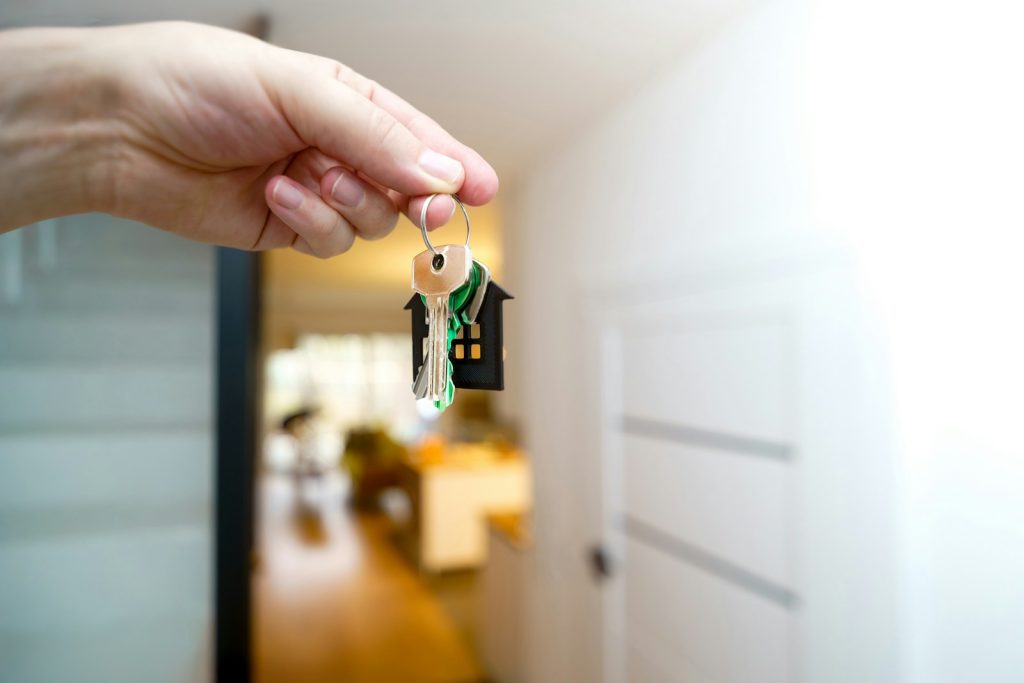
For off-plan buyers in Dubai: exactly what happens after construction finishes, from the developer’s completion notice and your final payment through snagging, key collection, and the conversion of your Oqood into a full title deed at the Dubai Land Department.
After your off-plan Dubai property is built, the developer issues a completion notice, you settle the final installment on your payment plan, you inspect the unit at snagging, you collect the keys at handover, and then your interim Oqood registration is converted into a full title deed at the Dubai Land Department (DLD) once the building’s completion certificate is in place. The developer’s “handover” gives you possession of the unit; the DLD title deed makes you the registered legal owner, and the two are separate events that usually happen within weeks of each other.
This guide walks through that sequence step by step, with the timing and costs attached to each stage. It explains the difference between physical handover and legal registration, why the 4% DLD fee is not charged again at title deed issuance, how the Defect Liability Period protects you after you move in, and what to do if you find serious defects at snagging before you sign. For the wider buying journey, see our off-plan property investment guide for Dubai.
Handover vs. Title Deed: Two Different Events
The single most common point of confusion at completion is treating “handover” and “title deed transfer” as the same thing. They are not. Handover is a contractual act between you and the developer: the developer confirms the unit is complete, you pay the final balance, you inspect and accept the property, and you receive the keys. Title deed registration is a legal act carried out at the Dubai Land Department, where your ownership is recorded in the official property register and your interim Oqood is replaced by a full title deed.
You can take possession at handover and start using or renting the unit before the title deed is in your name, because the developer has already registered your purchase on the interim Oqood system. The Oqood is a legally recognized record of your right to the property while it is still under construction or awaiting final registration. For the full comparison, see our explainer on the difference between a title deed and Oqood in Dubai.
What Is the Difference Between Handover and Title Deed Transfer?
Handover is when the developer gives you possession of the completed unit after final payment and inspection, marked by receiving the keys. Title deed transfer is when the Dubai Land Department converts your interim Oqood registration into a full title deed, recording you as the legal owner. Handover is contractual; the title deed is the official ownership document.
The Completion Notice: Where the Handover Starts
The handover process begins when the developer sends you a completion or handover notification for your specific unit. This notice is triggered once the building has received its completion certificate, and it typically confirms four things: that the unit is ready, the final payment amount due under your plan, the deadline to respond, and how to book your handover appointment. Buyers are usually given a defined window, commonly around 14 to 30 days depending on the developer, to settle the balance and start the inspection process.
Behind that notice sits a regulatory gate. Before any unit can be legally handed over and registered, the developer must obtain a Building Completion Certificate confirming the development meets Dubai’s regulatory and safety requirements. Until that certificate exists, DLD will not issue individual title deeds, regardless of whether the building physically looks finished. This is why some buyers receive keys before the title deed arrives: the developer’s internal handover can run slightly ahead of the final DLD registration paperwork.
What Is the Building Completion Certificate?
The Building Completion Certificate is the official confirmation that a Dubai development meets all regulatory and safety requirements and is fit for occupation. The developer must obtain it before individual units can be legally registered, and no title deeds are issued without it, even if the building appears physically complete and keys have been handed over.
The Full Handover-to-Title-Deed Sequence
The steps below run in order, though the exact timing depends on the developer, the community, and how quickly you respond to the completion notice. The table sets out each stage, what happens, and the typical timing or cost attached to it. Treat the timings as realistic norms rather than guarantees, since each development runs on its own schedule.
| Step | What happens | Typical timing / cost |
|---|---|---|
| 1. Completion notice issued | Developer notifies you the unit is ready, states the final balance and a response deadline, and invites you to book handover. | Respond within about 14-30 days |
| 2. Final installment paid | You settle the remaining balance due under your payment plan into the developer’s escrow account. | Final % of purchase price per your plan |
| 3. Snagging inspection | You (or a snagging company) inspect the unit for defects and submit a snag list for the developer to fix. | Days; rectification often 30-90 days |
| 4. Key handover | You sign the handover documents accepting the unit and receive the keys and access cards. | Same day as handover appointment |
| 5. DEWA and utilities activated | You register the unit with DEWA and any district cooling provider, and pay deposits to switch on electricity, water, and cooling. | Deposit plus activation fee (see costs table) |
| 6. Oqood converted to title deed | Developer submits the bulk completion application to DLD and your interim Oqood is replaced by a full title deed. | Often weeks after handover; DLD issuance fees apply |
| 7. Service charges activated | You are registered with the Owners Association, and annual service charges begin accruing on your unit. | Charged per sq ft, per RERA-approved budget |
Two of these steps are worth isolating because buyers get them wrong most often: the snagging inspection, where you have real leverage before you sign; and the Oqood-to-title-deed conversion, which is what actually makes you the legal owner. Both are covered in detail below.
The Final Installment: Paying the Balance Into Escrow
Once you receive the completion notice, the next action is to settle the final installment set out in your payment plan. Under Dubai’s off-plan rules, buyer payments are made into a project escrow account rather than directly to the developer, which is one of the core protections built into the system. Your final tranche follows the same route. For how these accounts work and why they matter, see our guide to off-plan escrow accounts and payment rules in Dubai.
Do not treat the final payment as a formality that can be delayed indefinitely. Most completion notices set a response window, and paying late can trigger contractual penalties or, in some contracts, jeopardize the handover slot. At the same time, you are entitled to inspect what you are paying for. In practice many buyers pay the balance and conduct the snagging inspection close together, so that any serious issues surface while the developer still has a strong incentive to resolve them before final acceptance.
Snagging and the Defect Liability Period
Snagging is your formal inspection of the finished unit for defects before you accept it. You walk the property, or hire a professional snagging company to do it, and record everything that is not built or finished to standard: hollow or cracked tiles, paint and grouting failures, doors and windows that do not seal, air-conditioning drainage faults, plumbing leaks, electrical issues, and any deviation from the specification you were sold. You then submit this snag list to the developer, who is expected to rectify the items, commonly within a 30 to 90 day window for standard defects.
Separately from snagging, your unit is protected by a Defect Liability Period (DLP). Dubai law draws a clear line between two categories. Structural defects carry a 10-year liability on the developer from the completion certificate date, while non-structural and mechanical, electrical, and plumbing (MEP) defects typically carry a minimum of one year from handover. The exact DLP length and scope for your unit are written into your Sale and Purchase Agreement (SPA), so read that clause rather than assuming a universal figure. Reinforcing this, DLD retains 5% of the project value in escrow for one year after completion specifically as a guarantee that the developer addresses defects.
What Is the Defect Liability Period in Dubai?
The Defect Liability Period is the window during which the developer must fix defects at no cost to you. In Dubai, structural defects are covered for 10 years from the completion certificate, while non-structural and MEP defects are typically covered for at least one year from handover. The precise period is set in your Sale and Purchase Agreement.
Decision point: you find major defects at snagging. If the inspection reveals serious problems, such as structural cracks, major water ingress, or systems that do not work, do not sign the handover acceptance as though the unit were complete. Document every defect in writing with photos, submit a formal snag list, and ask the developer to rectify before you sign final acceptance. Signing acceptance can be read as confirming the unit is satisfactory, which weakens your position later. Minor cosmetic snags are normally logged and fixed during the DLP without holding up handover, but keep the written record either way.
What Actually Happens on Snagging and Key-Collection Day
What actually happens: you book a handover appointment through the developer’s portal or handover team. On snagging day you, or your appointed inspector, go room by room testing every socket, tap, drain, door, window, and appliance, and the specification is checked against what was promised. The findings are compiled into a snag list that is shared with the developer. Depending on the developer’s process, you may sign a handover form that records the unit as received with the snag list attached, or you may withhold final acceptance until agreed items are fixed.
On the key-collection side, once payment is cleared and any handover paperwork is signed, you receive the keys, access cards, and often a handover pack with warranties and manuals. From this point you can access the unit to arrange DEWA activation, cooling connection, and move-in logistics. Many master communities also require a separate move-in permit from the community management before you can move furniture in, so confirm that requirement for your specific development before booking movers.
Converting Oqood to a Full Title Deed at DLD
The legal transfer of ownership happens at the Dubai Land Department, not at the developer’s office. After completion, the developer submits a bulk application to DLD to move the project to fully completed status, using the completion certificate and unit-level records. On the back of that, your interim Oqood is converted into a full title deed recorded in your name. In many cases this happens automatically as part of the developer’s completion filing, and the title deed appears in your Dubai REST app, though timing varies by developer and can run from a couple of weeks to a few months after handover.
A frequent question is whether the 4% DLD fee is charged again at this stage. For most off-plan purchases, the 4% registration fee is paid once, when the sale is first registered through Oqood, and it is not charged a second time when the Oqood converts to a title deed. What you pay at title deed issuance are the DLD’s issuance and administrative charges, not another 4%. For the full fee picture across every scenario, see our breakdown of DLD fees and property transfer costs in Dubai, and for the registration mechanics see our guide to Oqood registration for off-plan property.
When Do I Get the Title Deed for an Off-Plan Property?
You receive the title deed after the developer obtains the Building Completion Certificate, you complete final payment and handover, and the developer files the completion application with DLD. The Oqood-to-title-deed conversion commonly takes from a couple of weeks up to a few months after handover, and the title deed then appears in your Dubai REST app.
Costs at Handover
Beyond your final installment, several charges fall due around handover and title deed issuance. The DLD title deed issuance fee itself is modest; the larger cash items are utility deposits and the first service charge invoice. The table below lists the recurring official charges. Confirm current amounts on the official portals, since fees and community budgets change.
| Cost item | Amount / basis | Notes |
|---|---|---|
| Final installment | Final % of purchase price per your plan | Paid into the project escrow account |
| 4% DLD registration fee | 4% of purchase price | Normally paid once at Oqood registration, not again at title deed conversion |
| Title deed issuance fee | AED 250 | DLD fee for issuing the title deed certificate |
| Map / site plan issuance | AED 120 | Issued alongside the title deed by DLD |
| Knowledge and Innovation fees | AED 10 + AED 10 | Standard fees on DLD transactions |
| DEWA connection | Refundable deposit plus activation fee | Deposit higher for villas than apartments; confirm current amounts with DEWA |
| Service charge (first invoice) | Charged per sq ft per year | Set by the RERA-approved community budget via the Mollak system |
DEWA, Utilities, and Service Charge Activation
To make the unit livable you connect utilities through the Dubai Electricity and Water Authority (DEWA). Activation requires registering the premises, paying a refundable security deposit, which is higher for villas than apartments, and an activation fee, after which electricity and water are switched on within a short window. Many newer communities also run on district cooling from a separate provider, which has its own registration and deposit. Some master communities require a move-in permit from the community management before you connect or move in, so check your community’s rules.
Service charges are the recurring cost of maintaining shared areas and building systems, billed per square foot of your unit. Once the community’s Owners Association is set up, your unit is registered and service charges begin. In Dubai these are regulated by RERA and administered through the Mollak system, which benchmarks approved budgets, so you should be able to see the approved rate for your community rather than accept an arbitrary figure. Clearing service charges also matters later: a developer or Owners Association No Objection Certificate confirming charges are paid is typically required before any future resale, as explained in our guide on how to get a developer NOC in Dubai.
If the Handover Is Delayed
Not every project completes on the promised date. If your developer misses the handover deadline in your SPA, you are not without options, but the remedy depends on the contract terms and the reason for the delay. Grace periods are common in off-plan contracts, and genuine force majeure events may extend timelines legitimately. Where a delay is unjustified, buyers may have grounds to seek remedies. The practical steps, and the limits, are set out in our guide to off-plan property delays and buyer rights in Dubai. Once you do reach the title deed, keep it safe, as it is your primary proof of ownership; our Dubai title deed guide covers what it contains and how to use it.
FAQ
How Long Does Off-Plan Handover Take in Dubai?
From the developer’s completion notice for your unit, the handover process itself commonly takes around two to four weeks, covering final payment, snagging, and key collection. The separate conversion of your Oqood into a title deed at DLD can then take from a couple of weeks up to a few months. Timelines depend on the developer, the community, and how quickly you respond to the completion notice.
When Do I Get the Title Deed for an Off-Plan Property?
You get the title deed after the developer has the Building Completion Certificate, you have completed final payment and handover, and the developer files the completion application with DLD. Your interim Oqood is then converted into a full title deed recorded in your name, which appears in the Dubai REST app. This commonly happens within weeks of handover, though some cases take longer.
What Is the Defect Liability Period?
The Defect Liability Period is the time during which the developer must repair defects at no cost to you. In Dubai, structural defects are covered for 10 years from the completion certificate, and non-structural and MEP defects are typically covered for at least one year from handover. The exact period and scope are defined in your Sale and Purchase Agreement, so confirm the clause rather than assuming a fixed figure.
Do I Pay the 4% DLD Fee Again at Title Deed Issuance?
For most off-plan purchases, no. The 4% DLD registration fee is normally paid once, when the sale is first registered through Oqood. When your Oqood converts to a title deed, you pay the DLD issuance and administrative charges, such as the title deed and map fees, rather than another 4%. Always confirm your specific figures with DLD, since individual cases can differ.
What Is the Difference Between Oqood and a Title Deed?
The Oqood is the interim registration for an off-plan property, recording your right to a unit that is not yet fully registered. The title deed is the final ownership document issued once the property is completed, handed over, and registered at DLD. The Oqood protects your position during construction; the title deed confirms you as the legal owner of a completed property.
Can I Move In Before I Get the Title Deed?
Usually yes. Once handover is complete, you have possession of the unit and can activate utilities and move in, because your purchase is already registered on the interim Oqood system. The title deed conversion often follows within weeks. Some master communities require a separate move-in permit from community management, so confirm that requirement before arranging your move.
What Should I Do at the Snagging Inspection?
Inspect every room and test all sockets, taps, drains, doors, windows, air-conditioning, and appliances against the specification you were sold. Record every defect with photos and compile a formal snag list for the developer. For a thorough result, many buyers hire a professional snagging company. Avoid signing final acceptance as complete if there are serious unresolved defects, and keep all written records.
What Happens If I Delay the Final Payment After the Completion Notice?
Completion notices normally set a response window, often around 14 to 30 days, to settle the balance and start handover. Paying late can trigger contractual penalties and, under some contracts, affect your handover slot. If you have a genuine dispute about the unit, raise it in writing and document it rather than simply withholding payment without record, and check your SPA for the specific consequences.
Who Issues the Building Completion Certificate?
The Building Completion Certificate confirms the development meets Dubai’s regulatory and safety requirements and is fit for occupation. The developer must obtain it before individual units can be legally registered and before DLD will issue title deeds. This is why a developer can hand over keys slightly ahead of the final title deed, since the internal handover can run before the last registration steps close.
When Do Service Charges Start on a New Off-Plan Unit?
Service charges generally begin once the unit is handed over and the community’s Owners Association is established, at which point you are registered and billed per square foot. In Dubai these charges are regulated by RERA and administered through the Mollak system, which benchmarks the approved community budget. Ask for the approved rate for your community so you can check the amount you are billed.
Official Sources
This article references information from the following official and authoritative sources:
- Dubai Land Department – Issue Title Deed service (fees and required documents)
- Dubai Land Department – Frequently Asked Questions (project completion, Oqood, 5% defect retention)
- Dubai Land Department – Real estate registration and RERA
- Dubai Electricity and Water Authority – Move-in activation of electricity and water
- The UAE Government portal – Buying a property in the UAE
This guide is for informational purposes only. UAE regulations, fees, and developer procedures are subject to change, and the terms of your individual Sale and Purchase Agreement govern your specific handover, Defect Liability Period, and payment obligations. Always verify current requirements and fees with the Dubai Land Department, DEWA, and your developer before acting.