

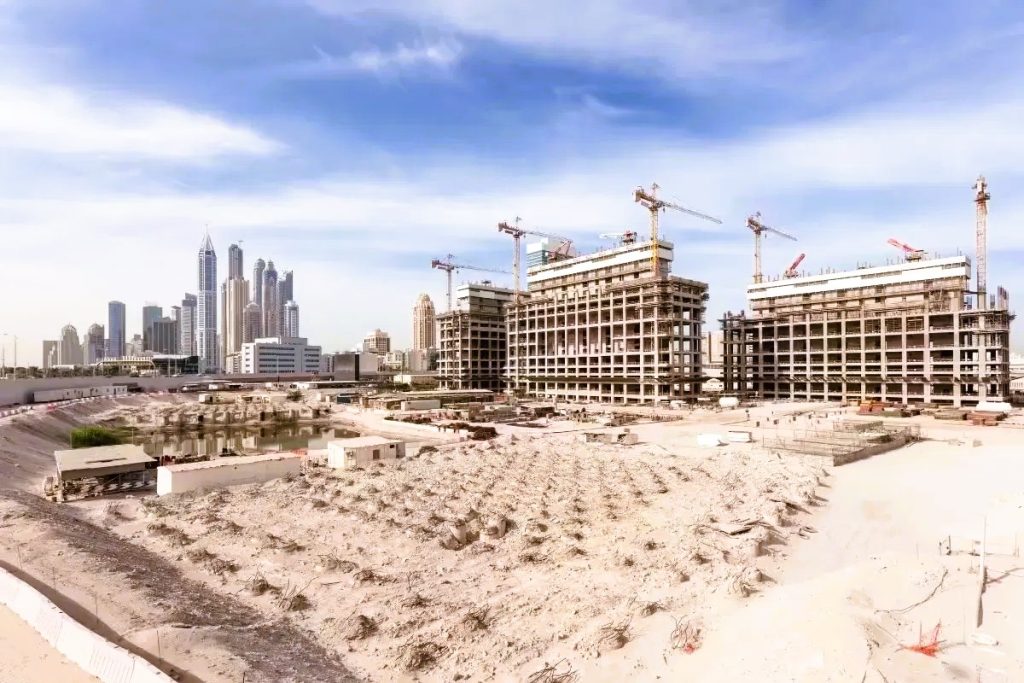
If your off-plan developer in Dubai misses the contractual handover date, the developer is typically entitled to a grace period of 6 to 12 months (as specified in your SPA) before you can pursue legal action. Once that grace period expires, you may have grounds to cancel the contract and claim a full refund of escrowed payments — but the developer may counter with a force majeure defence, and RERA’s assessment of each case is individual. Under Law No. 8 of 2007 (Escrow Accounts), your payments are protected in a dedicated account that the developer’s creditors cannot seize. Under Law No. 13 of 2008, all off-plan sales are registered in the Oqood system. Under Executive Council Resolution No. 6 of 2010, developers must hand over properties by the agreed date once buyers have met their financial obligations.
This guide covers what happens when a developer misses the handover deadline, the legal distinction between the contractual grace period and RERA intervention, your rights as a buyer to cancel or claim compensation, how developers may use force majeure to justify delays (including current supply chain disruptions from the Strait of Hormuz closure), the dispute filing process, and what happens if RERA cancels an entire project. If you purchased off-plan property through a standard Dubai property transaction, understanding these timelines and mechanisms is essential for protecting your investment.
How Off-Plan Handover Deadlines Work in Dubai
Every off-plan Sale and Purchase Agreement (SPA) in Dubai includes an anticipated completion date (ACD) — the date by which the developer expects to hand over the finished unit. This date is registered with RERA as part of the project approval process and forms part of the Oqood (interim property register) record.
In addition to the ACD, most SPAs include a grace period — typically 6 to 12 months beyond the anticipated completion date — during which the developer is not considered to be in breach. The exact length is defined in your SPA, not by a universal RERA regulation. During this grace period, the developer is legally permitted to delay without triggering penalty clauses, cancellation rights, or compensation obligations. This grace window exists because construction timelines are inherently subject to variables that cannot be precisely forecast at the time of sale.
The critical timeline for buyers:
| Phase | What Happens | Buyer’s Position |
|---|---|---|
| Before ACD | Construction in progress; developer makes milestone payments from escrow | Continue making scheduled payments as per SPA; monitor progress via Dubai REST app |
| ACD passes | Developer enters grace period (typically 6–12 months as per SPA) | No immediate legal action available; developer is not in breach during grace period |
| Grace period expires | Developer is now potentially in breach of the SPA | Buyer may pursue cancellation, refund, and/or compensation — depending on SPA terms and developer’s defence |
| RERA intervention | RERA monitors construction progress and may investigate unjustified delays or cancel the project | If RERA cancels the project, full refund of all payments from escrow; dispute handled by Special Tribunal |
Your Rights When the Developer Misses Handover
Once the contractual grace period has expired and the developer still has not delivered, your SPA and UAE law provide several potential remedies. The exact options depend on your contract’s specific wording, the developer’s reasons for the delay, and whether the project remains active or has been cancelled.
Right to Cancel and Claim a Refund
If the developer exceeds the ACD plus the contractual grace period, you may have the right to terminate the SPA and claim a refund of all payments held in escrow. This right is supported by Article 234 of the Civil Transactions Law (Article 272 of the 1985 Civil Code), under which, in a contract binding on both sides, a party may after formally notifying the other ask the court to order performance or rescission. Article 237 then requires the parties to be restored to the position they were in before the contract, which is the basis for getting your payments back. The process is not automatic — you must formally notify the developer, allow a reasonable period for remedy, and potentially escalate through DLD/RERA or the Dubai courts if the developer disputes the cancellation.
Refunds are processed from the project’s escrow account. Under Law No. 8 of 2007, all buyer payments are deposited into a dedicated DLD-registered escrow account. These funds are protected from the developer’s creditors — even if the developer faces financial difficulties, your escrowed payments cannot be seized for the developer’s other debts. However, the practical timing of a refund depends on the balance available in the escrow account, RERA’s involvement, and whether other buyers are also seeking refunds simultaneously.
Right to Claim Compensation
Under Article 256 of the Civil Transactions Law (Article 295 of the 1985 Civil Code), compensation is assessed in money, and the court may instead order restoration to the former position or the performance of a specific act by way of compensation. Buyers may claim for actual financial losses caused by the developer’s delay. Compensable losses may include foregone rental income (the rent you would have earned had the property been delivered on time), additional mortgage payments incurred during the delay period, ongoing rental costs for alternative accommodation attributable to the inability to take possession, and interest on the payments held in escrow during the delay.
Some SPAs include liquidated damages clauses that pre-agree a compensation amount — for example, a fixed daily or monthly penalty rate for each day beyond the grace period. If your SPA contains such a clause, it takes precedence. If it does not, you must prove actual financial loss through documentary evidence. Courts and RERA assess compensation claims on a case-by-case basis.
Right to Continue and Wait
You are not obligated to cancel. If you believe the project will eventually complete and you prefer to retain your unit, you can continue holding your position while reserving the right to claim compensation for the delay period. This may be the more practical option if the project is substantially complete but facing short-term logistical challenges, particularly with current supply chain disruptions.
Developer Force Majeure Claims: What They Can and Cannot Argue
Developers facing delays may invoke force majeure to avoid liability. As we covered in our guide to force majeure in UAE contracts, the legal test under Article 236 of the Civil Transactions Law (Article 273 of the 1985 Civil Code) requires proving that the event was unforeseeable, unavoidable, and rendered performance impossible — not merely more difficult or expensive. Executive Council Resolution No. 6 of 2010 allows developers to claim force majeure, but DLD and courts assess each case individually and scrutinise whether the delay genuinely stems from the event or from developer negligence.
| Developer Claim | Likely Valid? | Why |
|---|---|---|
| “We cannot import steel/concrete because the Strait of Hormuz is closed” | Potentially valid | Maritime route closure is an external event; but developer must prove no alternative source existed and that mitigation steps were taken |
| “Labour shortages because workers left the country” | Weak | Labour market challenges are manageable; replacement workers can be sourced; does not meet impossibility threshold |
| “Construction costs have increased due to the crisis” | Not valid as force majeure | Increased cost is hardship (Art. 249), not impossibility (Art. 273); court may adjust terms but cannot terminate |
| “The project was already delayed before the conflict” | Not valid | Pre-existing delays cannot be retroactively attributed to a subsequent event; the developer was already in breach |
| “Government ordered a temporary construction halt for safety” | Strong | Government-imposed restrictions are a recognised force majeure trigger; documented easily |
What to demand from your developer: If the developer claims force majeure, request formal written notice that identifies the specific event, specifies which obligations are affected, details the mitigation steps being taken, and provides an estimated revised timeline. Under UAE law, the burden of proof lies with the party claiming force majeure. Generic statements about “regional instability” without specific evidence linking the event to the actual construction delay are insufficient.
How to File a Complaint with RERA and DLD
If negotiation with the developer fails, you can escalate through official channels. The process differs depending on whether you are seeking mediation, filing a regulatory complaint, or pursuing a court case.
Step 1: Formal Written Notice to the Developer
Send a formal written notice (ideally via registered mail and email) to the developer stating that the contractual handover date plus grace period has expired, requesting either delivery within a specified period (e.g., 30 days) or termination and refund. Keep a copy of all correspondence. This written record is essential evidence in any subsequent dispute.
Step 2: DLD Mediation
Under Executive Council Resolution No. 6 of 2010, the DLD can mediate disputes between buyers and developers. You can request mediation through the DLD’s legal affairs department. Mediation is typically faster and less expensive than court proceedings. Many disputes are resolved at this stage through negotiated settlements — partial refunds, revised handover dates, or compensation agreements.
Step 3: RERA Complaint
If the developer is not responding or you believe RERA regulations are being violated (e.g., escrow misuse, failure to report construction progress, unjustified delay without communication), file a regulatory complaint through the RERA complaint process. RERA monitors construction progress through periodic technical reports and can investigate whether the developer’s delay is justified.
Step 4: Dubai Real Estate Court or Special Tribunal
For claims that cannot be resolved through mediation, the Dubai Real Estate Court has jurisdiction over property disputes including delayed handover claims and compensation. If RERA has cancelled the entire project, the case is referred to the Special Tribunal for Unfinished and Cancelled Real Property Projects (established by Decree No. 33 of 2020). The Special Tribunal has exclusive jurisdiction over cancelled project disputes and its decisions are final. It can order refunds, assign project completion to a replacement developer, or oversee liquidation.
What Happens If RERA Cancels the Entire Project
RERA has the authority to cancel an off-plan project registration under several circumstances: the developer does not commence construction within six months of receiving off-plan sales approval (Article 17 of Law No. 8 of 2007), the developer commits offences such as submitting false documents, selling units in fraudulent developments, or embezzling escrow funds, or the project experiences significant unjustified delays and the developer fails to correct course after being notified by RERA.
When RERA issues a cancellation decision, the legal consequences are clear: the developer must refund all payments made by buyers, processed through the escrow account in accordance with Law No. 8 of 2007. The project is referred to the Special Tribunal, which manages the settlement of buyer rights, verifies escrow account balances, and oversees the refund process. Creditors of the developer cannot access escrowed funds — they are protected exclusively for buyer refunds or project completion. You can check whether a project has been cancelled on the DLD website by checking its “Project Status.”
How to Protect Yourself as an Off-Plan Buyer
- Read your SPA’s handover and force majeure clauses before signing. The contractual grace period length, penalty clauses, compensation terms, and force majeure definitions vary between developers. These clauses determine your rights — not general market assumptions.
- Verify the project is registered with RERA. Use the Dubai REST app or DLD website to confirm the project registration, developer licence, and escrow account status.
- Track construction progress. RERA requires developers to submit periodic technical reports. You can monitor progress through the Dubai REST app. If the developer’s reported completion percentage does not match what you see on site, flag this with DLD.
- Link payments to milestones. Your SPA should specify that instalment payments are linked to verified construction milestones — not calendar dates. If a milestone has not been reached, you should not be obligated to make the corresponding payment.
- Keep all documentation. Payment receipts, Oqood registration, SPA copies, developer correspondence, construction site photographs, and any written force majeure notices from the developer. This documentation is critical if you later file a dispute.
- Act within limitation periods. Buyers typically have one to two years from the scheduled handover date to bring a formal claim. Delaying too long can weaken your legal position.
- Seek legal advice early. If the delay extends beyond the grace period and the developer is not communicating, consult a UAE property lawyer before the situation deteriorates further. Early intervention often produces better outcomes than waiting for RERA to act on its own timeline.
Frequently Asked Questions
How long can a developer delay after the handover date before I can take action?
This depends on your SPA. Most Dubai off-plan contracts include a grace period of 6 to 12 months beyond the anticipated completion date. During this period, the developer is not considered to be in breach. Legal action — cancellation, refund, or compensation — typically becomes available only after the grace period expires. Check the specific clause in your SPA for the exact duration.
Can a developer use the current conflict as a force majeure excuse for delays?
Potentially, but the bar is high. The developer must prove that the specific delay was caused by the conflict (e.g., inability to import materials due to the Strait of Hormuz closure), that the delay was unforeseeable when the SPA was signed, and that reasonable mitigation steps were taken. Pre-existing delays before the conflict cannot be retroactively attributed to it. Increased construction costs alone do not constitute force majeure — that falls under hardship (Article 249), which allows contract adjustment but not termination.
Is my money safe if the developer goes bankrupt?
Under Law No. 8 of 2007, all buyer payments must be deposited into a dedicated DLD-registered escrow account. No attachment can be imposed on these funds for the benefit of the developer’s creditors. In a developer insolvency, your escrowed payments are protected and earmarked either for project completion or buyer refunds. If RERA cancels the project, the Special Tribunal oversees the refund process.
Can I get compensation for lost rental income during the delay?
Yes, if you can prove actual financial loss. Under Article 256 of the Civil Transactions Law (Article 295 of the 1985 Civil Code), buyers may claim compensation for foregone rental income, additional mortgage payments, and ongoing accommodation costs caused by the delay. If your SPA includes a liquidated damages clause specifying a penalty rate for late delivery, that clause governs the compensation calculation. Otherwise, you must provide documentary evidence of your actual losses.
What if the developer says they will deliver “soon” but keeps pushing the date?
Verbal promises have limited legal value. Insist on written communication specifying a revised handover date. If the grace period has expired and the developer continues to delay without delivering, you have the right to pursue cancellation and refund. File a formal written notice, then escalate to DLD mediation or the Dubai Real Estate Court if the developer does not respond.
How do I check if my off-plan project has been cancelled by RERA?
Visit the Dubai Land Department website and check the “Project Status” section, or use the Dubai REST app. If a project has been cancelled by RERA, it will be listed accordingly. Cancelled projects are transferred to the Special Tribunal for liquidation and buyer refund processing.
Can I sell my off-plan unit to someone else instead of waiting for the developer?
Yes, provided you meet the developer’s minimum payment requirement and obtain a resale NOC (No Objection Certificate). Off-plan resales are registered through the Oqood system. However, finding a buyer during a period of market uncertainty and construction delays may be challenging, and you may need to accept a price below what you originally paid. The DLD transfer fees (typically 4% of the sale price) apply to resales as well.
Where do I file a complaint about developer delays?
Start with a formal written notice to the developer. If unresolved, request DLD mediation through the DLD legal affairs department. For regulatory violations (escrow misuse, failure to report progress), file a RERA complaint through the DLD’s complaint portal. For cancellation and compensation claims beyond mediation, the Dubai Real Estate Court has jurisdiction. If RERA has cancelled the project, the Special Tribunal for Cancelled Real Property Projects handles all related disputes exclusively.
Does the developer have to keep me informed about delays?
RERA requires developers to submit periodic technical reports on construction progress. While there is no specific regulation mandating that developers notify individual buyers of delays in a prescribed format, the general good faith obligations under the Civil Transactions Law (Article 221, formerly Article 246) require parties to perform contracts honestly. If the developer is not communicating, this itself may be grounds for a complaint to RERA. Practically, request written updates and document the developer’s failure to respond.
What happens to my mortgage if the developer delays handover?
If you took a mortgage for an off-plan property, your loan repayment obligations to the bank continue regardless of the developer’s delay. The bank is not a party to the SPA and has no obligation to pause or reduce your payments because the developer missed the handover date. This is one of the compensable losses you can claim from the developer — additional mortgage payments incurred during the delay period.
Official Sources
- Dubai Land Department — Frequently Asked Questions (Off-Plan, Escrow, RERA)
- Dubai Legislation Portal — Law No. 8 of 2007 (Escrow Accounts)
- EGSH — Delayed Property Handover Dubai: Buyer Rights & Legal Steps
- BSA Law — Rights of UAE Buyers Regarding Off-Plan Property Delays
- BSA Law — Developer Compliance in Off-Plan Projects (Law No. 8, Law No. 13, Decree No. 33)
RERA regulations, DLD procedures, and court jurisdictions may change. The UAE Civil Transactions Law (Federal Decree-Law No. 25 of 2025) has been in force since 1 June 2026 and renumbered the provisions cited here; contracts signed before that date are still read against the 1985 Civil Code numbering. This guide is informational and does not constitute legal advice. For specific off-plan disputes, consult a qualified UAE property lawyer.