

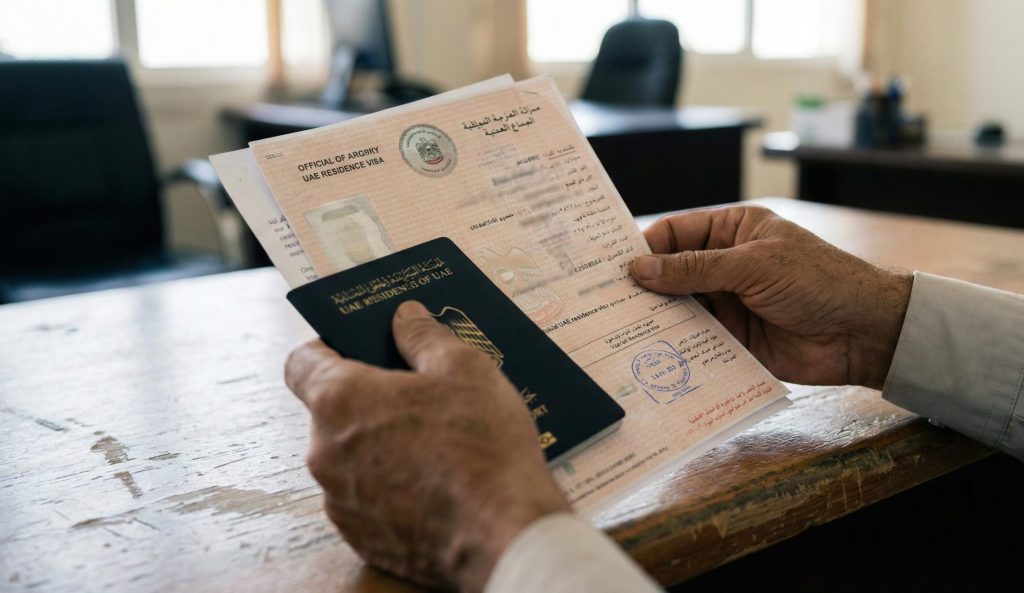
Your complete handbook to UAE residence permits—every visa type, eligibility criteria, costs, and application procedures verified through official government sources.
Moving to the UAE in 2026 means navigating one of the most flexible and investor-friendly immigration systems in the world. Whether you are relocating for employment, purchasing property, launching a business, or retiring with your family, the UAE offers multiple residency pathways designed to match your specific situation. This guide explains every major visa category in plain terms: who qualifies, what documents you need, how much it costs, and how long the process takes.
This article covers employment visas, property-based investor permits, the Golden and Green Visa programmes, family sponsorship, retirement residency, and freelance options. All information reflects current procedures administered by the Federal Authority for Identity, Citizenship, Customs and Port Security (ICP) and the General Directorate of Residency and Foreigners Affairs (GDRFA), with Dubai-specific details where applicable.
UAE Visa System Overview
The UAE’s residency framework operates under Federal Decree-Law No. 29 of 2021 on the Entry and Residence of Foreigners and its Executive Regulations (Cabinet Decision No. 65 of 2022). These laws govern all entry permits, residence visas, renewals, and cancellations across the Emirates. ICP administers the federal system, while GDRFA handles Dubai-specific applications.
Every long-term stay begins with an entry permit—a temporary authorisation valid for 60 days that allows you to enter the UAE for a specific purpose such as employment, investment, study, or family reunification. Once inside the country, the entry permit converts into a residence visa, granting permission to live in the UAE for a fixed term ranging from one to ten years depending on the category. All residents receive an Emirates ID, which serves as official proof of identity and links directly to the residence visa record. This card is required for opening bank accounts, signing tenancy contracts, accessing healthcare, and registering utilities.
Most visa categories require a sponsor—either an employer, a family member, or, in self-sponsored categories like the Golden or Green Visa, the applicant themselves. When the residence visa expires, the Emirates ID also becomes invalid, so both are typically renewed together.
Key Terms
Entry Permit: Temporary approval to enter the UAE, valid for 60 days from issuance. Residence Visa: Long-term stay permit issued after entry, typically valid for 2–10 years. Emirates ID: Mandatory national identification card linked to your visa record. Labour Card: Work authorisation issued by the Ministry of Human Resources and Emiratisation (MOHRE) for employees. Sponsor: The individual or entity legally responsible for your visa status in the UAE.
Employment Residence Visa
The employment residence visa is the most common pathway for foreign professionals working in the UAE. Issued to individuals sponsored by a licensed employer registered with MOHRE, this permit allows you to live and work legally in the country for the duration specified in your employment contract.
To qualify, you need a valid job offer from a UAE-based company or free zone entity. Your employer handles most of the application process, including work permit requests through MOHRE and entry permit applications through ICP. You must pass a mandatory medical fitness examination at an approved health centre after arriving in the UAE, which includes blood screening for communicable diseases and a chest X-ray for tuberculosis.
Who Qualifies
Any foreign national aged 18 or above with a confirmed job offer from a UAE-registered company may apply. The occupation must align with the business activities specified in the employer’s trade licence. Workers are classified into three skill categories based on educational qualifications: Category 1 (bachelor’s degree or higher), Category 2 (diploma holders), and Category 3 (secondary school certificate or skilled trades). Your category affects processing fees and certain procedural requirements.
Required Documents
Applicants need a valid passport with at least six months’ remaining validity, passport-sized photographs with a white background, attested educational certificates, a signed employment contract, and completed application forms. Educational documents issued outside the UAE must be attested by the relevant ministry in your home country, the UAE Embassy, and the UAE Ministry of Foreign Affairs (MOFA). Your employer provides company documents including the trade licence, establishment card, and sponsor details.
Costs and Timeline
Total costs typically range from AED 3,000 to AED 7,000, covering the work permit, entry permit, medical examination, Emirates ID, and visa stamping. The employer usually bears these costs. Processing takes two to four weeks from application submission to final visa issuance, depending on document verification and government approvals. The standard employment visa is valid for two years and renewable as long as the employment relationship continues.
Grace Period After Termination
When employment ends, the sponsor must cancel the visa. Employees receive a 30-day grace period under MOHRE regulations—extended to 60 days for workers who have completed more than one year of continuous service. During this time, you may seek new employment and transfer sponsorship, convert to a self-sponsored visa like the Green Visa, or apply for a short-term extension while arranging your affairs.
2-Year Property Investor Visa (Taskeen Programme)
The 2-year property investor visa, administered through Dubai Land Department’s Taskeen Programme, allows foreign nationals who purchase residential real estate in Dubai to obtain renewable residence permits. This pathway is designed specifically for property buyers who want legal residency tied to their real estate investment.
To qualify, you must own a completed residential property in a designated freehold area with a minimum purchase value of AED 750,000 at the time of acquisition. The property must be registered in your name at the Dubai Land Department. Mortgaged properties qualify provided you have paid at least 50% of the property value or a minimum of AED 750,000, whichever is greater, with a No Objection Certificate (NOC) from the financing bank.
Eligibility Requirements
The property must be completed and ready for occupancy—off-plan units are not eligible for this visa category. Commercial properties are also excluded. Married couples may share ownership of a single property worth AED 750,000 or more if they provide an attested marriage certificate. In joint ownership arrangements, the property share must be equal between spouses, and the primary shareholder applies as the visa holder while sponsoring the other party.
Required Documents
You need a valid passport, an electronic copy of the title deed from DLD, a personal photograph meeting GDRFA specifications, valid health insurance, and a certificate of good conduct from Dubai Police addressed to the Dubai Land Department. If the property is mortgaged, include the NOC from your bank and a mortgage statement showing the paid and outstanding amounts. Current UAE residents should provide copies of their existing Emirates ID and residence permit.
Costs and Timeline
Processing takes approximately one to two weeks once all documents are verified. Total costs range from AED 4,000 to AED 7,000, covering the entry permit, medical examination, Emirates ID, and residence visa stamping. The visa is valid for two years and renewable indefinitely as long as you maintain property ownership meeting the minimum threshold.
Family Sponsorship
Property visa holders can sponsor their spouse and children under the same residency file. Dependents require attested marriage and birth certificates, medical fitness tests for those aged 18 and above, and valid health insurance. The sponsor must demonstrate adequate accommodation, which the property title deed satisfies.
Golden Visa (5-Year and 10-Year Residency)
The UAE Golden Visa is a long-term self-sponsored residency programme offering five or ten-year renewable permits to investors, entrepreneurs, exceptional professionals, and other qualifying individuals. Introduced in 2019 and significantly expanded in 2022, it allows foreign nationals to live, work, and study in the UAE without requiring a local employer or sponsor.
The Golden Visa removes several limitations that apply to standard residence permits. Holders can remain outside the UAE for extended periods—exceeding the usual six-month limit—without automatic visa cancellation. They can sponsor immediate family members including children of any age and, in some cases, parents. The visa is renewable indefinitely as long as eligibility criteria remain satisfied.
Real Estate Investment Pathway
Property investors qualify for the 10-year Golden Visa by purchasing real estate in the UAE with a minimum value of AED 2 million. This can be a single property or multiple properties combined to reach the threshold. Both completed units and off-plan properties are eligible. Mortgaged properties also qualify provided you obtain an NOC from your bank confirming the property’s value and your right to use it for visa purposes.
For mortgaged properties, you must demonstrate that the paid amount meets or contributes toward the AED 2 million threshold. Joint ownership with a spouse is permitted, but if the total value is less than AED 4 million, only one spouse may apply for the Golden Visa while sponsoring the other. Non-spouse joint owners must each individually meet the AED 2 million requirement.
Other Eligibility Categories
Business Investors: Individuals who invest at least AED 2 million in a UAE-registered company or hold a fixed deposit of equivalent value in an accredited UAE investment fund. Company investors must submit certified financial reports, a valid trade licence, and proof of their ownership stake.
Entrepreneurs: Founders or owners of UAE-registered startups with annual revenue of at least AED 1 million, or those with an innovative project valued at AED 500,000 or more and approved by an accredited UAE business incubator.
Specialised Professionals: Doctors, scientists, engineers, IT professionals, and other experts who meet specific criteria set by relevant authorities. Engineers may apply through dedicated Golden Visa pathways upon recommendation from professional bodies. Medical professionals require approval from the Ministry of Health or Dubai Health Authority. Scientists need recommendation from the UAE Council for Scientists.
Outstanding Students and Graduates: University students with a cumulative GPA of 3.75 or above, or high school graduates with scores of 95% or higher from top-performing UAE schools.
Tax Contributors: Business owners or partners whose companies pay annual taxes of at least AED 250,000 to the Federal Tax Authority.
Required Documents
All applicants need a valid passport with at least six months’ validity, recent passport photographs, medical fitness test results, and valid UAE health insurance. Property investors provide title deeds and valuation certificates from DLD. Business investors submit certified financial reports, trade licences, and shareholder documentation. Professionals include attested degrees, professional licences, and recommendation letters from relevant authorities. Current UAE residents provide copies of their Emirates ID.
Costs and Timeline
Golden Visa processing typically takes four to eight weeks, with complex cases requiring up to twelve weeks for security clearance and document verification. Costs range from AED 4,000 to AED 10,000 for the primary applicant, covering application fees, medical examination, Emirates ID, and visa stamping. Property investors applying through DLD may pay additional valuation and service fees. Each sponsored family member incurs separate costs of approximately AED 1,000 to AED 2,500.
Maintaining Eligibility
You must maintain the qualifying investment throughout the visa period. For property investors, this means retaining ownership of real estate worth at least AED 2 million. Selling your property without reinvesting in equivalent real estate may result in visa cancellation. Market fluctuations can affect property values, so investors purchasing near the threshold should consider this when planning long-term. Renewal requires updated documentation confirming continued eligibility approximately six months before visa expiration.
Green Visa (5-Year Self-Sponsored Residency)
The Green Visa is a five-year self-sponsored residence permit introduced as part of the UAE’s 2022 immigration reforms. It targets skilled professionals, freelancers, and investors who want long-term residency without depending on an employer or family sponsor. Unlike the Golden Visa, the Green Visa has lower entry thresholds, making it accessible to a broader range of qualified individuals.
Green Visa holders sponsor themselves, eliminating the need for a company or family member to maintain their residency status. They can change jobs without affecting their visa, sponsor family members including children up to age 25 and unmarried daughters without age restriction, and benefit from extended grace periods of up to six months after visa expiry or cancellation.
Skilled Employee Category
Employed professionals in the UAE may apply for the Green Visa if they meet specific criteria. You must have a valid employment contract with a UAE-based company and be classified in occupational levels 1, 2, or 3 according to MOHRE’s classification system (managers, professionals, and skilled technical workers). Educational requirements include a minimum of a bachelor’s degree or equivalent qualification. You must earn at least AED 15,000 per month.
Once issued, the Green Visa allows you to change employers without reapplying, providing flexibility unavailable with standard employment visas. The visa remains valid throughout the five-year term regardless of employment changes, though you must comply with UAE labour laws including obtaining appropriate work permits for each position.
Freelancer and Self-Employed Category
Independent professionals who work for themselves or contract with multiple clients can apply through the freelancer pathway. Requirements include holding a valid freelance or self-employment permit from MOHRE or a recognised UAE free zone, a bachelor’s degree or specialised diploma, and proof of annual income from self-employment of at least AED 360,000 over the previous two years—or equivalent financial solvency documentation.
Bank statements, contracts, invoices, and tax returns serve as income evidence. The income threshold ensures applicants can sustain themselves without employer support while contributing economically to the UAE.
Investor Category
Individuals investing in or partnering with UAE-licensed businesses may qualify under the Green Visa investor category. This pathway requires a valid commercial or industrial licence issued by a relevant free zone or the Department of Economic Development, proof of investment or ownership stake in the business, and compliance with applicable regulations. The investment threshold is lower than the Golden Visa, making it suitable for small business owners and minority shareholders.
Required Documents
Applicants provide a valid passport with at least six months’ validity, passport photographs, attested educational certificates, proof of income or employment (depending on category), medical fitness test results, and valid health insurance. Freelancers include their MOHRE permit or free zone freelance licence. Employed applicants need their employment contract and employer’s trade licence copy.
Costs and Timeline
Processing takes three to four weeks from document submission. Costs range from AED 4,000 to AED 6,000, including the visa application, Emirates ID, and medical examination. Freelancers incur additional fees for obtaining or renewing their MOHRE permit, typically AED 6,000 to AED 10,000 depending on profession and permit category. Family sponsorship adds approximately AED 3,000 to AED 5,000 per dependent.
Retirement Visa (5-Year Residency for Over-55s)
The UAE retirement visa provides a five-year renewable residence permit for expatriates aged 55 and above who wish to settle in the country after their professional careers. This self-sponsored visa allows retirees to live in the UAE without employment or business activity, enjoying the country’s lifestyle, healthcare, and tax-free environment.
Applicants must meet both age and financial criteria. The age requirement is straightforward: you must be at least 55 years old at the time of application. Financial eligibility can be satisfied through one of three pathways—or, in Dubai, a combination of assets.
Financial Eligibility Pathways
Property Ownership: Own real estate in the UAE valued at AED 1 million or more. The property must be registered in your name and either fully paid or with at least AED 1 million of any mortgage settled. You need a title deed and valuation certificate from the relevant land department.
Financial Savings: Maintain savings or a fixed deposit of at least AED 1 million in a UAE-based bank. The deposit typically must remain in place for the duration of the visa. Bank statements for the previous six months serve as proof.
Monthly Income: Demonstrate a stable monthly income of at least AED 20,000 from pensions, investments, or other sources. Dubai offers a lower threshold of AED 15,000 per month. Income can be verified through pension letters, bank statements, or investment account statements.
Combination (Dubai): Dubai allows applicants to combine property equity and savings to reach the AED 1 million threshold—for example, AED 500,000 in property ownership plus AED 500,000 in savings.
Additional Requirements
All applicants must hold comprehensive health insurance valid in the UAE throughout the residency period. Some emirate-specific programmes require proof of at least 15 years of cumulative work experience, whether in the UAE or abroad. Medical fitness testing is mandatory as part of the application process.
Required Documents
You need a valid passport with at least six months’ validity, passport photographs, proof of age, and your chosen financial documentation (title deed, bank statements, or pension letters). Include valid UAE health insurance, a medical fitness test appointment or certificate, and—for Dubai applicants using the property route—a valuation from Dubai Land Department.
Costs and Timeline
Processing takes approximately one to two weeks in most cases. Total costs range from AED 3,000 to AED 7,000 depending on the emirate and services used, covering the residence permit application, Emirates ID, medical examination, and administrative fees. The visa is valid for five years and renewable upon demonstrating continued eligibility at each renewal.
Family Sponsorship
Retirement visa holders can sponsor their spouse and dependent children. Spouses require an attested marriage certificate, while children need birth certificates. All sponsored family members must hold valid UAE health insurance and undergo medical fitness tests if aged 18 or above.
Family Sponsorship Visa
UAE residents holding valid employment, investor, Golden, or Green visas can sponsor their immediate family members for residence permits. This allows spouses, children, and—under certain conditions—parents to live together in the UAE as a family unit. Family visa validity typically matches the sponsor’s visa duration.
Who Can Sponsor
Any UAE resident with a valid residence visa may sponsor family members if they meet minimum income requirements. The standard threshold is AED 4,000 per month, or AED 3,000 plus employer-provided accommodation. Female sponsors typically face higher thresholds—AED 10,000 per month, or AED 8,000 with accommodation—though this varies by emirate and is subject to ongoing review. Golden Visa holders have no minimum salary requirement for sponsoring family.
Who Can Be Sponsored
Spouse: Legally married husbands or wives with an attested marriage certificate. The certificate must be verified by the UAE Embassy and MOFA if issued abroad, then translated into Arabic by a certified translator.
Children: Sons can be sponsored until age 25 (increased from 18 under recent reforms). Unmarried daughters may be sponsored without age restriction. Children with disabilities or special needs can be sponsored indefinitely regardless of age. Sons over 18 who are full-time students require proof of university enrolment for continued sponsorship.
Parents: Expatriates can sponsor both parents (or one parent if the other is deceased) for annual residence permits. Parent sponsorship requires a higher income threshold—typically AED 20,000 per month—and proof of relationship and dependency. A refundable security deposit may be required, and medical insurance is mandatory.
Required Documents
Sponsors provide copies of their passport, Emirates ID, and valid UAE residence visa, along with a salary certificate or employment contract confirming income. A valid tenancy contract registered with Ejari (Dubai) or Tawtheeq (Abu Dhabi) proves adequate accommodation. For spouse sponsorship, include an attested marriage certificate translated into Arabic. For children, provide attested birth certificates. All attestations follow the standard process: verification in the issuing country, UAE Embassy certification, and MOFA legalisation.
Process and Costs
The application process involves obtaining entry permits for family members, arranging their travel to the UAE, completing medical fitness tests and Emirates ID biometrics after arrival, and receiving final visa stamping. Processing takes two to four weeks once all documents are submitted. Costs range from AED 2,500 to AED 4,000 per family member, covering entry permit, medical test, Emirates ID, and visa stamping fees.
Important Notes
Sponsors have 60 days after family members enter on entry permits to complete the residence visa process. If the sponsor’s visa is cancelled or expires, dependent visas are automatically invalidated—family members then receive a grace period to either arrange new sponsorship or exit the country. Newborns must have their residence visa applied for within 120 days of birth to avoid fines.
Step-by-Step Application Process
Regardless of visa category, all UAE residence visa applications follow a standardised sequence of stages. Understanding this process helps you prepare documents efficiently, anticipate timelines, and avoid common delays.
Stage 1: Preparation and Eligibility Check
Before applying, confirm which visa category matches your situation and verify that you meet all eligibility requirements. Gather required documents, beginning attestation processes early since these often take three to six weeks for foreign-issued certificates. Arrange health insurance that meets UAE standards—this is mandatory for all residence visa applications. Prepare passport photographs meeting ICA specifications (4.3 x 5.5 cm, white background) and ensure your passport has at least six months’ validity.
Stage 2: Entry Permit Application
The entry permit is your initial authorisation to enter the UAE for visa processing. For employment visas, your employer submits this through MOHRE. For self-sponsored categories like the Golden or Green Visa, you or an authorised typing centre submits the application through ICP or GDRFA portals. Property investors apply through DLD’s Taskeen service or GDRFA. Entry permits are typically issued within three to seven working days and remain valid for 60 days.
Stage 3: Medical Fitness Test
After entering the UAE, complete the mandatory medical fitness examination at a government-approved health centre. Tests include blood screening for HIV, Hepatitis B and C, and syphilis, plus a chest X-ray for tuberculosis. Pregnant women are exempt from X-rays upon providing a certified doctor’s letter but must complete blood tests. Results are typically available within 30 minutes to 72 hours. The fitness certificate is valid for 90 days—if visa processing extends beyond this period, retesting is required.
Stage 4: Emirates ID Application and Biometrics
Following medical clearance, apply for your Emirates ID. This involves submitting biometric data—fingerprints, photograph, and signature—at an ICP service centre. The Emirates ID application links automatically to your visa file. Processing takes five to ten working days, after which the physical card is delivered to your registered address or collected from a designated location. Your temporary Emirates ID number can be used immediately for essential services like bank account opening and utility registration.
Stage 5: Visa Stamping and Issuance
The final stage involves submitting all verified documents for residence visa stamping. For most applications, this is now processed electronically rather than requiring a physical passport stamp. Submit your medical fitness certificate, Emirates ID receipt, original passport, and photographs through ICP, GDRFA, or an authorised typing centre. Pay the residence visa fee—typically AED 1,000 to AED 3,000 depending on visa type and duration. Processing takes five to ten working days. Upon approval, your residence visa details are updated across all government databases.
Document Attestation Requirements
Foreign-issued documents used in UAE visa applications must undergo attestation—a verification process confirming their authenticity for legal use in the Emirates. This applies to educational certificates, marriage and birth certificates, and business documents like trade licences and shareholder agreements.
Educational Certificates
Degrees, diplomas, and professional qualifications follow a three-stage attestation path. First, verification by the issuing institution and the Ministry of Education (or equivalent) in your home country. Second, endorsement by the UAE Embassy or Consulate in that country. Third, final legalisation by the UAE Ministry of Foreign Affairs (MOFA). This process typically takes three to six weeks and costs AED 500 to AED 1,500 depending on the issuing country.
Personal Documents
Marriage and birth certificates required for family sponsorship follow the same attestation sequence: home country authority, UAE Embassy, and MOFA. These documents must also be translated into Arabic by a certified legal translator if originally issued in another language. Processing takes two to four weeks with costs of AED 300 to AED 800.
Business Documents
Trade licences, memoranda of association, and shareholder agreements begin attestation with the issuing authority (such as a chamber of commerce or company registrar), then proceed through UAE Embassy certification and MOFA legalisation. Timeline is two to three weeks at costs of AED 400 to AED 1,000.
Apostille Convention
Countries participating in the Hague Apostille Convention may benefit from simplified attestation procedures. Apostilled documents receive an internationally recognised certification that may reduce the number of verification steps required. Check whether your country participates and whether the UAE accepts apostille certification for your specific document type.
Cost Breakdown by Visa Type
Total costs for obtaining a UAE residence visa depend on the category, validity period, and whether standard or expedited processing is used. The following table summarises typical expenses in 2026.
| Visa Type | Validity | Estimated Total Cost |
|---|---|---|
| Employment Visa | 2 years | AED 3,000 – 7,000 |
| Property Visa (Taskeen) | 2 years | AED 4,000 – 7,000 |
| Golden Visa (Property) | 10 years | AED 8,000 – 15,000 |
| Golden Visa (Professional) | 10 years | AED 4,000 – 6,000 |
| Green Visa | 5 years | AED 4,000 – 6,000 |
| Retirement Visa | 5 years | AED 3,000 – 7,000 |
| Family Sponsorship (per person) | Matches sponsor | AED 2,500 – 4,000 |
Costs include entry permit, medical examination, Emirates ID, and visa stamping fees. Attestation, translation, and health insurance are additional. Renewal costs are typically 70–80% of initial application fees since attestation and entry permit expenses are not repeated. VIP or express processing may add AED 500 to AED 1,000.
Processing Timelines
Standard processing times vary by visa category and depend on document completeness, security clearance requirements, and application volume.
| Visa Type | Standard Processing Time |
|---|---|
| Employment Visa | 2 – 4 weeks |
| Property Visa (Taskeen) | 1 – 2 weeks |
| Golden Visa | 4 – 12 weeks |
| Green Visa | 3 – 4 weeks |
| Retirement Visa | 1 – 2 weeks |
| Family Sponsorship | 2 – 4 weeks |
Delays typically result from incomplete documentation, unattested certificates, property ownership discrepancies, or security clearance requirements. Applications submitted during peak periods (summer months, Ramadan) may experience longer processing times.
Renewal and Extension Process
Residence visa renewal follows a simplified version of the initial application process. Since most data is already registered in ICP and Emirates ID systems, renewals process faster—typically within one to two weeks. Begin the renewal process two to three months before expiry to avoid overstay fines and ensure uninterrupted access to banking, healthcare, and tenancy services.
UAE regulations allow renewal up to six months before visa expiry. Late renewals incur daily fines of AED 50 after the grace period ends. Automated notifications are sent via GDRFA and Emirates ID apps, though the sponsor (whether employer, family member, or self) bears responsibility for timely renewal.
Renewal Requirements by Visa Type
Employment visas require a valid renewed labour contract, updated health insurance, and a new medical fitness certificate. Investor and property visas require confirmation that the qualifying investment remains registered in your name. Golden Visa holders typically need only to reconfirm ongoing eligibility—medical tests may not be required. Green Visa holders submit proof of continued income or business activity.
Residents within their grace period may apply for short-term extensions (30–90 days) instead of immediate renewal, useful when awaiting new employment, property transfers, or updated documentation.
Visa Cancellation and Exit
Residence visa cancellation is legally required before permanently leaving the UAE or changing sponsors. Proper cancellation ensures all obligations—employment, financial, and residency records—are formally closed in government systems, preventing future entry issues, fines, or visa conflicts.
When Cancellation Is Required
You must cancel your residence visa upon termination or resignation from employment, permanent relocation outside the UAE, transfer to a new employer or self-sponsored visa, company closure or trade licence suspension, or divorce or death of a sponsoring spouse. Failure to cancel before departure can result in daily overstay fines of AED 50, complications during re-entry, and frozen bank accounts or utilities linked to your Emirates ID.
Cancellation Process
For employment visas, the employer files a cancellation request through MOHRE, followed by ICP processing. Once approved, the labour card and visa are deactivated, triggering the grace period. For self-sponsored visas, the holder cancels directly through the ICP Smart Services portal or at an authorised typing centre. Required documents include the original passport, Emirates ID, sponsor’s ID copy, and official clearance of outstanding obligations such as utility bills, tenancy agreements, or traffic fines. Cancellation takes three to five working days, with electronic confirmation issued upon completion.
Grace Period After Cancellation
After cancellation, standard employment visa holders receive a 30-day grace period, extended to 60 days for those who completed more than one year of continuous service. Golden Visa holders benefit from extended grace periods of up to 90 days. During this time, you may secure new sponsorship and convert visa status, apply for a visit or tourist visa without exiting the country, or leave the UAE and re-enter later under a new visa category.
Common Challenges and Solutions
Even with the UAE’s streamlined digital systems, applicants frequently encounter procedural or documentation issues that delay or jeopardise approval. Understanding these challenges helps you avoid them.
Medical Fitness Test Failures
Applicants testing positive for certain communicable diseases like HIV or active tuberculosis are generally ineligible for standard residence visas. Private pre-screening before travel helps identify potential issues. Temporary health conditions such as treated tuberculosis may allow reapplication upon providing a full medical recovery report from an authorised UAE health authority.
Document Attestation Errors
Unattested or incorrectly translated certificates remain a primary cause of processing delays. All foreign-issued documents must complete embassy and MOFA attestation, and translations must come from licensed Arabic legal translators. Preparing documents well in advance—three to six weeks before your intended application date—prevents last-minute complications.
Property Valuation Discrepancies
Investor visa applicants sometimes face delays when property values on title deeds do not match current market valuations, or when mortgaged property documentation is incomplete. Obtain updated valuation certificates from DLD and ensure bank NOCs clearly state the paid amount and confirm no objection to visa issuance for the property.
Insufficient Salary Documentation
Family sponsorship applications may be rejected when income proof is incomplete or when sponsors count total salary packages rather than basic salary. Provide clear salary certificates from your employer specifying basic salary and allowances separately. Bank statements should consistently show salary deposits over the previous three to six months.
2025-2026 Updates and Recent Changes
The UAE continues to modernise its immigration framework with reforms designed to attract global talent and simplify procedures.
Blue Visa
Launched in February 2025, the Blue Visa is a 10-year residence permit for individuals who have made exceptional contributions to environmental protection and sustainability. Eligible categories include environmental activists, researchers, conservationists, and members of international environmental organisations. Applications are processed through the ICP Smart Services platform.
New Visit Visa Categories
In September 2025, ICP introduced four new visit visa categories for specialists in artificial intelligence, entertainment, events, and cruise ship/yacht tourism. These reflect the UAE’s strategic focus on technology, innovation, and tourism sectors.
Expanded Golden Visa Eligibility
Recent updates extend Golden Visa eligibility to nurses with 15 or more years of service in Dubai, educators meeting specific performance criteria, content creators through Dubai’s Creators HQ programme, and Waqf donors qualifying as financial supporters of humanitarian work.
Digital Processing Improvements
The UAE’s Zero Government Bureaucracy initiative has reduced processing times across all visa categories. Most applications are now submitted and tracked entirely online through ICP Smart Services and GDRFA portals, with biometric appointments the only in-person requirement for most applicants.
FAQ
What is the minimum property value to get a UAE residence visa?
The minimum is AED 750,000 for a 2-year renewable residence visa through Dubai Land Department’s Taskeen Programme. For the 10-year Golden Visa, the minimum property investment is AED 2 million. Both completed and off-plan properties (for Golden Visa) qualify, and mortgaged properties are accepted with appropriate bank documentation.
Can I work in the UAE on a property investor visa?
A property visa grants residency but not automatic work authorisation. To be employed legally, you need a separate labour card and work permit from MOHRE. Alternatively, Golden Visa and Green Visa holders can work without additional employer sponsorship, making these options more suitable if you plan to work in the UAE.
How long can I stay outside the UAE without losing my residence visa?
Standard residence visas become invalid if you remain outside the UAE for more than 180 consecutive days. Golden Visa holders are exempt from this restriction and can stay abroad indefinitely without automatic cancellation. Green Visa and property visa holders must comply with the 180-day rule.
What is the difference between the Golden Visa and Green Visa?
The Golden Visa offers 10-year residency for high-value investors (AED 2 million minimum), exceptional professionals, and other qualifying individuals with no absence restrictions. The Green Visa offers 5-year residency for skilled employees earning at least AED 15,000 monthly or freelancers with AED 360,000 annual income. Green Visa holders must comply with the 180-day absence rule but benefit from extended grace periods and flexible job mobility.
What salary do I need to sponsor my family in the UAE?
The minimum salary for sponsoring a spouse and children is AED 4,000 per month, or AED 3,000 plus employer-provided accommodation. Female sponsors typically need AED 10,000 (or AED 8,000 with accommodation). Sponsoring parents requires approximately AED 20,000 monthly income. Golden Visa holders have no minimum salary requirement for family sponsorship.
Can I sponsor my parents on a UAE residence visa?
Yes. Expatriate residents can sponsor both parents (or one parent if the other is deceased) for annual residence permits. Requirements include a higher income threshold (around AED 20,000 monthly), proof of relationship, adequate accommodation (typically a two-bedroom apartment), medical insurance for both parents, and potentially a refundable security deposit.
How do I qualify for the UAE retirement visa?
You must be at least 55 years old and meet one of three financial criteria: own UAE property worth AED 1 million or more, maintain AED 1 million in savings in a UAE bank, or demonstrate monthly income of at least AED 20,000 (AED 15,000 in Dubai). Some programmes also require 15 years of cumulative work experience. The visa is valid for five years and renewable.
What happens to my visa if I lose my job?
When employment ends, your visa enters a grace period—30 days standard, or 60 days if you completed more than one year of service. During this time, you can find new employment and transfer sponsorship, convert to a self-sponsored visa like the Green Visa, apply for a short-term extension, or leave the UAE. Overstaying beyond the grace period incurs daily fines of AED 50.
Can I get a UAE residence visa as a freelancer?
Yes. The Green Visa offers a 5-year self-sponsored residence permit for freelancers who hold a valid MOHRE or free zone freelance permit, have at least a bachelor’s degree or specialised diploma, and can demonstrate annual income of AED 360,000 over the previous two years (or equivalent financial solvency). This visa allows you to work independently without employer sponsorship.
How long does the Golden Visa application take?
Golden Visa processing typically takes four to eight weeks, with complex cases requiring up to twelve weeks for document verification and security clearance. Property investors applying through Dubai Land Department may experience faster processing. Online applications through ICP Smart Services or dedicated Golden Cube centres at Dubai World Trade Centre can expedite the process.
Information in this guide reflects UAE residency regulations as of early 2026. Visa requirements, fees, and procedures are subject to change. Confirm current requirements with official authorities—ICP, GDRFA, MOHRE, or Dubai Land Department—before submitting applications.