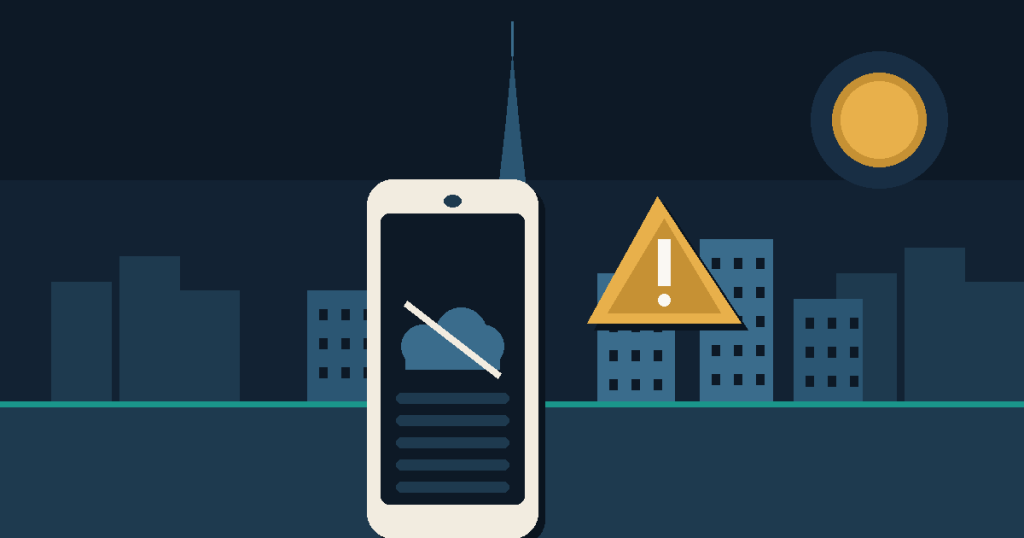
When your UAE bank app or online banking goes down, your money is not gone. This guide walks you through what to check first, how to keep paying bills and moving cash while the app is offline, what compensation you can realistically claim, and the exact escalation ladder from the bank’s call center up to the Sanadak financial ombudsman.
A bank app outage is an access problem, not a money problem. When Emirates NBD, ADCB, FAB, or any UAE bank has an app or online banking failure, your deposits stay exactly where they were, protected in your account and untouched by the technical fault. During the two-day ADCB disruption in March 2026, the bank confirmed that at no point were customer data, accounts, or the security of its systems compromised, and branches, ATMs, and card payments kept working throughout. So the first thing to do is not panic and not repeatedly log in. Confirm the outage is on the bank’s side, switch to a working channel (ATM, card, branch, or a second account), and document anything that costs you money. If you are worried specifically about whether your balance is safe rather than merely unreachable, our guide on whether your money is safe in a UAE bank covers deposit protection in full.
This article is the operational playbook for a live outage: how to confirm the app is actually down, the immediate steps to keep your finances moving, your rights under the Central Bank of the UAE Consumer Protection Standards, whether you can claim compensation for a missed payment, and how to escalate a complaint through the bank and on to Sanadak, the independent financial ombudsman. It closes with the backup-account hygiene that turns the next outage into a non-event. Rules and timelines here are current as of July 2026; confirm anything time-sensitive with your bank or the regulator.
First, confirm the app is actually down (and it is not your device)
Before you do anything else, rule out a problem on your end. An expired app version, a poor connection, a VPN, or a phone that needs a restart can look identical to a bank-side outage. Close and reopen the app, switch between Wi-Fi and mobile data, and check that the app is updated. If online banking on the web browser also fails and card payments start declining, the fault is far more likely to be the bank’s.
Then check whether other customers are affected. Banks post service notices on their official social media accounts (X and Instagram) and sometimes on the website banner before they answer the phones. Independent outage trackers such as Downdetector show spikes in real time. The March 2026 event, caused by a regional cloud data-center disruption, hit the digital apps of several banks at once while ATMs and branches stayed open, so a wave of simultaneous reports is a strong signal the problem is systemic rather than yours alone.
Answer Block: How do I know if my bank app is down or it is just me?
Restart the app, switch between Wi-Fi and mobile data, and confirm the app is updated. If web banking also fails and your card starts declining, the fault is the bank’s. Confirm it by checking the bank’s official social media for a service notice and outage trackers like Downdetector for a spike in reports.
Immediate steps to keep your money moving while the app is down
An app outage rarely takes down every channel at once. In both the March and July 2026 ADCB disruptions, card payments, ATMs, and branch services were the first to keep running or to be restored. The table below is a quick checklist to work through in order, from the fastest self-service option to a physical branch visit.
| Step | What to do | Why it helps |
|---|---|---|
| 1. Try your physical card | Use your debit or credit card in stores and online as normal | Card networks often stay live even when the app is down, so everyday spending continues |
| 2. Use an ATM | Withdraw cash or check your balance at your bank’s ATM | ATMs run on separate systems and typically kept working through the 2026 outages |
| 3. Switch to your backup account | Pay or transfer from a second account at a different bank or digital bank | A second app at an unaffected bank keeps payments moving with no waiting |
| 4. Call the bank | Phone the call center for urgent transactions and to log the outage | Creates a timestamped record if you later need to prove the fault caused a loss |
| 5. Visit a branch | Go in person for cash, a manual transfer, or a certified letter | Branch counters can process transactions the app cannot while it is offline |
If a payment is time-critical, for example rent, a credit card due date, or a school fee, do not wait for the app to come back. Pay through your card, a branch, or a backup account, and keep the receipt. If you need to send money abroad while transfers are frozen, an exchange house or a second bank is the fastest alternative; our guide on sending money from the UAE lists the working channels.
Answer Block: Can I still use my card if the banking app is down?
Usually yes. Debit and credit card networks run on separate infrastructure from the mobile app, so in-store and online card payments and ATM withdrawals often keep working during an app outage. In the March 2026 UAE bank disruptions, card services and ATMs stayed operational while the apps were offline.
Your rights during an outage under UAE Central Bank rules
Banks in the UAE operate under the Central Bank of the UAE Consumer Protection Standards, which require them to treat customers fairly, communicate clearly, and maintain business continuity so essential services can be restored quickly after a disruption. That is why banks issue public service notices during outages and prioritize restoring cards and ATMs. You have a right to clear information about the status of the fault and to raise a complaint if the outage caused you a problem.
Being honest about compensation matters here. An outage on its own, with no direct financial loss to you, does not automatically entitle you to a payout. Where you have a strong case is a direct, provable, out-of-pocket loss caused by the bank’s failure, for example a late-payment penalty on a loan or credit card because the outage stopped you paying on the due date, or a bounced transaction fee. In that situation you should raise a formal complaint and ask the bank to reverse the penalty or reimburse the fee. Keep evidence: screenshots of the error, the outage notice, and the charge you incurred. An outage is also different from a deliberately restricted account; if you cannot transact because your account has been blocked rather than because of a technical fault, see our guide on why UAE bank accounts get frozen and how to unfreeze them.
Answer Block: Can I claim compensation if a bank outage caused a late payment?
You have a realistic claim only for a direct, provable loss, such as a late-payment penalty or bounced-transaction fee caused by the outage. File a formal complaint with evidence (screenshots, the outage notice, the charge) and ask the bank to reverse it. An outage with no financial loss rarely entitles you to compensation.
How to complain and escalate: the full ladder to Sanadak
If the outage cost you money or the bank handled it badly, the complaint path is structured and free. You always start with the bank itself, and only if that fails do you go to the independent ombudsman. Under the Central Bank’s complaint management standards, the bank must acknowledge your complaint within two complete business days and send a final written response, with reasons, within 30 complete business days.
If the bank does not resolve your complaint or its answer does not satisfy you, you can escalate to Sanadak, the independent financial ombudsman unit established by the Central Bank of the UAE and operating since March 2024. You must first give the bank at least 15 calendar days from when you raised the complaint before Sanadak will take it. Sanadak is free of charge for consumers, covers all banks and insurers licensed by the Central Bank, and aims to resolve complaints within around 15 working days after accepting them. The table below sets out the escalation ladder.
| Step | Channel | Typical timeframe |
|---|---|---|
| 1. Check status | Bank app, website banner, official social media, outage trackers | Immediate |
| 2. Contact the bank | Call center, secure message, or branch to report and log the issue | Same day |
| 3. File a formal complaint | Bank’s official complaint channel, in writing, with evidence | Acknowledged within 2 business days |
| 4. Await the final response | Bank issues a written final response with reasons | Up to 30 business days |
| 5. Escalate to Sanadak | Sanadak ombudsman (online, app, or in person), free of charge | After 15 calendar days with the bank; resolved in about 15 working days |
When you complain, be specific. State the date and time of the outage, the transaction you could not complete, the exact loss in dirhams, and the outcome you want (a fee reversed, a penalty reimbursed). A vague complaint about inconvenience is far weaker than a documented late-payment penalty tied to a named outage.
Answer Block: When can I escalate a bank complaint to Sanadak?
Raise the complaint with your bank first. If it is unresolved or the response does not satisfy you, you can escalate to Sanadak after at least 15 calendar days from when you first complained. Sanadak, the Central Bank’s independent financial ombudsman, is free for consumers and covers all UAE-licensed banks and insurers.
Backup-account hygiene: how to make the next outage a non-event
The single most effective protection against a bank outage is not a rule or a refund, it is redundancy. If all your money and all your payments run through one app, a single outage stops your financial life. If you hold a second account at a different Central Bank-licensed institution, an outage at one bank is a minor inconvenience because you simply pay from the other.
A practical setup is a main account at a traditional bank plus a zero-balance digital account at an unrelated bank, such as Wio, Mashreq Neo, or Liv, kept funded with enough to cover a month of essential payments. Because these are app-based banks on separate systems, they are unlikely to fail at the same moment as your main bank. Opening one is quick; our walkthrough on how to open a bank account in Dubai covers the steps, and if you are still choosing, compare options in our guide to the best bank accounts for expats.
Two more habits close the gaps. First, keep a small cash reserve at home for the rare case where cards and ATMs are also affected. Second, know your direct debits and standing orders. Rent, loan installments, and utility payments set up as auto-debits usually process on the bank’s back-end systems and are not blocked by an app outage, but if a due date falls during a prolonged disruption, contact the biller to flag it and avoid a penalty.
Answer Block: What is the best backup if my bank app goes down?
Hold a second account at a different Central Bank-licensed bank, ideally a zero-balance digital bank such as Wio, Mashreq Neo, or Liv, funded to cover a month of essential payments. On separate systems, it is unlikely to fail at the same time as your main bank, so you can keep paying while the first app is offline.
FAQ
Is my money safe if the bank app is down?
Yes. An outage is a technical access problem, not a loss of funds. Your deposits stay in your account and are unaffected by the app failing. In the March 2026 UAE outage, banks confirmed no customer data or accounts were compromised. For how deposits are protected in general, see our deposit safety guide.
How do I know whether my bank app is down or the problem is my phone?
Restart the app, switch between Wi-Fi and mobile data, and confirm the app is updated. If web banking also fails and your card starts declining, the fault is likely the bank’s. Confirm by checking the bank’s official social media for a service notice and outage trackers such as Downdetector.
Can I still pay and withdraw cash during an outage?
Usually yes. Card payments and ATM withdrawals run on separate systems from the app and often keep working. In the 2026 UAE bank disruptions, cards, ATMs, and branches stayed operational while the mobile apps were down. A branch visit is the fallback for transactions the app cannot process.
Will I be compensated for a bank app outage?
Not automatically. An outage with no financial loss rarely entitles you to compensation. You have a realistic claim only for a direct, provable loss, such as a late-payment penalty or bounced-transaction fee caused by the outage. File a formal complaint with evidence and ask the bank to reverse the charge.
What are my rights during a bank outage in the UAE?
Under the Central Bank of the UAE Consumer Protection Standards, banks must treat you fairly, communicate clearly about the fault, maintain business continuity to restore services quickly, and handle any complaint you raise within set timeframes. You are entitled to clear status information and to a formal complaint process.
How long does a bank have to respond to my complaint?
Under Central Bank rules, the bank must acknowledge your complaint within two complete business days and send a final written response, with reasons, within 30 complete business days. If it does not resolve the issue or you are unsatisfied, you can escalate to the Sanadak ombudsman after 15 calendar days.
What is Sanadak and is it free?
Sanadak is the UAE’s independent financial ombudsman unit, established by the Central Bank and operating since March 2024. It resolves consumer complaints against all Central Bank-licensed banks and insurers free of charge. You use it only after complaining to your bank first and waiting at least 15 calendar days.
How do I escalate a complaint to Sanadak?
First complain to your bank and keep the reference. If unresolved after at least 15 calendar days, submit your complaint to Sanadak online at sanadak.gov.ae, through its app, or in person, with your evidence and the bank’s response. Sanadak reviews the case and issues a written decision, typically within around 15 working days of acceptance.
Should I keep money in more than one bank?
It is sensible. A second account at a different Central Bank-licensed bank means an outage at one bank does not stop your payments. A zero-balance digital bank such as Wio, Mashreq Neo, or Liv, funded to cover a month of essentials, is a low-cost backup on a separate system from your main bank.
Are my scheduled direct debits affected by an app outage?
Usually not. Direct debits and standing orders for rent, loans, and utilities process on the bank’s back-end systems, which are separate from the customer app, so they generally run as normal. If a due date falls during a long disruption, contact the biller to flag it and avoid a late-payment penalty.
Official Sources
The following official regulator and ombudsman pages set out the consumer rights, complaint timelines, and escalation route referenced above. Rules and timeframes are updated periodically, so use these as your primary check.
- Central Bank of the UAE – Consumer Protection Standards
- CBUAE Rulebook – Article 8: Complaint Management and Complaint Resolution
- CBUAE Rulebook – Consumer Protection Regulation
- Sanadak – UAE Independent Financial Ombudsman Unit
- Sanadak – Submit a Complaint Against a Licensed Financial Institution
- UAE Government – Raising Complaints Against Financial Institutions
- Central Bank of the UAE – Consumer Protection Portal
Information is current as of July 2026. Complaint timelines, escalation rules, and ombudsman procedures change periodically and can vary by bank and complaint type. Confirm current figures and processes directly with your bank, the Central Bank of the UAE, or Sanadak before acting. This article is general information, not financial or legal advice.