Complete guide to buying property in Dubai from initial search through title deed issuance, covering DLD registration, NOC procedures, transfer fees, and working with RERA-licensed agents.
Purchasing property in Dubai as a foreign buyer involves a structured, government-regulated process designed to protect both buyers and sellers. The Dubai Land Department (DLD) oversees all property transactions, while the Real Estate Regulatory Agency (RERA) licenses and regulates brokers and agents. Understanding each step—from finding a property to receiving your title deed—helps you navigate the process efficiently and avoid costly delays.
This guide covers the complete Dubai property registration process for foreign buyers: eligibility requirements, required documentation, the role of RERA-registered agents, RERA forms and the Memorandum of Understanding (Form F), obtaining the developer’s No Objection Certificate (NOC), DLD transfer procedures at trustee offices, all associated fees and costs, typical timelines, and using digital platforms like the Dubai REST app. Whether you’re purchasing with cash or financing through a UAE mortgage, this step-by-step walkthrough provides the procedural clarity you need.
Foreign Buyer Eligibility and Freehold Ownership
Foreign nationals of any nationality can purchase property in Dubai within designated freehold areas established under Law No. 7 of 2006 and Regulation No. 3 of 2006. These zones grant full ownership rights—including the land beneath the property—with no time limitations, inheritance rights, and the ability to sell, lease, or mortgage the property freely.
Popular freehold areas include Dubai Marina, Palm Jumeirah, Downtown Dubai, Business Bay, Jumeirah Beach Residence (JBR), Emirates Hills, Jumeirah Lakes Towers (JLT), Arabian Ranches, Dubai Hills Estate, and Jumeirah Village Circle (JVC). In 2024, Dubai expanded freehold ownership to additional areas along Sheikh Zayed Road and Al Jaddaf, converting 457 plots previously under leasehold arrangements. Before purchasing, verify that your target property falls within a designated freehold zone by checking the property status through the DLD Property Status Enquiry service or the Dubai REST app.
Non-residents can purchase property without a UAE visa, though buying property valued at AED 750,000 or above makes you eligible for a property investor visa. Properties valued at AED 2 million or more qualify for the 10-year Golden Visa, while investments of AED 1 million qualify for a 5-year visa. No prior residency, employment, or local sponsor is required to purchase property in Dubai’s freehold areas.
Step 1: Property Search and Agent Selection
The Dubai property market operates through licensed real estate brokers regulated by RERA. While not legally mandatory, working with a RERA-registered agent provides significant advantages: market expertise, access to verified listings, negotiation support, and guidance through the registration process. For foreign buyers unfamiliar with local procedures, professional representation helps avoid common pitfalls and ensures compliance with regulatory requirements.
Verifying Agent Credentials
Before engaging any agent, verify their RERA license through the DLD Licensed Real Estate Brokers directory or the Dubai REST app. Every licensed agent holds a Broker Registration Number (BRN) issued through the Trakheesi system and must display their broker e-card. The agent’s brokerage must also hold a valid real estate activity license from DLD. Unregistered agents cannot legally facilitate property transactions, and any agreements with unlicensed individuals have no legal standing.
Signing RERA Form B (Buyer-Agent Agreement)
When you appoint an agent to find properties on your behalf, you sign RERA Form B—the standardized buyer-agent agreement. This form outlines the scope of services, property requirements, commission terms, contract duration, and termination conditions. Form B protects your interests by clearly defining the agent’s obligations and your rights. The agent registers Form B through the Trakheesi system, creating an official record of your agreement. You can appoint multiple agents, but each relationship requires a separate Form B.
Property Due Diligence
Once you identify a suitable property, conduct thorough due diligence before making an offer. Verify the seller’s ownership by requesting sight of the original title deed or checking property records through the DLD. Confirm there are no outstanding mortgages, liens, disputes, or encumbrances that could complicate the transfer. For properties in jointly owned developments, check the service charge payment history to ensure no arrears exist. Your agent should assist with these verifications, but independent confirmation through official channels provides additional security.
Step 2: Making an Offer and Signing the MOU (Form F)
After agreeing on price and terms with the seller, the transaction moves to formal documentation through the Memorandum of Understanding (MOU), officially known as RERA Form F. This legally binding agreement captures all essential transaction details and initiates the property transfer process.
Form F Contents and Requirements
Form F records the agreed purchase price, property identification (unit number, plot number, building name, area), buyer and seller details, payment schedule, deposit amount, completion deadline, and consequences for default by either party. The form also specifies conditions precedent—typically obtaining the developer NOC and mortgage approval if applicable—and outlines the responsibilities of each party.
Since 2024, DLD has mandated digital MOU registration through the Dubai REST app or authorized Real Estate Services Trustee Centers. A RERA-licensed broker prepares Form F digitally, and both parties review and sign electronically through the DLD system. This digital process ensures transparency, creates an auditable record, and reduces fraud risk compared to informal paper agreements.
The 10% Security Deposit
Upon signing Form F, the buyer pays a 10% deposit—typically via manager’s cheque—held by the broker’s escrow account or the trustee office until the transaction completes. This deposit demonstrates buyer commitment and is refunded upon successful transfer. If the buyer defaults without valid legal reason, the deposit is forfeited to the seller. If the seller defaults, the buyer is entitled to a full refund and may pursue compensation for losses through the Dubai Real Estate Court or Rental Dispute Settlement Centre.
Timeline After MOU Signing
Form F typically specifies a completion deadline of 30–60 days, though parties can negotiate different terms. This period allows time for mortgage approval (if applicable), obtaining the developer NOC, preparing manager’s cheques for the final payment, and scheduling the DLD transfer appointment. Missing the deadline without extension can trigger default provisions, so build realistic buffers into your timeline.
Step 3: Mortgage Approval (If Financing)
Foreign buyers can obtain mortgage financing from UAE banks, though terms differ between residents and non-residents. Getting pre-approval before property hunting clarifies your budget and strengthens your negotiating position with sellers.
Loan-to-Value Ratios and Down Payments
UAE Central Bank regulations establish maximum loan-to-value (LTV) ratios that determine minimum down payment requirements based on residency status and property value:
| Buyer Category | Property Value | Maximum LTV | Minimum Down Payment |
|---|---|---|---|
| UAE Residents (First Property) | Up to AED 5 million | 80% | 20% |
| UAE Residents (First Property) | Above AED 5 million | 70% | 30% |
| Non-Residents | Ready properties | 50–65% | 35–50% |
| All Buyers | Off-plan properties | 50% | 50% |
Non-residents typically face stricter requirements: 35–50% down payment, higher interest rates (0.5–1% above resident rates), and more extensive documentation including proof of income from their home country, international bank statements, and credit history verification. Not all UAE banks offer non-resident mortgages—major lenders with non-resident programs include Emirates NBD, HSBC, Mashreq, FAB, and ADCB.
Mortgage Documentation Requirements
Mortgage applications typically require: valid passport copies, UAE residence visa (for residents), Emirates ID (for residents), salary certificates or employment letters, 6–12 months of bank statements, proof of address, existing liability declarations, and the signed Form F or Sale and Purchase Agreement. Self-employed applicants need additional documentation including trade licenses, audited financial statements, and company bank statements. The bank conducts property valuation (typically AED 2,500–3,500) and processes approval within 2–4 weeks.
Central Bank Directive on Broker Commissions
As of February 1, 2025, the UAE Central Bank prohibits banks from financing real estate broker commissions as part of property mortgages. This means the 2% buyer’s commission must be paid separately from your own funds rather than rolled into the mortgage loan. Budget accordingly when calculating your total cash requirement.
Step 4: Obtaining the Developer NOC
Before the DLD will register any property transfer in a jointly owned development (apartments, towers, gated communities), the seller must obtain a No Objection Certificate (NOC) from the project developer or the Owners’ Association (OA) management company. The NOC confirms that all service charges, maintenance fees, and other dues related to the property have been paid and that no violations or disputes exist.
Electronic NOC (eNOC) Process
Dubai’s eNOC system, integrated into the DLD’s Mollak platform for jointly owned properties, digitizes the NOC process. For properties registered under Mollak, the seller (or their authorized representative) applies for the eNOC through the Dubai REST app:
- Log in to Dubai REST using UAE Pass or Emirates ID
- Navigate to eNOC services and select the property
- Submit the application with required details
- The developer/OA receives notification and reviews the request
- Upon approval, the eNOC is issued electronically and linked to the property record
- The seller receives confirmation via email
Processing typically takes 3–5 working days. If outstanding charges exist, the application is rejected until dues are cleared. The eNOC remains valid for a specific period (usually 30–60 days), so timing should align with your planned transfer date.
NOC Fees
Developer NOC fees vary by developer and project, typically ranging from AED 500 to AED 5,000. DLD has not prescribed standard fees for eNOCs, leaving pricing at developers’ discretion. Some developers charge flat fees regardless of property value; others base fees on unit type or project. Confirm the exact fee with the developer before budgeting. This cost is paid by the seller as part of preparing the property for transfer.
Developer NOC vs. eNOC
For off-plan properties not yet handed over to DLD (still in developer possession), buyers obtain a traditional developer NOC directly from the developer’s office. For ready properties registered under the Mollak system (post-handover), the eNOC through Dubai REST applies. The distinction matters because procedures and processing times differ between the two.
Step 5: Property Transfer at DLD Trustee Office
With the NOC obtained, mortgage approved (if applicable), and all documentation ready, both parties proceed to a DLD-approved Real Estate Registration Trustee office to complete the ownership transfer. This is where legal ownership officially changes hands and the new title deed is issued.
Scheduling the Transfer Appointment
Your agent or conveyancer typically coordinates the transfer appointment, ensuring all parties—buyer, seller, bank representatives (if mortgages are involved), and agents—can attend simultaneously. Appointments can be booked through the trustee office or coordinated by your broker. DLD operates multiple trustee offices throughout Dubai (Business Bay, JLT, Deira, and others), so choose a convenient location.
Required Documents at Transfer
All parties must bring original documents to the trustee office:
| Document | Required From | Notes |
|---|---|---|
| Valid passport | Buyer and seller | Original required; copies not accepted for ID verification |
| Emirates ID | UAE residents | Non-residents use passport only |
| Original title deed | Seller | Current ownership document |
| Developer NOC/eNOC | Seller | Electronic version accessed through system |
| Signed Form F (MOU) | Both parties | Registered in DLD system |
| Manager’s cheques | Buyer | For purchase price, DLD fees, agent commission |
| Mortgage clearance letter | Seller (if mortgaged) | From seller’s bank confirming loan settlement |
| Bank representative authorization | Banks (if applicable) | For mortgage registration/release |
| Power of Attorney | If representative attends | Must be notarized and attested |
Trustee offices are strict about document accuracy—even minor spelling discrepancies between passport and title deed can cause delays. Double-check all details before your appointment.
The Transfer Process
At the trustee office, the following sequence occurs:
- Document verification: The trustee officer checks all documents, verifies identities, and confirms the NOC status
- Data entry: Transaction details are entered into the DLD system and audited
- Fee payment: Buyer pays DLD transfer fees (4% of property value) plus administrative charges via manager’s cheque
- Purchase price exchange: Buyer hands over manager’s cheque(s) for the remaining purchase amount to the seller
- Commission payment: Buyer pays agent commission via manager’s cheque
- Mortgage registration: If buyer is financing, the bank’s mortgage is registered against the property (0.25% registration fee applies)
- Title deed issuance: DLD issues a new title deed in the buyer’s name
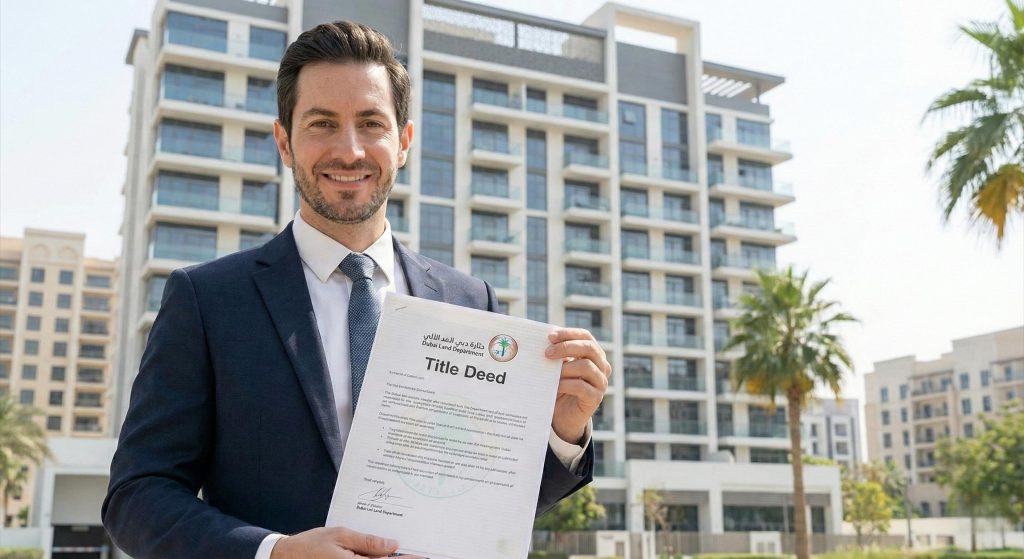
The appointment typically takes 30–90 minutes if all documentation is in order. The buyer receives an official digital title deed in PDF format with a QR code, which has the same legal validity as a printed deed. This document can be accessed through the Dubai REST app and verified through the DLD Title Deed Verification Portal.
Remote Transfer Option
DLD introduced a remote property registration system allowing transactions to be completed through audio-visual communication. Both parties can interact with the registration trustee digitally, with identity verification conducted remotely. Transaction amounts are transferred through an escrow account managed by DLD, with funds reaching the seller’s account within three working days. This option is particularly useful for overseas buyers who cannot attend in person.
Complete Fee Breakdown
Understanding all costs associated with property purchase helps you budget accurately. Beyond the purchase price, buyers face several mandatory fees:
| Fee Type | Amount | Paid By | Paid To |
|---|---|---|---|
| DLD Transfer Fee | 4% of property value (2% buyer + 2% seller) | Typically buyer pays full 4% | DLD |
| Title Deed Issuance | AED 250 | Buyer | DLD |
| Property Map Fee | AED 225 (villas/apartments) or AED 100 (land plots) | Buyer | DLD/Dubai Municipality |
| Knowledge Fee | AED 10 | Buyer | DLD |
| Innovation Fee | AED 10 | Buyer | DLD |
| Trustee Office Fee | AED 4,000 + VAT (≥AED 500,000) or AED 2,000 + VAT (<AED 500,000) | Buyer | Trustee |
| Agent Commission | 2% of property value + 5% VAT | Buyer (secondary market) | Agent/Broker |
| Mortgage Registration | 0.25% of loan amount + AED 290 | Buyer | DLD |
| Bank Processing Fee | Typically 1% of loan amount | Buyer | Bank |
| Property Valuation | AED 2,500–3,500 | Buyer | Approved Valuers |
| Developer NOC | AED 500–5,000 | Seller | Developer/OA |
| Conveyancing (optional) | AED 5,000–10,000 | Buyer | Conveyancer |
Sample Cost Calculation
For a property purchased at AED 2,000,000 with mortgage financing:
- DLD Transfer Fee (4%): AED 80,000
- Title Deed + Map + Fees: AED 495
- Trustee Office Fee: AED 4,200 (AED 4,000 + VAT)
- Agent Commission (2% + VAT): AED 42,000
- Mortgage Registration (0.25% of AED 1.6M loan + AED 290): AED 4,290
- Bank Processing (1% of loan): AED 16,000
- Valuation: AED 3,000
- Total Transaction Costs: Approximately AED 150,000 (7.5% of purchase price)
Add your down payment (20–50% depending on residency status) to calculate total cash required at closing. For off-plan purchases, the developer typically pays agent commission, reducing buyer costs.
Timeline: From Search to Title Deed
The complete property purchase process typically spans 4–8 weeks for cash buyers and 8–12 weeks when financing is involved. Here’s a realistic timeline breakdown:
| Stage | Duration | Notes |
|---|---|---|
| Property search and viewing | Variable (days to weeks) | Depends on requirements and availability |
| Offer negotiation | 1–7 days | Market-dependent |
| MOU signing (Form F) | 1–3 days | Including document preparation |
| Mortgage pre-approval | 3–7 days | Ideally obtained before property search |
| Final mortgage approval | 2–4 weeks | Including valuation and documentation |
| Developer NOC | 3–5 working days | Assuming no outstanding dues |
| Mortgage settlement (if seller has mortgage) | 5–7 working days | Bank-to-bank coordination required |
| DLD transfer appointment | 1–2 working days | Once all documents are ready |
| Title deed issuance | Same day | 30–90 minutes at trustee office |
Common delays occur due to incomplete documentation, outstanding service charges blocking NOC issuance, mortgage processing complications, or scheduling conflicts among parties. Working with experienced agents and preparing all documents in advance minimizes delays.
Using the Dubai REST App
The Dubai REST (Real Estate Self Transaction) app, developed by DLD, serves as a comprehensive digital platform for property-related services. Available on iOS and Android, the app enables buyers, sellers, owners, and tenants to access services without visiting government offices.
Key Features for Property Buyers
- Property verification: Check ownership records, title deed authenticity, and property status
- Market data: Access recent transaction prices, rental indices, and service charge information
- Broker directory: Verify RERA-licensed agents and their ratings
- eNOC applications: Apply for and track electronic NOC status
- Transaction tracking: Monitor your purchase progress through the system
- Digital documents: Access and download your title deed after transfer
- Developer information: Check project registration, escrow account details, and completion status for off-plan purchases
Foreign investors can log in using UAE Pass or title deed login options. The app provides legitimate, government-sourced information—critical when verifying property details or agent credentials. Download from the App Store or Google Play.
Working with RERA-Registered Agents
RERA regulates all real estate professionals in Dubai to ensure ethical conduct and competent practice. Understanding how the agent relationship works helps you get the most value from professional representation.
Agent Commission Structure
For secondary market (resale) transactions, the standard commission is 2% of the sale price, typically paid by the buyer. This commission is subject to 5% VAT. For off-plan purchases, the developer pays agent commission (usually 3–7%), meaning buyers pay nothing directly to agents. Commission terms must be clearly stated in RERA Forms A (seller-agent) or B (buyer-agent) before any transaction proceeds.
RERA Forms Overview
- Form A: Authorization between seller and listing agent to market the property. Sellers can sign Form A with up to three agents simultaneously.
- Form B: Agreement between buyer and agent to search for properties. Outlines buyer requirements, commission terms, and contract duration.
- Form F: The MOU between buyer and seller, capturing all transaction terms.
- Form I: Agent-to-agent collaboration agreement when multiple agents are involved in one transaction.
- Form U: Termination notice to formally end an agent agreement.
All forms are processed through the Trakheesi system, creating official records. Your agent should explain each form before you sign and ensure proper registration.
Trakheesi Permit Verification
Every property advertisement in Dubai must bear a Trakheesi permit number, confirming the agent is authorized to market that specific property. Listings without permit numbers are illegal. Before viewing any property, ask to see the Trakheesi permit or verify it through the DLD website. This simple check protects you from fraudulent listings or unauthorized agents.
FAQ
Can Foreigners Buy Property in Dubai Without a Visa?
Yes. Foreign nationals of any nationality can purchase freehold property in Dubai’s designated areas without requiring a UAE residence visa. No prior residency, employment, or local sponsor is necessary. The purchase itself may qualify you for an investor visa: properties worth AED 750,000+ qualify for a 2-year visa, AED 1 million+ for a 5-year visa, and AED 2 million+ for the 10-year Golden Visa.
How Long Does the Dubai Property Registration Process Take?
Cash purchases typically complete within 4–6 weeks from MOU signing to title deed issuance. Mortgage-financed purchases take 8–12 weeks due to bank approval, valuation, and documentation requirements. The actual transfer appointment at the DLD trustee office takes 30–90 minutes once all documents are ready. Delays usually result from incomplete paperwork, outstanding service charges, or mortgage processing complications.
What Is the Total Cost of Buying Property in Dubai for Foreign Buyers?
Beyond the purchase price, buyers should budget approximately 7–8% for transaction costs: 4% DLD transfer fee, 2% agent commission (+ VAT), trustee office fees (AED 2,000–4,200), title deed fees (AED 495), and if financing, mortgage registration (0.25% of loan + AED 290) plus bank processing (typically 1% of loan). Off-plan purchases reduce costs since developers usually pay agent commissions.
What Is the Difference Between Developer NOC and eNOC?
Developer NOC applies to off-plan properties still under developer possession (not yet handed over to DLD). The buyer obtains this directly from the developer’s office. Electronic NOC (eNOC) applies to ready properties registered under DLD’s Mollak system for jointly owned buildings. Sellers apply for eNOC through the Dubai REST app, with the developer or Owners’ Association confirming all dues are cleared. Processing takes 3–5 working days for either type.
Can I Complete the Property Transfer Remotely If I Cannot Attend in Person?
Yes. DLD offers remote property registration through audio-visual communication with registration trustees. Alternatively, you can grant notarized Power of Attorney to a representative to attend on your behalf. The POA must be properly attested—if executed outside the UAE, it requires UAE embassy attestation and Ministry of Foreign Affairs verification. Many overseas investors use this option, though it requires advance preparation of documentation.
What Happens If the Buyer or Seller Defaults After Signing the MOU?
If the buyer defaults without valid legal reason, they forfeit the 10% security deposit to the seller. If the seller defaults, the buyer is entitled to a full deposit refund and may seek compensation for losses through the Dubai Real Estate Court or Rental Dispute Settlement Centre. DLD’s electronic MOU registration ensures disputes have clear documentation. Either party can request arbitration through official channels if informal resolution fails.
Do I Need a Lawyer or Conveyancer to Buy Property in Dubai?
Legal representation is not mandatory—the DLD registration process is designed to be completed through licensed agents and trustee offices. However, many buyers, especially first-time foreign purchasers, engage conveyancers for additional peace of mind. Conveyancing services (typically AED 5,000–10,000) include document preparation, liaison with all parties, attendance at the transfer appointment, and ensuring all procedural requirements are met correctly.
How Do I Verify a Property and Seller Before Purchasing?
Request to see the original title deed and verify ownership through the DLD Property Status Enquiry service or Dubai REST app. Check for any outstanding mortgages, liens, or disputes registered against the property. Verify the seller’s identity matches the title deed. For properties in developments, confirm service charge payment status. Your RERA-registered agent should assist with due diligence, but independent verification through official DLD channels provides additional security.
Official Sources
This article references information from the following UAE government authorities and official resources:
- Dubai Land Department – Property Sale Registration
- Dubai Land Department – Sale Registration Application
- Dubai Land Department – Licensed Real Estate Brokers
- Dubai Land Department – Dubai REST App
- Dubai Land Department – Electronic NOC
- Dubai Land Department – Registration Trustee Offices
- RERA – Real Estate Regulatory Agency Services