

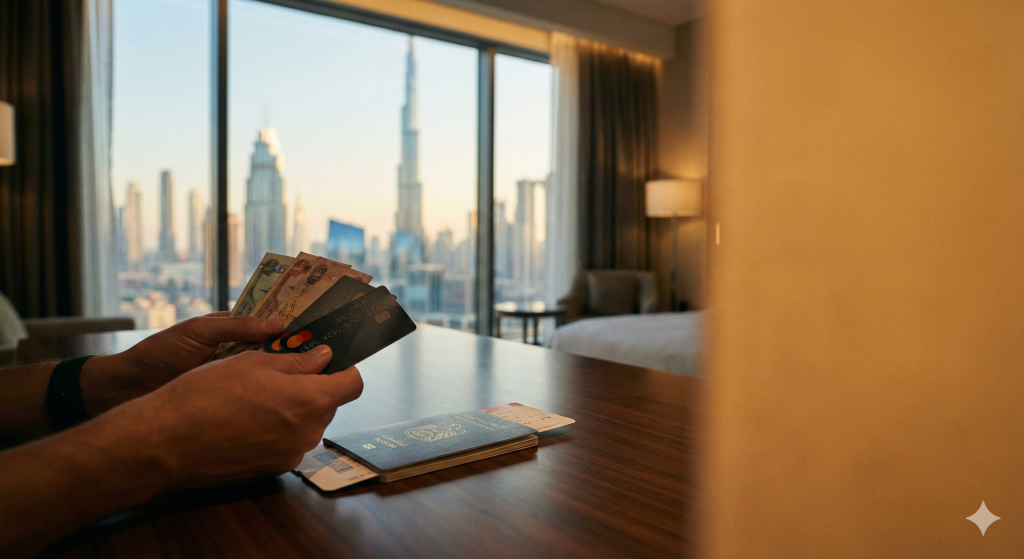
Everything you need to budget for a Dubai trip in 2025, from visa fees to daily expenses and attractions.
Planning a trip to Dubai raises one critical question before anything else: how much will it actually cost? The answer varies significantly based on your travel style, duration, and priorities. A budget-conscious traveller can experience Dubai’s highlights for around AED 400–550 (USD 110–150) per day, while mid-range visitors typically spend AED 550–900 (USD 150–250), and luxury seekers face virtually no upper limit in a city built on extravagance. Understanding these cost layers helps you allocate funds strategically and avoid unwelcome surprises.
This guide breaks down every expense category for visiting Dubai: visa requirements and fees based on your nationality, accommodation costs across different neighbourhoods and hotel tiers, daily expenses for food and transportation, major attraction ticket prices, and practical strategies to reduce spending without sacrificing experiences. Whether you’re planning a five-day holiday or an extended stay, these figures reflect current 2025 prices verified through official sources and recent traveller data.
Entry Requirements and Visa Costs
Your first expense—or non-expense—depends entirely on your passport. The UAE maintains one of the world’s more generous visa-on-arrival policies, granting citizens of over 70 countries free or low-cost entry without advance applications. Citizens from the United States, United Kingdom, European Union member states, Australia, Canada, New Zealand, Japan, South Korea, and Singapore receive visa-free entry for 30 to 90 days upon arrival, requiring only a passport valid for at least six months. GCC nationals (Saudi Arabia, Kuwait, Bahrain, Oman, Qatar) enter with just a national ID card and face no visa requirements whatsoever.
Travellers who require pre-arranged visas face different fee structures depending on duration and entry type. According to GDRFA Dubai, the official tourist visa fees are AED 200 (approximately USD 55) for a 30-day single-entry visa and AED 300 (USD 82) for a 60-day single-entry visa, plus 5% VAT. Multiple-entry options cost more: a 30-day multiple-entry visa runs AED 690 (USD 188), while a 90-day multiple-entry visa costs AED 1,740 (USD 474). These fees apply when applying through accredited tourism offices, airlines, or hotels—individual travel agencies may add service charges of AED 100–400 depending on processing speed and nationality-specific requirements.
Special Entry Provisions
Indian passport holders with valid residence permits or visas from the United States, United Kingdom, European Union countries, Australia, Canada, Japan, New Zealand, South Korea, or Singapore can obtain a visa on arrival for 14 days (extendable for an additional 14 days for AED 250). This provision has made Dubai significantly more accessible for Indian travellers who previously required sponsored visas. Overstaying any visa category incurs fines of AED 50 per day under standardised ICP regulations, plus AED 200 for an exit pass—enforcement is strict, and unpaid fines can result in detention at departure.
| Visa Type | Duration | Government Fee | Approx. USD |
|---|---|---|---|
| Visa on Arrival (eligible nationalities) | 30–90 days | Free | $0 |
| Tourist Visa – Single Entry | 30 days | AED 200 + VAT | $57 |
| Tourist Visa – Single Entry | 60 days | AED 300 + VAT | $86 |
| Tourist Visa – Multiple Entry | 30 days | AED 690 + VAT | $197 |
| Tourist Visa – Multiple Entry | 90 days | AED 1,740 + VAT | $497 |
| Visa Extension | 30 days | AED 850 | $231 |
Flight Costs to Dubai
Airfare typically represents the largest single expense for visitors from Europe and North America. Round-trip flights from major European cities—London, Paris, Frankfurt, Amsterdam—range from USD 400–700 during off-peak periods (May–September) and USD 600–1,000 during high season (November–March). Carriers serving these routes include Emirates, Etihad, British Airways, Lufthansa, and budget options like Wizz Air Abu Dhabi and flydubai, though budget carriers often route through secondary airports or require connections.
North American travellers face higher baseline costs due to distance: round-trip flights from New York, Los Angeles, Chicago, or Toronto typically run USD 800–1,200 during regular periods and USD 1,000–1,500+ during peak winter months and holidays. Emirates operates direct flights from major US hubs, with flight times of 12–14 hours; one-stop options via European carriers may save USD 100–300 but add 6–10 hours of travel time. Travellers from India enjoy significantly cheaper access, with round-trip fares from Mumbai, Delhi, or Bengaluru ranging from USD 200–400 depending on season and advance booking.
When to Book for Best Prices
Dubai’s pricing follows predictable seasonal patterns that smart travellers can exploit. Peak season runs from November through March when temperatures moderate to 20–28°C and major events like the Dubai Shopping Festival (January–February) draw crowds. Booking flights 8–12 weeks in advance during this period typically yields 15–25% savings compared to last-minute purchases. The summer months (June–August) offer the steepest discounts—often 40–50% below peak rates—but daytime temperatures exceeding 40°C limit outdoor activities to early mornings and evenings. Shoulder seasons (April–May and September–October) balance reasonable weather with moderate pricing.
Accommodation Costs by Category
Dubai’s hotel market spans from AED 150 hostels to AED 50,000+ ultra-luxury suites, with pricing heavily influenced by location, season, and booking timing. Understanding neighbourhood differences matters as much as star ratings: a four-star hotel in Deira costs substantially less than a similar property in Dubai Marina or Downtown. Published rack rates tell only part of the story—taxes and fees add approximately 20% to quoted prices, including 10% municipality fee, 10% service charge, and a tourism dirham (AED 7–20 per room per night based on hotel classification).
Budget Accommodation: AED 150–350 per Night
Budget travellers find the best value in older commercial districts like Deira and Bur Dubai, where two- and three-star hotels cluster near metro stations and traditional souks. Properties like Premier Inn Dubai International Airport, Rove Hotels, or independent operators in these areas offer clean, functional rooms for AED 150–250 during off-peak periods, rising to AED 250–350 in high season. Hostel beds start around AED 80–120 in dorm rooms, though Dubai’s hostel infrastructure remains less developed than European cities. Al Barsha and Jumeirah Village Circle provide mid-distance alternatives with slightly larger rooms at similar price points.
Mid-Range Hotels: AED 350–800 per Night
The mid-range segment offers the most varied options, with four-star properties and premium three-stars providing comfortable bases throughout the city. Expect to pay AED 350–500 for well-located hotels near metro stations in Business Bay, Dubai Marina, or JBR during normal periods, with prices climbing to AED 500–800 during peak winter months. Properties in this tier typically include breakfast, pool access, and fitness facilities. Booking through aggregators like Booking.com or Hotels.com often surfaces better rates than direct hotel bookings, and prices shown include all taxes—unlike direct bookings where fees appear at checkout.
Luxury and Ultra-Luxury: AED 800–5,000+ per Night
Dubai’s luxury hotel density rivals any city globally, with five-star properties dominating Palm Jumeirah, Downtown Dubai, and the Dubai Marina waterfront. Entry-level luxury starts around AED 800–1,200 for brands like JW Marriott, Hilton, or Waldorf Astoria. Iconic properties command premiums: Atlantis The Palm ranges from AED 1,500–4,000 depending on room category, while the Burj Al Arab—bookable only as suites—starts above AED 8,000 per night. During major events or New Year’s Eve, rates at premium properties often double or triple standard pricing, and minimum-stay requirements may apply.
| Category | Off-Peak (AED/night) | Peak Season (AED/night) | Best Areas |
|---|---|---|---|
| Budget (2–3 star) | 150–250 | 250–400 | Deira, Bur Dubai, Al Barsha |
| Mid-Range (4 star) | 350–550 | 550–900 | Business Bay, JBR, Marina |
| Luxury (5 star) | 800–1,500 | 1,500–3,000 | Downtown, Palm Jumeirah |
| Ultra-Luxury | 2,500–8,000+ | 5,000–15,000+ | Burj Al Arab, Four Seasons |
Food and Dining Expenses
Dubai’s dining scene reflects its multicultural population, offering everything from AED 10 shawarma wraps to AED 2,000 tasting menus. Food costs represent one of the most controllable budget variables: eating primarily at local restaurants in Deira or Karama keeps daily food expenses under AED 100, while dining in hotel restaurants and tourist-area establishments easily pushes that figure above AED 400. The city lacks street food vendors in the traditional sense—health regulations restrict informal food sales—but small restaurants and cafeterias in older neighbourhoods serve excellent, inexpensive meals.
Budget Dining Options
Local cafeterias and shawarma shops offer the best value, with meals averaging AED 15–35. A chicken shawarma wrap costs AED 8–15, biryani plates run AED 18–28, and South Asian thali meals with multiple dishes range from AED 20–40. Supermarkets like Carrefour, Lulu, and Spinneys provide groceries at reasonable prices—particularly the local Lulu Hypermarket, which offers competitive pricing on fresh produce, meats, and prepared foods. Fast food chains maintain pricing slightly above Western equivalents: a McDonald’s meal costs AED 30–40, while local chains like Shawarma House or Al Mallah offer similar portions for AED 20–30.
Mid-Range and Fine Dining
Casual sit-down restaurants in malls and popular areas like JBR, Dubai Marina, or City Walk charge AED 60–120 for main courses, with full meals including drinks and service running AED 100–200 per person. Dubai Mall restaurants typically price 20–30% above city averages due to location premiums. Fine dining establishments range widely: celebrity chef restaurants like Zuma, Nobu, or La Petite Maison average AED 400–700 per person, while ultra-premium experiences at venues like Al Mahara (underwater dining) or At.mosphere (Burj Khalifa) exceed AED 1,000 per person for multi-course meals. Alcohol significantly inflates restaurant bills—a glass of wine costs AED 50–80, cocktails AED 60–100, and beer AED 40–60 even at casual venues.
Transportation Costs
Dubai’s transportation infrastructure offers options across all budgets, though the city’s sprawling layout makes some form of motorised transport essential. The Dubai Metro represents exceptional value for tourists, covering major attractions along two main lines with air-conditioned stations and carriages. Taxis remain affordable by Western standards but costs accumulate quickly across a week-long stay, while ride-hailing apps offer convenience with modest premiums over standard taxis.
Dubai Metro and Public Transport
The RTA Nol card system covers metro, trams, and buses with simple zone-based pricing. A Nol Silver card costs AED 25, including AED 19 of stored credit and a AED 6 card fee—a worthwhile investment for any stay exceeding two days. Individual journey costs range from AED 3 (single zone) to AED 7.50 (full network traversal). A trip from Dubai Marina to Burj Khalifa costs AED 5, while airport to downtown runs AED 8.50. Day passes exist but offer limited value unless you plan more than four separate metro trips daily. Metro operating hours run 5:30 AM to midnight Saturday–Wednesday, extending to 1:00 AM Thursday–Friday, with Friday morning service starting at 10:00 AM.
Taxis and Ride-Hailing
RTA taxis charge AED 5 flag fall (AED 7 from airports) plus AED 2.19 per kilometre, with a minimum fare of AED 12. Typical tourist routes cost AED 35–50 from Dubai Mall to Marina, AED 50–70 from the airport to Downtown hotels, and AED 60–90 from Downtown to Atlantis on the Palm. Uber and Careem operate with slightly higher base rates but provide upfront pricing and cashless convenience. Airport shuttle services offered by most four- and five-star hotels range from free to AED 200 per vehicle—verify inclusions when booking accommodation.
Car Rental
Renting a vehicle makes sense only for day trips outside the city or extended stays where daily taxi costs would exceed rental rates. Economy cars start around AED 100–150 per day through local agencies, with international brands like Hertz or Avis charging AED 180–250. Fuel costs approximately AED 3 per litre for premium gasoline—among the world’s lowest prices. Parking in commercial areas runs AED 2–4 per hour, while hotel parking ranges from complimentary to AED 50+ daily at premium properties.
Attraction and Activity Costs
Dubai’s major attractions carry premium admission prices that can dominate a trip budget if not planned carefully. However, the city also offers substantial free experiences—public beaches, the Dubai Fountain shows, mosque visits, and souk exploration—that balance paid attractions. Purchasing combo tickets or tourist passes yields meaningful savings for visitors planning to hit multiple major sites.
Signature Attractions
The Burj Khalifa observation decks operate on a tiered pricing system based on height and time slot. “At The Top” access to levels 124–125 costs AED 169–249 depending on visit time, with sunset slots commanding premiums. “At The Top Sky” access to level 148 runs AED 399–649, including lounge access with refreshments. Booking online saves AED 40–50 compared to walk-up ticket counters, and advance reservations are essential during peak periods. The Dubai Aquarium and Underwater Zoo, located within Dubai Mall, charges AED 159 for basic access or AED 299 for enhanced experiences including cage snorkelling. The Museum of the Future, one of Dubai’s newest landmarks, costs AED 149 for general admission.
Desert and Adventure Experiences
Desert safaris rank among Dubai’s most popular activities, with evening tours including dune bashing, camel rides, entertainment, and dinner averaging AED 200–350 through reputable operators. Premium experiences with smaller groups, longer drives, or falcon displays run AED 450–800. Water sports and beach activities vary widely: jet ski rentals cost AED 350–500 per 30 minutes, parasailing runs AED 300–400, and yacht charters start around AED 500 per hour for small vessels. Theme parks—including IMG Worlds of Adventure, Dubai Parks and Resorts, and Atlantis Aquaventure—charge AED 295–395 for single-day admission.
Free and Low-Cost Activities
Dubai maintains several excellent public beaches including JBR Open Beach, Kite Beach, and La Mer—all free to access with paid options for sunbeds (AED 50–150). The Dubai Fountain presents choreographed water shows nightly at 6:00 PM, 6:30 PM, and then every 30 minutes until 11:00 PM, visible free from multiple vantage points around Burj Lake. The Al Fahidi Historical District offers glimpses of pre-oil Dubai with restored buildings, traditional architecture, and small museums—most charging under AED 20. Mall exploration costs nothing and provides air-conditioned relief from midday heat; Dubai Mall and Mall of the Emirates both feature substantial free entertainment including indoor waterfalls, aquarium viewing walls, and event spaces.
| Attraction | Adult Price (AED) | Approx. USD |
|---|---|---|
| Burj Khalifa (Levels 124–125) | 169–249 | $46–68 |
| Burj Khalifa Sky (Level 148) | 399–649 | $109–177 |
| Dubai Aquarium & Underwater Zoo | 159–299 | $43–81 |
| Museum of the Future | 149 | $41 |
| Dubai Frame | 52 | $14 |
| Desert Safari (Evening) | 200–350 | $55–95 |
| Atlantis Aquaventure | 320–395 | $87–108 |
| Ski Dubai | 220–350 | $60–95 |
| Dubai Fountain (viewing) | Free | $0 |
| Public Beaches | Free | $0 |
Sample Budgets for Different Travel Styles
Aggregating all expense categories produces realistic daily and weekly budgets across different travel approaches. These figures assume a solo traveller or per-person costs for couples and exclude international airfare, which varies too widely by origin to include meaningfully. Multiply accordingly for families, noting that children’s discounts apply at most attractions and some hotels offer kids-stay-free policies.
Budget Travel: AED 400–550 per Day (USD 110–150)
Budget travel in Dubai requires strategic choices but remains achievable without significant sacrifice. Accommodation in Deira or Bur Dubai averages AED 180–280, local restaurant meals total AED 80–120 daily, metro transport runs AED 20–35, and selective attraction visits add AED 100–150 averaged across stay length. A seven-night budget trip costs approximately AED 2,800–3,850 (USD 760–1,050) excluding flights, allowing visits to two or three paid attractions balanced against free experiences like beach days, mall exploration, and souk visits.
Mid-Range Travel: AED 700–1,100 per Day (USD 190–300)
Mid-range visitors enjoy significantly more flexibility with comfortable four-star accommodation averaging AED 400–600, mixed dining between local restaurants and tourist-area venues totalling AED 150–250, taxi/metro combination transport at AED 50–100, and more comprehensive attraction access averaging AED 150–250 daily. A seven-night mid-range trip totals AED 4,900–7,700 (USD 1,330–2,100) excluding flights, supporting visits to most major attractions, a desert safari, and several nicer dining experiences.
Luxury Travel: AED 2,000–5,000+ per Day (USD 545–1,360+)
Luxury travel in Dubai operates on an essentially unlimited scale. Five-star beach resorts average AED 1,200–2,500, fine dining runs AED 400–800 daily, private transfers and premium experiences add AED 500–1,500, and VIP attraction access or exclusive activities contribute AED 400–1,000+. A seven-night luxury trip starts around AED 14,000 (USD 3,800) for entry-level luxury and exceeds AED 35,000 (USD 9,500) for comprehensive premium experiences, with ultra-luxury choices pushing well beyond these figures.
Money-Saving Strategies
Strategic planning reduces Dubai trip costs by 20–40% without meaningfully compromising experiences. Timing represents the largest single variable: visiting during summer months (June–August) cuts accommodation costs roughly in half compared to peak winter season, though outdoor activity tolerance decreases correspondingly. Shoulder months—April–May and September–October—balance moderate weather with reasonable pricing and thinner crowds at major attractions.
Accommodation location drives significant savings: a four-star hotel in Al Barsha costs 30–40% less than equivalent properties in Dubai Marina while remaining two metro stops from Mall of the Emirates. Booking sites often surface better rates than hotel direct bookings, and prices displayed typically include all taxes—eliminating the 20% surprise that catches direct bookers. For stays exceeding five nights, serviced apartments or vacation rentals reduce per-night costs and enable self-catering for some meals.
Attraction costs decrease substantially through advance online booking, combo ticket packages, and tourist passes. The Go Dubai or Dubai Explorer passes cost AED 680–1,100 depending on attraction count and provide 15–30% savings for visitors planning to see multiple major sites. Many attractions offer discounted morning or weekday rates—Burj Khalifa’s non-prime time slots cost AED 50–80 less than sunset appointments. Avoiding hotel dining for at least half your meals and seeking out local restaurants in Deira, Satwa, or Karama cuts food expenses dramatically while providing more authentic culinary experiences.
FAQ
Is Dubai Expensive Compared to Other Major Cities?
Dubai’s costs fall between expensive European cities like London or Paris and moderately priced destinations like Bangkok or Istanbul. Transport and local food cost less than Western Europe, while hotels and attractions often match or exceed London pricing. The main budget differentiator is alcohol, which carries heavy taxation in Dubai—expect to pay double or triple European prices for drinks in licensed venues. Budget-conscious visitors who skip alcohol and dine at local restaurants find Dubai surprisingly affordable.
How Much Money Should I Bring for a Week in Dubai?
After prepaying accommodation, budget travellers should allocate AED 2,000–3,000 (USD 545–820) for a week covering food, transport, and selective attractions. Mid-range visitors need AED 3,500–5,500 (USD 950–1,500), while luxury travellers typically prepay most expenses but should carry AED 5,000–10,000+ (USD 1,360–2,720) for incidentals, premium experiences, and spontaneous purchases. Credit cards work virtually everywhere, reducing the need for large cash holdings.
Do I Need Travel Insurance for Dubai?
Travel insurance is strongly recommended though not legally required for tourist visa holders. Dubai’s healthcare system provides excellent care but at premium prices—a hospital visit without insurance can cost AED 1,000–5,000+ depending on treatment required. Adventure activities like desert safaris and water sports carry inherent risks that standard travel policies may not cover; verify activity exclusions before departure and consider supplemental coverage if planning extensive adventure tourism.
What Currency Should I Carry in Dubai?
The UAE Dirham (AED) is the only accepted currency, though US Dollars can be exchanged easily at competitive rates. Credit and debit cards enjoy universal acceptance in tourist areas, hotels, restaurants, and attractions. ATMs throughout the city dispense Dirhams with typical international transaction fees of 2–3%. Exchange offices in major malls (Dubai Mall, Mall of the Emirates, Gold Souk area) offer better rates than airport exchanges—avoid exchanging at Dubai International Airport where rates run 5–10% worse than city rates.
When Is the Cheapest Time to Visit Dubai?
Summer months from June through August offer the lowest prices across all categories—accommodation drops 40–50% below peak rates, flight prices decrease significantly, and attractions face minimal queues. The trade-off is extreme heat exceeding 40°C during daytime, limiting outdoor activities to early morning or evening hours. For balanced value, September–October and April–May provide moderate weather with pricing 20–30% below winter peaks and substantially lighter tourist crowds.
Are Tips Expected in Dubai?
Tipping remains optional but increasingly common in tourist-facing services. Restaurant bills often include a 10% service charge—additional tipping is appreciated but not obligatory. For exceptional service, AED 10–20 per interaction suits housekeeping, porters, and tour guides; taxi drivers do not expect tips but appreciate rounding up the fare. Spa treatments and salon services conventionally warrant 10–15% gratuity if service charge was not included.
How Much Does a Desert Safari Cost in Dubai?
Evening desert safaris including dune bashing, sandboarding, camel rides, entertainment, and dinner cost AED 200–350 (USD 55–95) through reputable operators when booked directly or through hotel concierges. Rates below AED 150 often indicate overcrowded tours with minimal inclusions. Premium small-group safaris, overnight camping experiences, or exclusive falcon experiences range from AED 500–1,500 depending on inclusions and exclusivity.
Is Public Transport Sufficient for Tourists in Dubai?
The Dubai Metro covers most major tourist areas including Downtown (Burj Khalifa), Dubai Mall, Dubai Marina, JBR, and both airport terminals. However, some attractions require taxi connections from metro stations—notably Palm Jumeirah, where the Palm Monorail connects to the metro system. A combination of metro for major routes and taxis for last-mile connections provides optimal cost-convenience balance for most visitors. Renting a car adds complexity without significant advantage unless planning day trips to Abu Dhabi, RAK, or other emirates.
Information in this guide reflects current 2025 pricing and policies. Visa regulations, attraction fees, and transportation costs are subject to change. Verify specific requirements through official UAE government sources (u.ae, ICP, GDRFA) before finalising travel arrangements.