

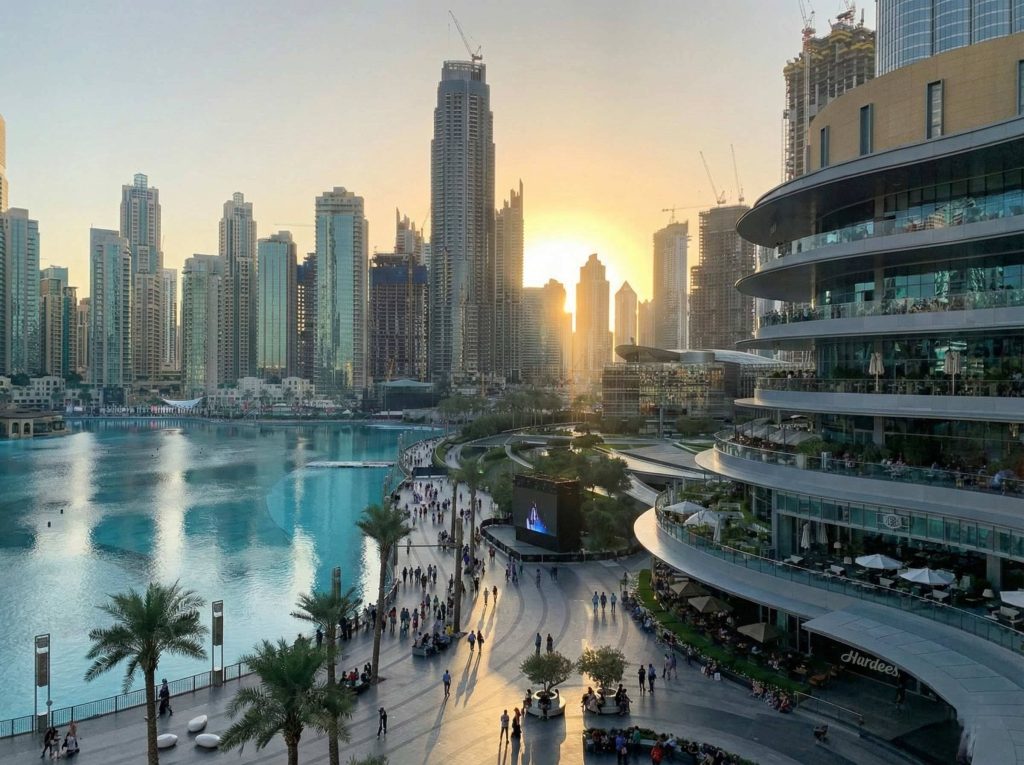
Complete neighborhood guide for expatriates choosing their Dubai residence based on budget, lifestyle, and family needs
Choosing the right neighborhood in Dubai determines your daily quality of life more than any other relocation decision. Between Dubai Marina’s waterfront energy and Arabian Ranches’ suburban calm, rental costs vary by 100-150%, commute times differ by 45 minutes, and lifestyle options range from pedestrian-friendly metro access to car-dependent villa communities.
This guide covers Dubai’s most popular expat neighborhoods segmented by profile: young professionals prioritizing nightlife and work proximity, families seeking schools and green spaces, and budget-conscious residents balancing affordability with quality. We analyze rental costs, transportation connectivity, amenities, and honest trade-offs for each area based on 2025 market data.
Understanding Dubai’s Expat Neighborhood Landscape
Dubai’s residential areas divide broadly into three zones: New Dubai (west of Trade Centre), Old Dubai (Deira and Bur Dubai), and emerging communities (inland developments). Expats concentrate in New Dubai neighborhoods along Sheikh Zayed Road corridor and waterfront areas, where infrastructure, international schools, and Western-style amenities are established.
The Dubai Metro Red Line connects most expat-popular areas, running from Rashidiya through key stations at Dubai Marina, Jumeirah Lakes Towers, Business Bay, and Downtown Dubai. Communities without metro access require private vehicles for daily commutes. Traffic congestion during peak hours (7:30-9:30 AM and 5:30-8:00 PM) adds 30-60 minutes to drives between Dubai Marina and business districts like DIFC or Business Bay.
Rental prices increased 10-18% in 2024-2025 depending on property type and location. As of early 2025, average annual costs range from AED 45,000 for studios in emerging areas to AED 130,000+ for one-bedrooms in premium waterfront locations. Villa rentals span AED 150,000-500,000 annually based on community prestige and property size.
Metro Connectivity vs Car Dependency
Neighborhoods along the Red Line metro—Dubai Marina, JLT, Downtown Dubai, Business Bay, and Al Barsha—enable car-free living for professionals working in nearby business districts. Metro frequency runs every 4-7 minutes during peak hours. Communities like Arabian Ranches, Dubai Hills Estate, and JVC lack direct metro access, requiring 15-30 minute drives to reach the nearest station.
Jumeirah Beach Residence benefits from both metro access and the Dubai Tram, which connects Marina to Palm Jumeirah and Mall of Emirates. This multi-modal transportation makes JBR one of Dubai’s most walkable neighborhoods for daily errands and beach access.
Best Neighborhoods for Young Professionals and Singles
Young professionals typically prioritize work proximity, social opportunities, and lifestyle amenities over space and schools. These neighborhoods balance vibrant atmospheres with reasonable commutes to Dubai’s main business districts.
Dubai Marina: Premium Waterfront Living
Dubai Marina remains the most popular choice for single expats and young couples seeking Dubai’s quintessential high-rise, waterfront lifestyle. The 3-kilometer man-made canal accommodates over 70,000 residents in towers reaching 80+ floors. Two metro stations serve the community—DAMAC Properties and Sobha Realty—plus the Dubai Tram loops through the entire district.
One-bedroom apartments in Marina towers cost AED 90,000-130,000 annually as of 2025. Premium towers with direct marina views (Princess Tower, The Torch, Cayan Tower) command 15-20% higher rents than buildings on the outer edges near Jumeirah Lakes Towers. Studios range AED 65,000-90,000 annually.
The Marina Walk—a 7-kilometer waterfront promenade—concentrates restaurants, cafes, and fitness facilities at ground level. This pedestrian-friendly design allows residents to access groceries, dining, and entertainment without vehicles. However, traffic congestion and limited parking create challenges during peak hours and weekends when tourists flood the area.
Commute times: 18 minutes by metro to Dubai Internet City, 25 minutes to DIFC, 30 minutes to Downtown Dubai during off-peak hours. Add 15-20 minutes during morning rush.
Best for: High-earning singles (AED 25,000+ monthly salary) who value walkability, dining diversity, and nightlife access. Not ideal for families with young children due to limited green spaces and crowded atmosphere.
Business Bay: Work-Life Integration
Business Bay positions residents directly within Dubai’s secondary business district, offering one of the city’s shortest commutes for professionals working in finance, consulting, or tech. The area combines residential towers with office buildings along the Dubai Water Canal.
One-bedroom apartments cost AED 85,000-115,000 annually, positioning Business Bay as slightly more affordable than Marina while maintaining proximity to business districts. The Business Bay metro station connects directly to DIFC in 3 stops and Downtown Dubai in 2 stops.
Unlike Marina’s resort atmosphere, Business Bay caters to working professionals with executive apartments, co-working spaces, and business lunch venues. Evening and weekend activity levels drop significantly compared to tourist-heavy areas. Views of Burj Khalifa from canal-facing apartments command premium rents.
Best for: Professionals prioritizing minimal commute times and preferring a more business-oriented environment over leisure-focused neighborhoods.
Jumeirah Lake Towers (JLT): Value Alternative to Marina
JLT delivers marina-style high-rise living at 20-30% lower costs than Dubai Marina proper. Located directly behind Marina across Sheikh Zayed Road, the community features modern towers surrounding man-made lakes with pedestrian promenades.
One-bedroom apartments range AED 70,000-95,000 annually, with studios from AED 55,000-75,000. Two metro stations serve JLT—DMCC and JLT Station—providing identical connectivity to Marina but without direct waterfront access. The Dubai Tram connects JLT residents to Marina, JBR beach, and Mall of Emirates within 10-15 minutes.
JLT attracts young professionals and couples seeking modern amenities without Marina’s premium pricing. The community offers international dining along lakeside promenades, community parks, and proximity to golf courses. However, it lacks beach access and has fewer entertainment options than Marina proper.
Best for: Budget-conscious professionals (AED 15,000-20,000 monthly salary) wanting new Dubai’s infrastructure without premium waterfront costs. Good stepping stone before upgrading to Marina.
Barsha Heights (Tecom): Metro-Connected Affordability
Barsha Heights occupies the free zone area near Mall of Emirates, offering one of New Dubai’s most affordable rental markets with metro connectivity. One-bedroom apartments cost AED 60,000-80,000 annually—30-40% less than Marina equivalents.
The neighborhood serves as a practical choice for professionals working in Dubai Internet City, Dubai Media City, or Knowledge Village, all within 5-10 minutes by metro. Barsha Heights lacks beach access and scenic views, positioning it as purely functional housing rather than lifestyle-focused living.
Serviced apartments are common in Barsha Heights, providing furnished options ideal for professionals on short-term assignments. The area suits expats prioritizing budget optimization over Dubai’s tourist-facing amenities.
Best Neighborhoods for Expat Families
Families prioritize international school access, safe green spaces, community atmosphere, and property sizes accommodating children. These communities trade proximity to nightlife for suburban planning, parks, and family amenities.
Arabian Ranches: Premium Villa Community
Arabian Ranches ranks among Dubai’s most established family villa communities, offering spacious gated neighborhoods with Mediterranean, Arabian, and Spanish-inspired architecture. The 1,650-acre development comprises 15 sub-communities, each featuring distinct villa styles and community facilities.
Three-bedroom villas rent for AED 275,000-355,000 annually, while four-bedroom properties range AED 325,000-450,000. Five-bedroom villas in premium clusters like Golf Homes and Polo Homes exceed AED 500,000 annually. Most properties include private gardens and parking, with some featuring private pools.
Education access drives Arabian Ranches’ family appeal. Jumeirah English Speaking School (JESS), Dubai British School, and GEMS Dubai American Academy operate within or near the community. The Ranches Souk provides convenient retail including Carrefour supermarket, cafes, and medical facilities without leaving the neighborhood.
Arabian Ranches lacks metro connectivity. Residents require private vehicles for commutes to business districts—approximately 25-30 minutes to Dubai Marina, 30-35 minutes to DIFC, and 35-40 minutes to Downtown Dubai during off-peak hours. The F30 bus route connects to Mall of Emirates Metro Station, but public transportation remains impractical for daily use.
Best for: Families with AED 40,000+ monthly household income prioritizing space, privacy, top-tier schools, and established community atmosphere over urban convenience.
Dubai Hills Estate: Modern Master-Planned Community
Dubai Hills Estate represents newer master-planned development combining apartments, townhouses, and villas around an 18-hole championship golf course. The community balances suburban family living with relatively central location—closer to business districts than Arabian Ranches.
Two-bedroom apartments rent for AED 140,000-180,000 annually, three-bedroom apartments AED 180,000-230,000, while three-bedroom villas start around AED 280,000-350,000 annually. The community features modern infrastructure, extensive cycling paths, parks, and the Dubai Hills Mall with premium retail and dining.
Healthcare access includes King’s College Hospital Dubai within the community, Mediclinic Dubai Hills, and American Hospital clinics. International schools nearby include GEMS Founders School, Fairgreen International School, and Jumeirah English Speaking School branches.
Dubai Hills Estate lacks dedicated metro stations. Al Khail Road and Mohammed Bin Zayed Road provide highway access to Downtown (15-20 minutes), Business Bay (18-22 minutes), and Dubai Marina (25-30 minutes) during off-peak hours.
Best for: Families seeking newer builds, modern community planning, and proximity to Dubai’s center without sacrificing suburban family amenities. Good balance between Arabian Ranches’ space and business district access.
Jumeirah Village Circle (JVC): Budget Family Option
JVC offers Dubai’s best value for family-friendly community living, combining townhouses, villas, and apartments at 30-50% below premium villa communities. Two-bedroom apartments rent for AED 75,000-90,000 annually, three-bedroom apartments AED 95,000-120,000, while three-bedroom villas range AED 140,000-180,000.
The circular community design centers around parks, playgrounds, and landscaped green spaces. International schools within or near JVC include GEMS Metropole School, Sunmarke School, Arcadia School, and Nord Anglia International School. Medical facilities include Right Health clinics and Karama Medical Center branches.
JVC’s main drawback involves traffic congestion. Despite proximity to major roads, peak-hour traffic frequently adds 30-60 minutes to commutes due to limited entry/exit points and ongoing construction in surrounding areas. The community lacks metro access—the J01 bus route connects to Mall of Emirates metro station, requiring 25-30 minutes.
Mall of Emirates and Dubai Marina sit 15-20 minutes away during off-peak hours, providing shopping and entertainment access without long-distance travel. JVC attracts young families and middle-income professionals balancing budget constraints with community atmosphere.
Best for: Young families with AED 20,000-30,000 monthly household income seeking community living, parks, and schools at affordable rates. Willing to accept traffic complications for budget savings.
Mirdif: Established Suburban Community
Mirdif represents one of Dubai’s older family communities, offering gated sub-communities with established infrastructure, mature landscaping, and strong neighborhood identity. The area appeals to families seeking quieter, more grounded residential environments away from Dubai’s tourist districts.
Three-bedroom villas rent for AED 180,000-240,000 annually, while three-bedroom apartments range AED 110,000-150,000. Mirdif provides practical, family-focused living without premium community pricing.
The neighborhood offers convenient access to Mushrif Park (one of Dubai’s largest green spaces), Mirdif City Centre mall for retail needs, and various healthcare facilities. International schools in or near Mirdif include Raffles International School and Greenfield International School.
Mirdif sits inland from Dubai’s main business corridors, requiring 30-40 minute drives to reach DIFC, Downtown, or Marina during off-peak hours. Limited metro connectivity positions this as a car-dependent community, though bus routes serve the area.
Best for: Families valuing established, quiet neighborhoods with mature amenities over proximity to Dubai’s central business districts. Good choice for families with flexible work arrangements or longer commute tolerance.
Al Barsha: Centrally Located Family Hub
Al Barsha occupies strategic central positioning between Dubai Marina and Downtown Dubai, offering family-friendly residential areas with excellent school density and metro connectivity. Two metro stations serve Al Barsha—Mall of Emirates and Sharaf DG stations.
Two-bedroom apartments rent for AED 85,000-110,000 annually, three-bedroom apartments AED 115,000-150,000, while villas range AED 160,000-220,000. The area provides more affordable family housing than Dubai Hills or Arabian Ranches while maintaining better connectivity.
International school concentration includes Dubai British School, Jumeirah English Speaking School branches, and various nurseries. Mall of Emirates provides convenient retail, dining, and entertainment including Ski Dubai. Medical facilities cluster around the area with Mediclinic Parkview Hospital and various specialty clinics.
Best for: Families wanting central location, metro access, and school proximity without premium villa community costs. Good middle-ground option balancing multiple priorities.
Budget-Friendly Neighborhoods for Cost-Conscious Expats
These areas offer the most affordable entry points for Dubai living, attracting young professionals, entry-level expats, and budget-conscious families willing to trade location prestige and premium amenities for cost savings.
Dubai Silicon Oasis (DSO): Tech Hub Affordability
Dubai Silicon Oasis functions as a technology free zone with integrated residential communities offering modern apartments at below-market rates. Two-bedroom apartments rent for AED 75,000-85,000 annually, studios for AED 45,000-60,000.
The community features planned infrastructure with parks, running tracks, a community mall, and tech campus facilities. DSO attracts young professionals working in technology, startups, or Dubai’s emerging tech sector.
Location represents DSO’s main limitation—situated inland east of Dubai’s main business corridors, requiring 35-45 minute drives to Marina or Downtown during off-peak hours. Limited metro connectivity necessitates private vehicles for most residents.
Best for: Tech professionals, entry-level expats, or budget-conscious singles accepting longer commutes for significant rental savings. Good short-term option while establishing Dubai career.
Dubai Sports City: Active Lifestyle Budget Option
Dubai Sports City combines residential living with sports facilities including cricket stadium, golf courses, tennis academy, and fitness centers. One-bedroom apartments rent for AED 55,000-75,000 annually, two-bedroom units AED 80,000-100,000.
The community attracts sports-oriented expats and young professionals valuing fitness amenities over location prestige. Parks, cycling tracks, and sports facilities support active lifestyles. However, Sports City sits far from business districts—45-50 minutes to Marina or Downtown during peak hours.
Best for: Fitness-focused singles and couples willing to accept extended commutes for affordable rents and integrated sports facilities.
Al Barsha South: Emerging Value Area
Al Barsha South represents newer development offering budget-friendly apartments and villas with central positioning near Mall of Emirates and connection roads to Marina. One-bedroom apartments rent for AED 60,000-80,000 annually, two-bedroom units AED 85,000-110,000.
The area provides supermarkets, dining options, schools, and healthcare centers at developing community pricing. Metro access via Mall of Emirates station sits 10-15 minutes by bus or taxi. Infrastructure continues expanding with new retail and residential projects.
Best for: Budget-conscious expats wanting reasonable proximity to central Dubai without premium neighborhood costs. Good value for money with improving infrastructure.
Deira: Old Dubai Budget Living
Deira represents Dubai’s oldest commercial district, offering the city’s most affordable housing options with extensive metro connectivity. Studio apartments rent for AED 25,000-35,000 annually, one-bedroom units AED 40,000-60,000.
Multiple metro stations serve Deira, providing excellent public transportation coverage. The area features traditional souks, diverse street-level retail, and strong South Asian expat communities. However, infrastructure dates from the 1980s-1990s with older building stock and less modern amenities compared to New Dubai.
Best for: Extreme budget optimization, entry-level expats, or those preferring Dubai’s traditional commercial atmosphere over modern master-planned communities. Essential metro connectivity without car ownership.
Key Factors for Neighborhood Selection
Commute Time Reality Check
Dubai’s traffic patterns significantly impact daily quality of life. Sheikh Zayed Road—the main artery connecting most expat neighborhoods—experiences heavy congestion from 7:30-9:30 AM heading toward business districts and 5:30-8:00 PM returning to residential areas. What appears as a 20-minute drive on maps regularly extends to 50-60 minutes during these windows.
Metro travel remains more predictable, with consistent 4-7 minute frequencies during peak hours. However, communities without direct metro access require either bus connections (adding 20-30 minutes) or driving to the nearest station, negating time benefits.
| From Neighborhood | To DIFC (Off-Peak) | To DIFC (Peak) | Metro Available |
|---|---|---|---|
| Dubai Marina | 25 minutes | 45-55 minutes | Yes (30 min) |
| Business Bay | 8 minutes | 15-20 minutes | Yes (10 min) |
| JVC | 20 minutes | 50-70 minutes | No |
| Arabian Ranches | 30 minutes | 55-70 minutes | No |
| Dubai Hills Estate | 18 minutes | 35-45 minutes | No |
| Al Barsha | 15 minutes | 30-40 minutes | Yes (20 min) |
School Access for Family Decisions
International school proximity determines many family location choices. Top-rated schools concentrate in Arabian Ranches, Jumeirah, Al Barsha, and Dubai Hills Estate. Application waiting lists for popular institutions extend 1-2 years, requiring advance planning before relocating.
School transportation costs add AED 6,000-12,000 annually per child depending on distance. Families living near schools eliminate these expenses while reducing daily logistics complexity. However, premium school-adjacent neighborhoods command 15-25% rental premiums.
Lifestyle Priorities: Urban vs Suburban
Dubai’s neighborhoods divide sharply between high-density urban living (Marina, Downtown, JBR) and suburban villa communities (Arabian Ranches, Mirdif, Dubai Hills). Urban neighborhoods prioritize walkability, dining diversity, and entertainment access but offer limited green space and smaller living areas. Suburban communities provide private gardens, community parks, and family-focused amenities but require driving for most activities.
Single professionals and couples without children typically prefer urban density for social opportunities and shorter commutes. Families with school-age children gravitate toward suburban communities offering space, safety, and established expat networks.
Budget-to-Lifestyle Balance
A useful guideline: housing costs should not exceed 30-35% of gross monthly income for comfortable Dubai living. This leaves sufficient budget for vehicle expenses (AED 1,500-2,500 monthly including loan, insurance, fuel), groceries (AED 1,500-3,000 monthly for couples), dining (AED 1,000-3,000 monthly), and savings.
For example, professionals earning AED 20,000 monthly should target housing under AED 6,000-7,000 monthly (AED 72,000-84,000 annually), pointing toward JLT, Barsha Heights, or JVC options. Those earning AED 35,000+ monthly can comfortably afford Marina or Downtown (AED 90,000-120,000 annually) while maintaining balanced budgets.
Additional Costs Beyond Rent
Chiller Fees and District Cooling
Many Dubai Marina, JBR, and Downtown towers use district cooling systems rather than individual AC units. Chiller fees cost AED 1,500-2,500 monthly during summer months (May-October), dropping to AED 800-1,200 during winter. These charges apply separately from rent and DEWA (Dubai Electricity and Water Authority) bills.
Villa communities and older apartment buildings without district cooling pay higher electricity bills but avoid separate chiller fees. Total cooling costs typically balance out, but tenants should clarify which system applies before signing leases.
Security Deposits and Agency Fees
Dubai rental agreements require 5% of annual rent as refundable security deposit, payable upfront alongside first rent payment. Tenants also pay 5% agency commission to real estate agents facilitating the lease. Combined, these initial costs equal 10% of annual rent—AED 9,000-13,000 for typical one-bedroom apartments in mid-range areas.
DEWA connection fees add approximately AED 2,000-4,000 for initial utility setup, refundable upon moving out if no outstanding bills remain.
Parking Costs
Most residential buildings include one parking space per apartment in rent. Additional spaces cost AED 3,000-8,000 annually in premium areas like Marina and Downtown. Villa communities typically include 2-3 parking spaces within property boundaries.
Practical Neighborhood Selection Process
Start by defining non-negotiable requirements: budget ceiling, commute time tolerance, metro necessity, school requirements (if applicable), and lifestyle preferences (urban/suburban). This narrows options to 3-5 viable neighborhoods.
Visit shortlisted areas during different times: weekday mornings (test commute), weekday evenings (assess noise and activity levels), and weekends (evaluate family amenities and atmosphere). Walk common routes—grocery stores, metro stations, parks—to verify daily convenience claims.
Check building-specific factors through property viewing: DEWA versus chiller cooling systems, elevator conditions (critical for high-rises), parking availability, gym and pool facilities, and building management responsiveness. Older buildings may offer lower rents but require more maintenance tolerance.
For families, visit schools before committing to neighborhoods. Waiting list lengths, curriculum options, and campus facilities vary significantly between institutions. Some expat families reverse-engineer location decisions by selecting schools first, then finding housing within 15-20 minute radius.
Neighborhood Comparison Summary
| Neighborhood | 1BR Annual Rent | Metro Access | Best For |
|---|---|---|---|
| Dubai Marina | AED 90,000-130,000 | Yes | High-earning singles, lifestyle-focused professionals |
| JBR | AED 95,000-135,000 | Yes (Tram) | Beach lovers, singles/couples, tourist atmosphere tolerance |
| Business Bay | AED 85,000-115,000 | Yes | Professionals prioritizing commute minimization |
| JLT | AED 70,000-95,000 | Yes | Budget-conscious professionals, Marina alternative |
| Downtown Dubai | AED 100,000-140,000 | Yes | High-earning professionals, iconic Dubai lifestyle |
| Arabian Ranches | N/A (Villa community) | No | Premium families, space priority, top schools |
| Dubai Hills Estate | AED 140,000-180,000 | No | Families wanting modern builds, central-ish location |
| JVC | AED 55,000-75,000 | No | Budget families, traffic tolerance |
| Al Barsha | AED 70,000-95,000 | Yes | Families balancing budget, location, schools |
| Dubai Silicon Oasis | AED 60,000-75,000 | No | Tech professionals, budget priority |
FAQ
What Is the Most Affordable Expat Neighborhood in Dubai?
Deira offers Dubai’s lowest rental costs with studios from AED 25,000-35,000 annually and one-bedroom apartments AED 40,000-60,000. Dubai Silicon Oasis, JVC, and Al Barsha South provide budget options in newer developments, with one-bedroom apartments ranging AED 55,000-80,000 annually. These areas sacrifice location prestige and commute convenience for significant cost savings compared to premium waterfront neighborhoods.
Can I Live in Dubai Without a Car?
Yes, but neighborhood selection becomes critical. Dubai Marina, JBR, Downtown Dubai, Business Bay, JLT, and Al Barsha offer metro connectivity enabling car-free living. These areas concentrate work, dining, and entertainment within walking distance or short metro rides. Communities like Arabian Ranches, Dubai Hills Estate, JVC, and Mirdif require private vehicles for daily errands, school runs, and commuting. Metro frequency runs every 4-7 minutes during peak hours, making public transportation viable for metro-accessible neighborhoods.
Where Do American Expat Families Typically Live?
American families concentrate in Arabian Ranches, Emirates Living (The Springs, The Meadows, The Lakes), Dubai Hills Estate, and Jumeirah due to spacious villa options, international schools following American or British curricula, and established expat communities. These neighborhoods offer suburban layouts familiar to North American residential patterns with private gardens, community pools, and neighborhood parks. Jumeirah provides beachfront proximity while maintaining family-friendly atmosphere.
How Much Should I Budget Monthly for Dubai Living as a Single Professional?
Single professionals should budget AED 8,000-18,000 monthly depending on lifestyle choices. This breaks down as: housing AED 5,000-10,000 (one-bedroom in mid-range area), transportation AED 800-2,000 (metro/taxi or vehicle costs), groceries AED 800-1,500, dining/entertainment AED 1,000-3,000, and utilities AED 400-1,200. Higher budgets accommodate premium neighborhoods like Marina or Downtown, frequent dining out, and lifestyle activities. Lower budgets target JLT, Barsha Heights, or JVC with moderate entertainment spending.
What Neighborhoods Have the Shortest Commute to Dubai Marina for Work?
JLT offers the shortest commute to Dubai Marina—5-10 minutes by Dubai Tram or metro during off-peak hours. Living within Dubai Marina itself eliminates commute entirely if working there. Barsha Heights and JBR provide 10-15 minute commutes via metro or tram. Business Bay requires 20-25 minutes by metro. Communities like JVC, Arabian Ranches, or Dubai Silicon Oasis require 30-50 minutes driving during peak hours.
Are Chiller Fees Included in Rent?
No, chiller fees are separate charges paid directly to district cooling providers. Most Dubai Marina, JBR, and Downtown buildings use district cooling systems with monthly chiller fees ranging AED 1,500-2,500 during summer months. Rental listings should specify whether the property uses district cooling (separate chiller fees) or individual AC units (included in DEWA electricity bills). Always clarify this before signing leases as chiller fees significantly impact total housing costs.
Which Neighborhoods Offer the Best Rental Value for Families?
JVC delivers the best value proposition for families—community atmosphere with parks, schools, and townhouse options at 30-50% below premium villa communities. Two-bedroom apartments rent for AED 75,000-90,000 annually, three-bedroom villas AED 140,000-180,000. Al Barsha provides excellent value combining central location, metro access, and school proximity at moderate costs. Mirdif offers established infrastructure and family amenities at reasonable rates. These neighborhoods balance affordability with family-essential features better than premium options like Arabian Ranches or Dubai Hills Estate.
How Do I Verify School Availability Before Choosing a Neighborhood?
Contact target schools directly to check current waiting list status and admission requirements before committing to housing. Popular international schools maintain 1-2 year waiting lists for certain grade levels. Some schools prioritize applicants living within specific radius or zoning areas. Visit school campuses during selection process to assess facilities, curriculum approach, and campus atmosphere. Many expat families secure school admission first, then search for housing within 15-20 minute commute radius to minimize daily logistics.
Official Sources
This article references rental pricing and neighborhood information from the following sources:
- DDA Real Estate – Dubai Rent Prices 2025
- Pacific Prime – Best Dubai Neighborhoods for Expat Families
- Matutto – Top 15 Places to Live in Dubai
- Property Finder – Expat Communities in Dubai
- EasyGo Property – Dubai Marina Area Guide
- DMCC – Cost of Living in Dubai for Expats
- Gulf News – Dubai Rental Market Trends 2025
Information is current as of January 2025. Rental prices fluctuate based on market conditions, property-specific factors, and seasonal demand. Verify current rates with landlords or real estate agents before making housing decisions.