
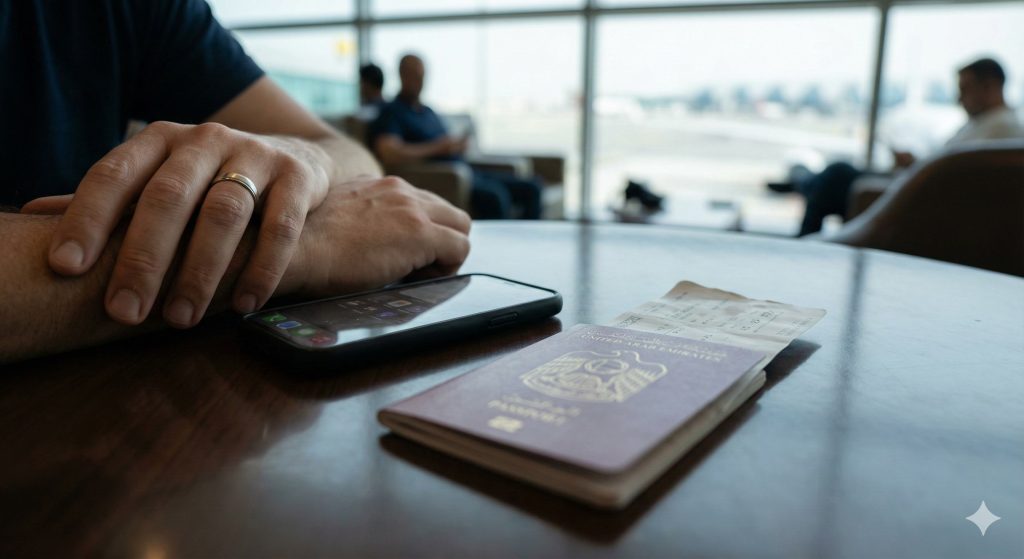
Choosing an eSIM for the UAE involves more than comparing data packages. The country’s telecom regulations create unique challenges—eSIM activation restrictions, VoIP blocking, and traffic routing through distant servers can all affect your experience. Whether you’re visiting Dubai for two weeks or relocating as an expat, selecting the wrong provider means dealing with slow connections, blocked apps, or the inability to top up once you’ve arrived.
This guide compares pricing across major eSIM providers, explains the critical activation timing requirements, addresses the VPN situation for calling apps, and includes feedback from travelers who’ve tested these services in Dubai and Abu Dhabi. You’ll find specific costs per gigabyte, coverage differences between networks (Etisalat vs. du), and practical workarounds for common connectivity problems.
How eSIMs Work in the UAE
The UAE has two mobile network operators: Etisalat (now branded as “e&”) and du. Both provide nationwide 4G LTE and 5G coverage across Dubai, Abu Dhabi, Sharjah, and other emirates. International eSIM providers partner with one of these networks to deliver service, which means your actual coverage depends on which local carrier your eSIM connects to.
A critical distinction exists between international travel eSIMs and local UAE eSIMs. International providers like Nomad, Saily, and Airalo offer convenience—you purchase and activate before arrival—but your internet traffic routes through servers in Europe or Asia, adding latency. Local options from Etisalat and du provide direct UAE routing but require in-person setup or specific activation conditions. The practical difference shows up in video call quality, gaming performance, and app responsiveness.
The Traffic Routing Issue
Multiple travelers report that international eSIM traffic routes through Austria, Poland, Singapore, or other countries rather than the UAE directly. One user testing Nomad found their connection showed an IP address in Singapore (where Nomad’s parent company is based), while another using Sparks saw their traffic routed through Poland. This affects speed tests and can cause problems with location-dependent apps or services. For basic WhatsApp messaging, maps, and social media, most users report acceptable performance despite the routing. For latency-sensitive applications, a local SIM performs better.
eSIM Provider Comparison and Pricing
The following comparison reflects current pricing from major eSIM providers serving the UAE market. Prices are listed in USD unless otherwise noted. Most international eSIM providers offer similar data amounts at comparable price points, with differences appearing in validity periods, network partners, and additional features like included VPNs.
| Provider | Data | Validity | Price (USD) | Cost per GB |
|---|---|---|---|---|
| Nomad | 3 GB | 30 days | $9.00 | $3.00 |
| Nomad | 10 GB | 30 days | $19.00 | $1.90 |
| Nomad | 20 GB | 45 days | $29.00 | $1.45 |
| Saily | 3 GB | 30 days | $8.99 | $3.00 |
| Saily | 10 GB | 30 days | $19.99 | $2.00 |
| Saily | 20 GB | 30 days | $33.99 | $1.70 |
| Jetpac | 5 GB | 30 days | $12.00 | $2.40 |
| Jetpac | 10 GB | 30 days | $20.00 | $2.00 |
| Sparks | 5 GB | 60 days | $17.70 | $3.54 |
| Sparks | 10 GB | 60 days | $33.90 | $3.39 |
| Globalesim | 10 GB | 30 days | $13.00 | $1.30 |
| Holafly | Unlimited | 10 days | ~$47.00 | N/A |
| Firsty | 512 MB/day | Pay-as-you-go | €1.80/day | ~$3.94 |
| Etisalat Tourist eSIM | 10 GB | 24 hours (free), then top-up | Free initially; 99 AED ($27) for additional 10 GB | $2.70 (after free tier) |
Based on this comparison, Globalesim offers the lowest per-gigabyte cost at $1.30/GB for 10 GB, followed by Nomad’s 20 GB package at $1.45/GB. The Etisalat tourist eSIM provides an attractive free 10 GB for the first 24 hours, but subsequent top-ups at 99 AED ($27) for 10 GB make it more expensive for extended stays. Travelers needing unlimited data report Holafly works without throttling—one user consumed 80 GB over 10 days without issues—though it carries a premium price.
What Real Travelers Report
User feedback from travelers who’ve tested eSIMs in Dubai and Abu Dhabi reveals practical insights beyond marketing claims. Coverage quality, activation ease, and app compatibility vary significantly between providers, and these differences matter most when you’re navigating an unfamiliar city or need to make urgent communications.
Saily
Travelers using Saily report good 5G and 4G+ coverage across Dubai, connecting to the du network. One user described getting connected “on the bus ride from the plane to the airport terminal” within about 20 minutes of landing—a practical test of how quickly service activates. The included VPN (through parent company NordVPN) helps access blocked apps, though users note you need the VPN active before arriving since the Saily app itself may be inaccessible without it. At $16-20 for 10 GB, Saily sits in the mid-range for pricing while offering the VPN as a differentiator.
Nomad
Nomad operates on the du network in the UAE, with traffic routing through Austria (via Drei, an Austrian provider). Speed tests show acceptable download and upload rates despite the routing, though ping times suffer compared to local SIMs. The 20 GB package with 45-day validity offers good value for longer trips at $1.45/GB. One user testing Nomad in Australia confirmed similar IP routing patterns, suggesting this is standard for the provider across all regions.
Airalo
Airalo receives frequent recommendations in travel forums, but some users report activation issues specifically in the UAE. One traveler received a message stating the service “is not working currently” while trying to set up in Dubai. Airalo’s support team responded to these complaints, suggesting active troubleshooting is available. The provider offers competitive pricing and a large selection of regional and global plans, making it worth testing before your trip if possible.
Etisalat Tourist eSIM
Etisalat provides a free tourist eSIM accessible via QR code upon landing at Dubai airports. The process requires connecting to free airport WiFi, scanning the QR code, and registering with passport or visa details. The free tier provides 10 GB valid for 24 hours—useful for immediate connectivity but requiring top-up for longer stays. At 99 AED ($27) per 10 GB for additional data, this becomes expensive compared to international alternatives. The eSIM automatically deactivates when you leave the UAE, and you cannot top up after your data expires while inside the country unless you have an active connection.
Mobimatter
Based in Abu Dhabi, Mobimatter aggregates eSIMs from multiple providers including “3” (Three) from Hong Kong. Users report good experiences across Europe, Canada, and China with this provider, though UAE-specific feedback mentions similar routing issues as other international options. The local company base provides responsive customer support for UAE-specific issues.
Critical Activation Requirement
Most international eSIM providers require activation before entering the UAE. This restriction applies to purchasing, installing, and activating the eSIM profile on your device. Once inside the UAE, attempting to purchase or activate a new international eSIM typically fails due to network restrictions. Users from countries where eSIM activation itself is restricted (such as Turkey) face additional complications—they cannot activate before departure and cannot activate upon arrival, leaving them without a straightforward option.
The practical implications are significant. If your data runs out while in the UAE, you cannot simply top up through most international eSIM apps. Users recommend purchasing more data than you expect to need, or having a backup plan such as the local Etisalat tourist SIM. One traveler specifically warned: “Make sure to top-up the eSIM before your data runs out, otherwise you won’t be able to do so inside the country.”
VoIP Restrictions and VPN Requirements
The UAE blocks many Voice over IP (VoIP) services, including WhatsApp calling, FaceTime, Skype, and similar apps. Text messaging through these platforms generally works, but voice and video calls require a VPN to function. This restriction applies regardless of whether you use a local SIM or international eSIM—it’s a network-level block implemented by UAE telecom regulators.
Several solutions exist. Saily includes VPN access through NordVPN as part of their eSIM packages. Other users recommend downloading a reliable VPN app (such as ProtonVPN, which offers a free tier) before arriving. The VPN must be installed and configured before you enter the UAE, as VPN provider websites and app stores may be partially blocked once you’re on local networks. For business travelers relying on video conferencing, testing your VPN configuration before departure prevents last-minute communication problems.
One important caveat: while personal VPN use for accessing communication apps is common and widely practiced, the UAE has laws regarding VPN use for illegal activities. Using a VPN to access otherwise-legal communication services is generally tolerated, but downloading copyrighted content or accessing prohibited material through a VPN carries legal risks.
Local vs. International eSIM: Making the Decision
Your choice between international and local eSIM options depends on trip length, data requirements, and technical priorities. Each approach carries trade-offs that matter differently depending on your specific situation.
Choose an International eSIM If:
You want setup completed before landing, eliminating airport queues and ensuring immediate connectivity. You’re visiting for less than two weeks and need 10-20 GB of data. You don’t require the lowest possible latency for video calls or gaming. You want predictable, dollar-denominated pricing. Recommended providers based on user feedback include Saily (for included VPN), Nomad (for value on larger packages), and Globalesim (for lowest per-GB cost).
Choose a Local eSIM If:
You’re staying longer than two weeks or relocating as an expat. You need local UAE phone number functionality for calls and SMS. You require the best possible connection quality for business applications. You’re comfortable navigating Etisalat or du stores with your passport. Local eSIMs provide direct network access without international routing, though at higher per-GB costs. Etisalat’s post-free-tier pricing of 99 AED ($27) for 10 GB is expensive, but larger packages and monthly plans reduce the per-unit cost for longer stays.
Practical Setup Steps
Installing an eSIM requires a compatible device and the correct sequence of steps. Most modern iPhones (XS and later) and Android devices (Google Pixel 3 and later, Samsung Galaxy S20 and later) support eSIM. Verify your device compatibility before purchasing, as some regional phone variants lack eSIM functionality.
Before Departure
Purchase your chosen eSIM through the provider’s app or website at least 24-48 hours before travel. Download and install the eSIM profile to your device—this typically involves scanning a QR code or clicking an installation link. Do not activate the eSIM yet if your provider charges validity from activation rather than first use (check provider terms). Download a VPN app and verify it works on a test connection. Set your phone to allow eSIM and configure data roaming settings if required.
Upon Arrival
Enable the eSIM line in your device settings. For iPhones: Settings > Cellular > tap the eSIM line > toggle on. For Android: Settings > Network & Internet > SIMs > tap the eSIM line > toggle on. Your device should connect to the local network (du or Etisalat depending on provider) within a few minutes. Users report successful connection during the airport bus transfer, meaning service typically activates before clearing immigration.
If Connection Fails
Toggle airplane mode on and off. Restart your device. Manually select the network carrier in settings if auto-selection fails. Contact your eSIM provider’s support—most offer chat or email support accessible via WiFi. As backup, use airport WiFi to access the Etisalat tourist eSIM QR code (available at Dubai airports) for immediate local connectivity while troubleshooting your primary eSIM.
Data Usage Expectations in the UAE
Planning data requirements helps avoid overspending or running out mid-trip. The UAE has extensive free WiFi in malls, hotels, airports, and many restaurants, reducing the amount of mobile data you’ll actually consume. Users who actively manage WiFi usage report consuming far less data than expected—one traveler used only 2 GB over 9 days with a 5 GB package.
| Usage Pattern | Estimated Daily Data | 7-Day Trip | 14-Day Trip |
|---|---|---|---|
| Light (maps, messaging, email) | 200-400 MB | 1.5-3 GB | 3-6 GB |
| Moderate (social media, photos, occasional streaming) | 500 MB-1 GB | 3.5-7 GB | 7-14 GB |
| Heavy (video calls, streaming, remote work) | 2-5 GB | 14-35 GB | 28-70 GB |
For most tourists spending time at hotels with WiFi and visiting malls (which universally offer free WiFi), a 5-10 GB package covers a week comfortably. Business travelers on video calls should consider the 20 GB packages or Holafly’s unlimited option, budgeting for VPN overhead which slightly increases data consumption.
FAQ
Can I Activate an eSIM After Arriving in the UAE?
Most international eSIM providers are blocked from activation within the UAE. You must purchase and install your eSIM profile before departing your home country. The Etisalat tourist eSIM is the exception—it’s designed for activation at UAE airports via QR code, but requires airport WiFi to access initially. If you forget to set up an international eSIM before travel, the Etisalat tourist option serves as a reliable backup despite higher top-up costs.
Does WhatsApp Calling Work in the UAE?
WhatsApp text messaging works normally, but voice and video calls are blocked by UAE telecom regulations. A VPN is required to make WhatsApp calls. Users recommend having a VPN installed and tested before arrival since VPN provider websites may be partially inaccessible from UAE networks. Saily eSIM includes VPN access through NordVPN; otherwise, ProtonVPN offers a free tier that works for basic calling needs.
Which Network Do International eSIMs Connect To?
Most international eSIM providers connect to the du network in the UAE. Some providers may use Etisalat depending on their roaming agreements. Both networks offer comprehensive 4G and 5G coverage across all emirates, including Dubai, Abu Dhabi, Sharjah, and the northern emirates. Coverage quality is comparable between networks in urban areas; du tends to have slightly better coverage in some remote areas while Etisalat has stronger presence in Abu Dhabi.
How Much Data Do I Need for a One-Week Dubai Trip?
Most tourists consuming maps, messaging, social media, and occasional photos need 5-10 GB for a week. The UAE has extensive free WiFi in hotels, malls, and restaurants, significantly reducing mobile data requirements. Budget travelers actively using WiFi report using only 2-3 GB over a week. Business travelers on regular video calls should budget 15-20 GB to account for VPN overhead and conference call data consumption.
Is the Free Etisalat Tourist eSIM Worth It?
The free 10 GB valid for 24 hours provides excellent value for short layovers or as emergency backup connectivity. For stays beyond one day, the 99 AED ($27) per 10 GB top-up cost exceeds international eSIM alternatives like Nomad (10 GB for $19) or Globalesim (10 GB for $13). Consider the Etisalat tourist eSIM as a supplement rather than primary solution for trips longer than 24 hours.
Why Is My eSIM Connection Slow Despite Good Signal?
International eSIMs route traffic through servers outside the UAE—commonly Austria, Poland, or Singapore—adding latency that affects perceived speed. Your connection reaches the UAE network, travels to Europe or Asia, then returns to the content server. For browsing and messaging, this routing rarely causes noticeable issues. For video calls or real-time applications, the added 100-200ms latency can degrade quality. A local SIM provides direct routing but at higher cost.
Can I Use My eSIM for Both Data and Calls?
Most international travel eSIMs provide data only, without a local UAE phone number for voice calls or SMS. If you need to receive calls or SMS to a UAE number (for bank verification, delivery notifications, or business purposes), you’ll need a local SIM from Etisalat or du. Many travelers use dual-SIM configuration: keeping their home number active on the physical SIM for important SMS and using the eSIM for data.
What Happens If My Data Runs Out While in the UAE?
If using an international eSIM, you typically cannot purchase additional data from within the UAE due to activation restrictions. Have a backup plan: either purchase more data than expected initially, or be prepared to use the Etisalat tourist eSIM as fallback (accessible via airport WiFi or any working connection). Some providers like Roamless offer pay-as-you-go credits with no expiration, eliminating the risk of running out mid-trip.