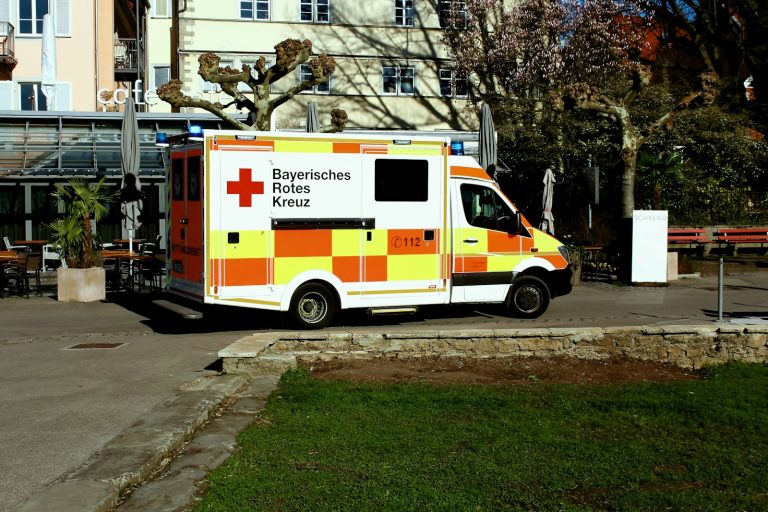

A practical guide for expats and residents deciding where to get treated in the UAE: how the public and private systems differ, who can use each, what they cost out of pocket, and how mandatory insurance changes the math.
Public healthcare in the UAE is run by government operators and is heavily subsidized for Emiratis, while most expatriates use private hospitals and clinics accessed through the health insurance their employer is legally required to provide. As a resident, your realistic choice is rarely “pay cash at a public hospital versus pay cash at a private one.” It is which network your mandatory cover lets you use, how long you are willing to wait, and how much co-payment you accept. This guide sets out the practical differences so you can make that call with real numbers rather than guesswork.
We cover who regulates and who operates healthcare in each emirate, who is eligible for public care and what a health card gets an expat, how private care actually works, an indicative public-versus-private cost comparison, the mandatory insurance rules and penalties that differ by emirate, and where the waiting-time and quality trade-offs fall. Because fees and policy details change and vary by emirate, treat the numbers here as indicative and confirm the current position with the relevant authority before you rely on it.
Who Runs Healthcare in the UAE: Regulator vs Operator
The most useful thing to understand first is that the UAE separates the regulator, which licenses facilities and staff and sets policy, from the operator, which actually runs the public hospitals. Confusing the two is the single most common mistake expats make when they try to work out who to deal with. In Dubai the regulator is the Dubai Health Authority (DHA) and the public operator is Dubai Health; in Abu Dhabi the regulator is the Department of Health (DoH) and the operator is SEHA; in the other five emirates the federal Ministry of Health and Prevention (MOHAP) regulates and Emirates Health Services (EHS) operates.
| Emirate / region | Regulator (licenses, policy, insurance) | Public operator (runs the hospitals) |
|---|---|---|
| Dubai | Dubai Health Authority (DHA) | Dubai Health (Dubai Academic Health Corporation) |
| Abu Dhabi | Department of Health (DoH) | SEHA (Abu Dhabi Health Services Company) |
| Sharjah, Ajman, Umm Al Quwain, Ras Al Khaimah, Fujairah | Ministry of Health and Prevention (MOHAP) | Emirates Health Services (EHS) |
Dubai formalized this split under Dubai Law No. 6 of 2018, which repositioned the DHA as the emirate’s health regulator and steward rather than a hospital operator. The public hospitals themselves, including Rashid Hospital, Dubai Hospital, Latifa Hospital for women and children, Hatta Hospital and Al Jalila Children’s Hospital, are now run by Dubai Health, the public operator created under Dubai Law No. 13 of 2021 and operating under that unified brand since late 2023. In Abu Dhabi the equivalent public hospitals, including Sheikh Khalifa Medical City and Sheikh Shakhbout Medical City, sit within the SEHA network under the Department of Health as regulator. This is one of the practical ways Abu Dhabi and Dubai differ day to day: the authority you deal with depends on your emirate of residence.
Public Healthcare: Who Can Use It and What It Costs
Public healthcare is not the same deal for everyone. UAE nationals receive heavily subsidized or free care at government facilities, while expatriates can use public hospitals but are charged for the service, either through a government health card or through their insurance. In Abu Dhabi, Emiratis are covered by the government-funded Thiqa program, which covers nationals at 100 percent in government facilities and 80 percent in-network at private ones. That is why public hospital waiting rooms are often busiest with citizens: for them, the public system is the primary and lowest-cost route.
The Health Card for Expats
Historically an expat needed a government health card to be treated at a public facility, and a version of that card still exists for accessing public hospitals and for certain non-insured situations. The card carries a modest annual fee that varies by emirate and by adult versus child, and it is issued by the local health authority. Since mandatory insurance now covers virtually all residents, most expats reach care through their insurance network instead of paying at a public counter, so the health card matters mainly for specific public-facility access or for people between coverage. Confirm the current card fee and whether you need one directly with the DHA in Dubai or the relevant authority, because the figures quoted on unofficial sites are easy to confuse with the insurance premium.
What Public Care Actually Costs an Expat
For an expat paying through a health card at a public facility, a standard consultation is relatively inexpensive, typically in the low hundreds of dirhams before any tests, which is well below the cash price at a private clinic. The trade-off is access: public facilities prioritize citizens and emergencies, so elective and specialist appointments can take longer to secure. Treat any specific consultation figure as indicative and confirm it at the facility, since public tariffs are set by the operator and are not published as a single fixed list. Whichever route you use, the practitioner and the facility should both appear on the relevant register, which is explained in checking a UAE doctor or clinic license.
Private Healthcare and How Most Expats Access It
For the majority of expatriates, private healthcare is the default, and it is reached through the mandatory health insurance your employer must provide by law. Rather than paying the full cash price, you pay a co-payment (commonly around 20 percent, subject to caps) and the insurer settles the rest within its network. This is the core reason the “public versus private” question is, for most residents, really a question about your insurance network and its limits rather than raw sticker prices.
The private sector is large and internationally accredited, with a high concentration of hospitals certified by Joint Commission International. Major private hospital groups operating across the UAE include Mediclinic, Aster, NMC, Saudi German Health, Burjeel, American Hospital Dubai, Medcare and Zulekha, among others. These are examples of the market, not endorsements: the right hospital for you is the one inside your insurance network with the specialty you need. If you are choosing or upgrading a policy, our guide on how to compare health insurance in the UAE explains why network, sub-limits and co-pay matter more than the headline premium.
Public vs Private: Indicative Cost Comparison
The table below shows indicative cash prices in the private sector with no insurance, alongside the public and insured routes, so you can see the three realistic scenarios side by side. These are ranges, not quotes: actual charges depend on the facility, the specialty, and any tests or imaging added on the day. Emergency and specialist figures in particular vary widely.
| Service | Private, cash (no insurance) | Public / insured route |
|---|---|---|
| GP consultation | Around AED 150 to AED 500 | Low hundreds at a public facility; co-pay only if insured |
| Specialist consultation | Around AED 500 to AED 700, more for complex specialties | Referral-based publicly; co-pay if insured |
| Emergency room visit | Around AED 500 to AED 3,000 with tests | Public ERs handle major emergencies; insured co-pay applies |
| Diagnostic tests (add-on) | Around AED 200 to AED 3,000 depending on test | Included in referral pathway; co-pay if insured |
The pattern is consistent across the emirates: public care carries a low cash cost but longer waits, private care without insurance carries a high cash cost, and private care with insurance carries a low co-payment plus short waits. That last combination is why most working expats never see the full cash price. For a worked example of how the same event plays out on each track, our guide to the cost of having a baby in Dubai compares public and private delivery in detail.
Mandatory Health Insurance by Emirate, and the Penalties
Health insurance is legally mandatory for residents across the UAE, but the law, who pays, and the fines differ by emirate. Getting this right is not optional: without valid cover you cannot complete a residence visa in the emirates where it is a renewal condition. The table summarizes the position, followed by the penalty detail.
| Emirate / region | Governing rule | Who pays |
|---|---|---|
| Dubai | Health Insurance Law No. 11 of 2013 (fully in force by 2016), via DHA / ISAHD | Employer covers employee; sponsor covers dependents |
| Abu Dhabi | Health Insurance Law No. 23 of 2005 (in force 2006), via DoH | Employer covers employee and at least 50% of dependent premium |
| Northern Emirates | Federal Basic Health Insurance Scheme, from 1 January 2025 (MOHRE, ICP, MOHAP) | Employer, as a residence-permit condition |
Dubai mandated cover under Health Insurance Law No. 11 of 2013, administered through the DHA’s ISAHD platform, with the employer required to provide it and prohibited from deducting the premium from salary. The commonly applied penalty for non-compliance is AED 500 per month for each uninsured person. Abu Dhabi was actually first in the country, mandating insurance under Law No. 23 of 2005, with employers covering the employee and at least half of the dependent premium, and no valid policy blocks residency renewal.
The newest change affects the five Northern Emirates. From 1 January 2025 a federal Basic Health Insurance Scheme became mandatory for private-sector employees and domestic workers there, coordinated by MOHRE with ICP and MOHAP as a condition of issuing or renewing a residence permit. The Basic package is widely reported at around AED 320 per year with a minimum annual benefit limit of about AED 150,000 and standard co-payments (roughly 25 percent on outpatient visits capped per visit, and 20 percent on inpatient care up to annual caps). These federal figures come from scheme summaries rather than a directly verified official page here, so confirm the current package details with MOHRE before relying on them.
Waiting Times and When to Choose Each
The quality of clinical care is high in both systems, so the real decision usually comes down to speed, choice and cost. Public hospitals deliver strong care, including major trauma and tertiary services, but waits for elective and specialist appointments can run into weeks because citizens use them heavily and emergencies take priority. Private hospitals compete on access: specialist appointments within days, modern facilities, wide specialist choice and multilingual staff, which is why most expats default to private for routine needs.
As a rule of thumb, public care is the sensible choice for genuine emergencies, specialized tertiary or critical care, maternity for those covered by Thiqa, and cost-sensitive situations, while private care suits routine GP and specialist visits, elective procedures, and anyone who values faster access and comfort. Whichever you lean toward, your insurance network decides which hospitals you can use at low cost, so check the network list before you assume a specific hospital is available to you. New residents will also encounter the public system early through the medical fitness test required for a residence visa.
FAQ
Is healthcare free in the UAE for expats?
No. Free or heavily subsidized public care is for UAE nationals. Expatriates can use public hospitals but are charged, either through a government health card or through their insurance. Most expats use private facilities reached through the mandatory health insurance their employer provides, paying only a co-payment.
Is health insurance mandatory in the UAE?
Yes, for residents, but the law differs by emirate. Dubai has required it since 2014 under Law No. 11 of 2013, Abu Dhabi since 2006 under Law No. 23 of 2005, and the Northern Emirates from 1 January 2025 under a federal Basic Health Insurance Scheme. In each case the employer provides the employee’s cover.
Who pays for health insurance, the employer or the employee?
The employer pays for the employee’s policy and cannot deduct it from salary. In Dubai the visa sponsor is responsible for dependents; in Abu Dhabi the employer must cover at least half of the dependent premium. Investors and non-working residents arrange their own cover to meet the requirement.
What is the penalty for not having health insurance?
In Dubai the commonly applied fine is AED 500 per month for each uninsured person. Across the emirates, a resident without valid cover generally cannot complete a residence visa renewal, since proof of insurance is a condition. Confirm the current penalty with the relevant authority, as amounts are periodically updated.
Can expats use public hospitals like Rashid Hospital or SKMC?
Yes. Expats can be treated at public hospitals such as Rashid Hospital in Dubai or Sheikh Khalifa Medical City in Abu Dhabi, either through a government health card or their insurance, and public emergency departments treat everyone. Citizens are prioritized for elective services, so expat waits for non-urgent appointments can be longer.
How much does a doctor’s consultation cost without insurance?
Indicatively, a private GP consultation runs around AED 150 to AED 500 and a specialist around AED 500 to AED 700, more for complex specialties, before any tests. A public consultation on a health card is cheaper, in the low hundreds. These are ranges; the facility sets the actual price, so confirm before your visit.
What is the difference between DHA, DoH, MOHAP, SEHA and EHS?
DHA (Dubai), DoH (Abu Dhabi) and MOHAP (federal, for the Northern Emirates) are regulators that license facilities and set policy. Dubai Health, SEHA and Emirates Health Services are the operators that actually run the public hospitals. The regulator you deal with depends on your emirate of residence.
Does the federal Basic Health Insurance Scheme cover dependents?
The federal scheme, mandatory in the Northern Emirates from 1 January 2025, targets private-sector employees and domestic workers as a residence-permit condition. Non-working dependents and investors are not automatically included and follow separate insurance requirements. Confirm coverage scope with MOHRE and your insurer.
Is public or private healthcare better in the UAE?
Both offer high clinical quality. Public care costs less in cash and handles major emergencies and tertiary care well but has longer waits for elective and specialist appointments. Private care offers faster access, wider specialist choice and modern facilities, which is why most insured expats use it for routine needs.
Do I still need a health card if I have insurance?
In most cases your insurance is what you use day to day, and the government health card matters mainly for specific public-facility access or if you are temporarily without cover. Requirements vary by emirate, so check with the DHA in Dubai or the relevant authority whether a card is needed for your situation.
Official Sources
- u.ae — Health authorities in the UAE
- Dubai.ae — The healthcare regulator (DHA)
- Dubai Health — public operator and hospitals
- Department of Health Abu Dhabi (regulator)
- ISAHD — Dubai mandatory health insurance (DHA)
- Ministry of Health and Prevention (MOHAP)
- Emirates Health Services (federal public operator)
This guide is for general information only and reflects the position current as of July 2026. Health authority structures, fees, insurance rules, penalties, and consultation costs change and vary by emirate. All cost figures are indicative ranges, not quotes. Always confirm the current requirements and charges with the relevant health authority or your insurer before making decisions about your care.