
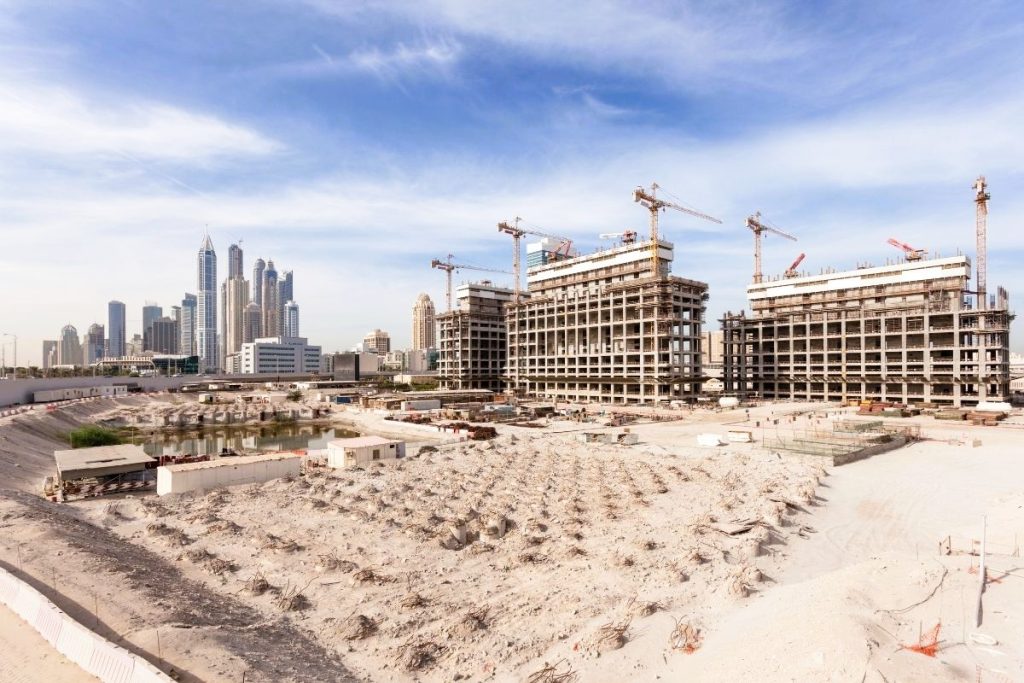
How to legally assign your off-plan contract to a new buyer in Dubai — payment thresholds, developer NOC, Oqood transfer, and total cost breakdown
Reselling an off-plan property in Dubai before handover requires the original buyer to have paid at least 30–40% of the total purchase price, obtain a No Objection Certificate (NOC) from the developer, and complete an Oqood transfer through the Dubai Land Department (DLD). The process is formally called an “assignment of contract” — the seller transfers their contractual rights under the Sales and Purchase Agreement (SPA) to a new buyer, who then assumes all remaining payment obligations to the developer. Total transaction costs typically range from 6–11% of the sale price, combining DLD fees, developer assignment charges, and agent commission.
This guide covers the legal framework governing off-plan resale in Dubai, exact eligibility rules and payment thresholds, the step-by-step assignment process from listing through Oqood re-registration, a full breakdown of every fee involved, and practical strategies for calculating your actual profit after costs.
What Is an Off-Plan Assignment and How Does It Differ from a Standard Resale?
An off-plan assignment is the legal transfer of a buyer’s rights and obligations under an SPA from the original purchaser to a new buyer. Unlike a standard resale of a completed (ready) property — where a title deed changes hands — an assignment transfers the Oqood registration, which is the provisional ownership record maintained by DLD for properties still under construction. The new buyer steps into the original buyer’s position, inheriting both the payment plan and the contractual relationship with the developer.
This distinction matters because the regulatory framework is different. Ready property sales are governed primarily by DLD’s property sale registration service and involve title deed transfer. Off-plan assignments, by contrast, operate under Law No. 13 of 2008 Regulating the Interim Real Property Register (as amended by Law No. 9 of 2009, Law No. 19 of 2017, and Law No. 19 of 2020), which specifically governs transactions recorded in the Oqood system. Article 6 of this law confirms that off-plan units entered in the Interim Property Register “may be disposed of by way of sale, mortgage, or any other legal disposition” — but only through the DLD’s registered processes.
A critical legal point: any sale or disposition of an off-plan unit that is not entered in the Interim Property Register is void under this law. Informal side agreements or private transfers without DLD registration carry no legal weight and expose both parties to significant risk.
Eligibility: When Can You Resell an Off-Plan Property in Dubai?
Resale eligibility hinges on two conditions: meeting the developer’s minimum payment threshold and obtaining their formal consent. Both must be satisfied before a transfer can proceed at DLD.
Minimum Payment Threshold: The 30–40% Rule
Most Dubai developers require the original buyer to have paid a minimum of 30–40% of the total property value before they will approve an assignment. This percentage is specified in the SPA and varies by developer and sometimes by individual project. Some developers set thresholds as high as 50%, while a few permit assignment after a lower percentage if the buyer has met all scheduled instalments up to a certain construction milestone.
The threshold serves a regulatory purpose: DLD and RERA use it to discourage purely speculative short-term flipping and to ensure that only committed buyers enter the market. If you have paid less than the required percentage, the developer will not issue a NOC, and the DLD will not process the Oqood transfer — regardless of whether you have found a willing buyer.
Check your SPA carefully. The assignment clause will state the exact percentage required, any waiting period (some developers impose a lock-in period of 6–12 months after purchase), and whether the developer charges a separate assignment or transfer fee.
Developer Consent Is Mandatory, Not Optional
Even after reaching the payment threshold, you cannot list or transfer an off-plan property without the developer’s formal approval. This approval takes the form of a No Objection Certificate (NOC) from the developer. Law No. 13 of 2008 explicitly prohibits developers from charging fees on off-plan resale beyond “those administrative costs which are approved by the Department” — but in practice, most developers levy an assignment or transfer fee (typically 2–5% of the original purchase price) as a condition for issuing the NOC.
The developer will verify your payment status, confirm there are no outstanding service charges or contractual breaches, and check that the minimum payment threshold has been met before releasing the NOC. Most NOCs are valid for 30 days from the date of issuance, so timing the NOC application with having a confirmed buyer is important to avoid expiry.
Step-by-Step: The Off-Plan Assignment Process in Dubai
The assignment follows a structured sequence involving the seller, buyer, developer, a RERA-licensed broker, and the DLD (via a Real Estate Registration Trustee Centre or the Oqood portal). Here is each step in order.
Step 1: Review Your SPA and Confirm Eligibility
Before taking any action, re-read your Sales and Purchase Agreement. Identify the assignment clause, the minimum payment percentage required, any lock-in period, and the developer’s stated assignment fee. Contact the developer’s sales or customer service team to confirm your current payment status and whether you meet the resale threshold. If you have an outstanding balance or missed instalments, these must be settled before the developer will entertain an NOC application.
Step 2: Engage a RERA-Licensed Broker
Off-plan assignments in Dubai must be facilitated by a RERA-registered broker. The broker will prepare RERA Form A (seller–agent agreement) and, once a buyer is identified, RERA Form B (buyer–agent agreement). The broker handles marketing, buyer qualification, price negotiation, and coordination with the developer and DLD trustee office. Agent commission is typically 2% of the sale price plus 5% VAT.
Step 3: Find a Buyer and Sign RERA Form F (MOU)
Once a buyer is identified and terms are agreed, the broker prepares RERA Form F — the legally binding Memorandum of Understanding between seller and buyer. Form F is generated through the DLD REST app or at a DLD Trustee Centre. It specifies the agreed sale price, deposit (usually 10%), payment schedule, responsibilities for fees, and the transfer timeline. For off-plan assignments, the Form F will reference the Oqood certificate number rather than a title deed.
The buyer typically pays a 10% deposit at this stage, held by the broker or trustee until the transfer is completed.
Step 4: Apply for the Developer’s NOC
With the signed Form F in hand, the seller applies to the developer for the NOC. The developer will verify that all payment obligations are current, the minimum threshold has been met, and no disputes are outstanding. The developer’s NOC fee (typically AED 500–5,000, varying by developer) must be paid at this point. Processing time varies from 3–14 business days depending on the developer.
If the property has an associated mortgage, the seller must first obtain a separate NOC from the lending bank, confirming the mortgage has been settled or will be settled from the sale proceeds. The bank’s NOC process adds additional time and may require the new buyer (or the seller) to clear the outstanding loan balance before the developer will release its own NOC.
Step 5: Complete the Oqood Transfer at a DLD Trustee Office
With the developer’s NOC issued, both parties (or their authorised representatives holding a valid Power of Attorney) attend a DLD-approved Real Estate Registration Trustee Centre to complete the Oqood transfer. The DLD processes the transfer through the Oqood portal, de-registering the original buyer and re-registering the property under the new buyer’s name.
Documents required at the trustee office:
| Document | Who Provides It |
|---|---|
| Developer’s NOC (original) | Seller (obtained from developer) |
| Original Oqood certificate | Seller |
| Signed RERA Form F (MOU) | Broker |
| New Sale and Purchase Agreement | Both parties / developer |
| Emirates ID (or valid passport for non-residents) | Both parties |
| Valid trade licence (if buyer or seller is a company) | Company party |
| Power of Attorney (if representative is attending) | Absent party’s representative |
| Bank NOC / mortgage clearance letter (if mortgaged) | Seller |
The DLD employee processes the transaction, both parties sign the system-generated contract, fees are paid via manager’s cheque, Noqodi wallet, ePay, or Dubai Pay, and a new Oqood certificate is issued in the buyer’s name via email. DLD’s published service time for Oqood-related registrations is approximately 25–35 minutes once all documents are in order.
Step 6: Developer Updates Their Records
After the DLD transfer is complete, the signed documents are submitted to the developer, who updates their internal records to reflect the new buyer as the contract holder. The new buyer now assumes full responsibility for all future instalment payments, service charges, and any handover obligations under the original (or amended) SPA.
Complete Fee Breakdown for Off-Plan Assignment in Dubai
Transaction costs for off-plan assignments come from three sources: DLD government fees, developer charges, and broker commission. The total typically falls between 6% and 11% of the sale price, depending on the developer’s assignment fee and whether the buyer or seller absorbs specific charges. Here is every line item.
| Fee Category | Amount | Who Typically Pays |
|---|---|---|
| DLD Transfer Fee | 4% of the sale value (legally 2% seller + 2% buyer) | Buyer (by market convention, unless negotiated otherwise) |
| DLD Knowledge Fee | AED 10 | Buyer |
| DLD Innovation Fee | AED 10 | Buyer |
| Developer Self-Registration Fee (Oqood Portal) | AED 1,000 | Varies (often passed to buyer) |
| Developer Assignment / NOC Fee | 2–5% of original purchase price (varies by developer) | Seller or split (negotiable) |
| Developer NOC Issuance Fee | AED 500–5,000 (varies by developer) | Seller |
| Broker Commission | 2% of sale price + 5% VAT | Seller (standard); negotiable |
| Trustee Office Fee | AED 2,000 + VAT (sale below AED 500k) or AED 4,000 + VAT (sale AED 500k+) | Buyer |
Source for DLD fees: Dubai Land Department — Transfer of Registration from One Property to Another, which confirms the 2% seller / 2% buyer split plus knowledge and innovation fees for Oqood transfers.
Important Notes on the 4% DLD Fee
The new buyer pays the 4% DLD fee on the new sale price, even if the original buyer already paid 4% when registering the initial Oqood. There is no credit or refund for the original registration fee. This is a common point of confusion — the DLD treats the assignment as a new registration event, triggering the full 4% again. For the complete breakdown of DLD fees in Dubai property transfers, see our dedicated guide.
How Developer Assignment Fees Vary
Developer assignment fees are the least standardised cost in the process. Major developers such as Emaar, DAMAC, Nakheel, and Meraas each set their own fee schedules, which may differ between projects. Some charge a flat percentage (commonly 2–3%), while others use a tiered structure or a fixed fee plus a percentage. Always request the developer’s current assignment fee schedule in writing before listing your property, as these fees can materially reduce your net profit. Law No. 13 of 2008 stipulates that developer charges must be limited to DLD-approved administrative costs, but the practical range remains wide.
Calculating Your Actual Profit from an Off-Plan Assignment
The headline “profit” from an off-plan resale is the difference between your purchase price and sale price. The actual net profit requires subtracting every transaction cost. Here is a worked example showing how costs compound.
Worked Example: Profit Calculation
| Item | Amount (AED) |
|---|---|
| Original purchase price | 1,500,000 |
| DLD Oqood fee paid at purchase (4%) | 60,000 |
| Amount paid to developer (40%) | 600,000 |
| Total invested by seller | 660,000 |
| Resale price | 1,900,000 |
| Gross premium (resale − purchase) | 400,000 |
| Seller’s costs: | |
| Developer assignment fee (3% of original price) | 45,000 |
| Developer NOC fee | 1,500 |
| Broker commission (2% of sale price + 5% VAT) | 39,900 |
| DLD transfer fee (seller’s 2% share, if not shifted to buyer) | 38,000 |
| Total seller costs | 124,400 |
| Net profit to seller | 275,600 |
| Return on cash invested (275,600 ÷ 660,000) | ~41.8% |
This example assumes the seller bears the 2% DLD share and the broker commission. In practice, fee allocation between buyer and seller is negotiable and should be explicitly agreed in Form F. If the buyer absorbs the full 4% DLD fee (as is common in Dubai’s resale market), the seller’s costs drop by AED 38,000, increasing net profit accordingly. Conversely, if the developer charges 5% instead of 3%, the seller’s net profit falls by AED 30,000.
Key takeaway: always model your profit calculation with the specific developer’s assignment fee, your actual DLD fee allocation, and the broker’s commission terms before agreeing on a sale price. A 26.7% gross premium (AED 400,000 on a AED 1,500,000 purchase) can shrink to roughly 18.6% net when costs are fully accounted for — or expand to 20.2% if the buyer absorbs the DLD share.
Reselling a Mortgaged Off-Plan Property
If the off-plan property was purchased with a mortgage, the assignment process adds an extra layer of complexity. The lending bank must release its own NOC before the developer will issue theirs, and the mortgage must be fully settled before the DLD can process the Oqood transfer.
In practice, this means one of two things must happen: either the seller pays off the outstanding mortgage from their own funds before the sale, or the buyer agrees to settle the seller’s mortgage as part of the transaction (with the mortgage amount deducted from the sale price). Some transactions use a third-party mortgage broker or a bank “liability letter” to coordinate simultaneous settlement and transfer. Selling a mortgaged property in Dubai is feasible but requires careful sequencing of bank clearance, developer NOC, and DLD registration.
Common Pitfalls and Rejection Reasons
Off-plan assignments fail or stall for predictable reasons. Knowing these in advance helps avoid wasted time and money.
Payment Shortfall Below the Developer’s Threshold
The most frequent blocker. If you have paid only 20% of the property value but the SPA requires 40% before assignment, the developer will reject your NOC application outright. There is no mechanism to override this — the threshold is contractually binding and enforced by both the developer and RERA.
Outstanding Service Charges or Developer Dues
Even small unpaid amounts — community service charges, late payment penalties, or minor contractual fees — can delay or block NOC issuance. Developers typically require full clearance of all financial obligations before approving a transfer.
Expired NOC
Most developer NOCs are valid for 30 days. If the DLD transfer is not completed within this window (due to buyer financing delays, document issues, or scheduling problems), the NOC expires and a new one must be obtained — often incurring the NOC fee again.
Attempting to Sell Without DLD Registration
Private side deals, informal “contract flipping,” or unregistered transfers are legally void under Law No. 13 of 2008. Any disposition not entered in the Interim Property Register has no legal standing. Both parties risk losing their entire investment in a dispute.
Lock-In Period Violations
Some SPAs include a lock-in period (e.g., 6 or 12 months from the date of purchase) during which assignment is prohibited, regardless of how much has been paid. Attempting to list or market the property during this period may violate the SPA terms.
Timing: When Is the Best Time to Assign an Off-Plan Contract?
Market timing significantly affects the premium a seller can command. Several practical factors influence optimal timing.
Selling closer to project completion (40–60% construction progress or higher) typically yields higher premiums because the project’s viability is more visible, the remaining payment schedule is shorter for the new buyer, and lenders are more willing to finance near-complete units. However, waiting too long — particularly past handover — shifts the transaction from an Oqood assignment to a standard title deed sale, which has different dynamics.
Price appreciation during construction phases is project-specific. Projects in high-demand areas or from developers with strong delivery track records tend to see the steepest price increases between launch and 50–60% completion. Monitoring Dubai’s off-plan property investment market data from DLD transaction records can help identify the right window.
From a cost perspective, selling before handover avoids incurring service charges, DEWA connection fees, and maintenance obligations that begin at handover. These ongoing costs can erode returns if the property is held beyond completion without being rented out or occupied.
Buyer’s Perspective: What the New Buyer Needs to Know
Buyers acquiring an off-plan property through assignment should understand that they are stepping into an existing contract, not negotiating a fresh deal with the developer. The remaining payment plan, the SPA terms, the expected handover date, and the unit specifications are all inherited from the original buyer.
Before proceeding, the buyer should verify the seller’s Oqood registration by using DLD’s free Property Status Enquiry service on the DLD website or through the Dubai REST app. Enter the Oqood certificate number to confirm the registered owner, unit details, and whether any encumbrances (legal blocks or restraints) exist on the property. A “valid” status confirms the property can be transferred; “blocked” or “restrained” status means the unit cannot be legally sold until the issue is resolved.
The buyer is responsible for the 4% DLD transfer fee on the new sale price, trustee office fees, and any future instalment payments to the developer. Buyers should also check escrow account payment rules for off-plan property to confirm the developer’s escrow is active and compliant.
FAQ
Can you resell off-plan property in Dubai before completing the full payment plan?
Yes, but only after meeting the developer’s minimum payment threshold, which is typically 30–40% of the total property value as specified in the SPA. You must also obtain a NOC from the developer and complete the transfer through DLD’s Oqood system. Attempting to sell before meeting the threshold will result in the developer refusing to issue the NOC.
What is the difference between an off-plan assignment and a regular property resale?
An assignment transfers the buyer’s contractual rights under the SPA to a new buyer through the Oqood (Interim Property Register) system. A regular resale involves transferring a title deed for a completed property. The legal framework, registration process, and fee structure differ. Assignments are governed by Law No. 13 of 2008, while standard sales follow DLD’s standard property sale registration process.
How much does it cost to resell an off-plan property in Dubai?
Total costs typically range from 6–11% of the sale price. This includes the 4% DLD transfer fee (2% seller / 2% buyer by law, though the buyer often absorbs the full 4%), developer assignment fee (2–5% of original price), developer NOC fee (AED 500–5,000), broker commission (2% + VAT), and trustee office fee (AED 2,000–4,000 + VAT). The exact total depends on the developer’s fee schedule and negotiated cost allocation.
Does the new buyer pay the 4% DLD fee even if the original buyer already paid it?
Yes. The DLD treats an off-plan assignment as a new registration event. The 4% fee applies to the new sale value, and there is no credit or refund for the original buyer’s Oqood registration fee. This is confirmed in DLD’s published fee schedule for Oqood transfer services.
What documents are required for an off-plan property assignment?
The key documents are: the developer’s NOC, the original Oqood certificate, the signed RERA Form F (MOU), a new SPA, Emirates ID or valid passport for both parties, and a trade licence if either party is a company. If the property is mortgaged, a bank NOC or liability clearance letter is also required. A Power of Attorney is needed if either party sends a representative.
Can you resell an off-plan property that has a mortgage?
Yes, but the mortgage must be fully settled before the developer issues their NOC and the DLD processes the Oqood transfer. The seller must obtain a separate NOC from the lending bank. The mortgage can be cleared using the seller’s own funds or from the sale proceeds, though the latter requires careful coordination between the bank, developer, and DLD trustee office.
What happens if the developer refuses to issue a NOC for resale?
Without the NOC, the DLD will not process the Oqood transfer, and the assignment cannot proceed. Developers may refuse the NOC if the payment threshold has not been met, service charges are outstanding, there are active disputes, or the SPA includes a lock-in period that has not expired. The recourse is to resolve the outstanding issue and reapply. If the refusal appears unjustified, the buyer or seller can escalate to RERA for mediation.
How long does the off-plan assignment process take?
The overall timeline depends on how quickly the developer issues the NOC (typically 3–14 business days), the availability of a DLD trustee office appointment, and the readiness of all documents. Once at the trustee office, the actual transfer takes approximately 25–35 minutes. From listing to completed transfer, the full process commonly takes 4–8 weeks, though complex cases (mortgaged properties, corporate buyers) may take longer.
Is there a capital gains tax on off-plan property resale in Dubai?
Dubai does not levy any capital gains tax on property sales, including off-plan assignments. There is no income tax, capital gains tax, or wealth tax applicable to real estate transactions for individuals. Corporate entities may be subject to UAE corporate tax (9% on taxable income above AED 375,000) if the property is held as a business asset, but personal property sales remain tax-free.
What is the difference between Oqood and a title deed in the context of resale?
The Oqood certificate is the provisional ownership record for off-plan properties still under construction, maintained in DLD’s Interim Property Register. A title deed is the final ownership certificate issued after project completion and handover. When reselling before handover, you transfer the Oqood. After handover and title deed issuance, any resale follows the standard property transfer process for ready properties.
Official Sources
This article references information from the following UAE government authorities and legal texts:
- Dubai Land Department — Transfer of Registration from One Property to Another (Oqood)
- Dubai Land Department — Request to Register the Initial Sale (Oqood)
- Dubai Land Department — Property Sale Registration Fees
- Dubai Legislation Portal — Law No. 13 of 2008 Regulating the Interim Property Register
- Dubai Legislation Portal — Law No. 19 of 2020 Amending Law No. 13 of 2008
- Dubai Land Department — Property Status Enquiry and Dubai REST App
Developer-specific fees, payment thresholds, and lock-in periods vary between developers and projects — always confirm the terms in your SPA and request the developer’s current fee schedule before proceeding. Regulations and fees are subject to change. This guide is informational and does not constitute legal or financial advice. Verify all requirements with official authorities and consider seeking professional legal counsel for complex transactions.