

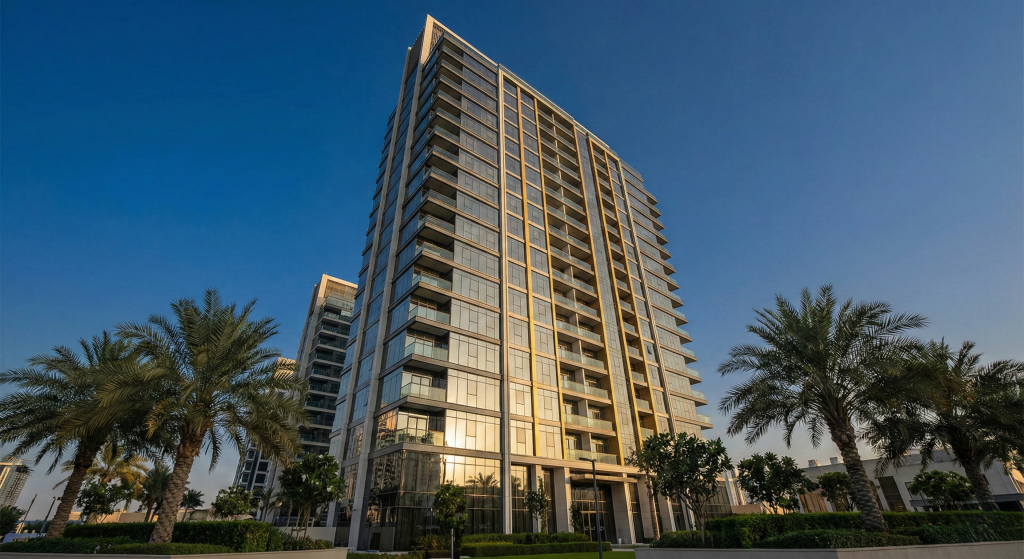
Understanding how freehold perpetual ownership differs from leasehold 99-year terms across inheritance rights, mortgage access, resale liquidity, visa eligibility, and long-term wealth implications for foreign property buyers in Dubai.
Property ownership in Dubai presents foreign buyers with two fundamentally different legal structures: freehold ownership granting perpetual title to both property and land, versus leasehold arrangements providing usage rights for fixed terms up to 99 years. This distinction profoundly affects inheritance planning, mortgage financing availability, resale market liquidity, UAE residence visa eligibility, and long-term wealth-building strategies.
This guide examines the legal frameworks governing each ownership type under Dubai Law No. 7 of 2006, explains which areas permit freehold purchase by non-GCC nationals versus those restricted to leasehold arrangements, and analyzes the practical long-term implications for financing, taxation, estate planning, and property transfer. We cover how ownership type affects your rights to renovate, lease to tenants, pass property to heirs, and qualify for Dubai’s property-based residence visas.
Legal Framework: Freehold vs Leasehold Ownership Under Dubai Law
Dubai’s property ownership framework for foreign nationals is governed by Law No. 7 of 2006 Concerning Real Property Registration in the Emirate of Dubai. This legislation established designated freehold areas where non-UAE and non-GCC nationals can acquire full ownership rights, fundamentally transforming Dubai’s real estate market into one of the world’s most accessible for international investors.
Under Article 4 of Law No. 7 of 2006, property ownership rights in Dubai are categorized by nationality and location. UAE nationals and citizens of Gulf Cooperation Council countries (Bahrain, Kuwait, Oman, Qatar, and Saudi Arabia) can own real property across all areas of Dubai without restriction. Foreign nationals—those outside the GCC—are granted specific ownership rights in designated zones approved by Dubai’s Ruler, including freehold ownership of real property without time restrictions, and usufruct or lease rights in real property for up to ninety-nine years.
Freehold ownership means you acquire absolute title to both the residential or commercial unit and a proportionate share of the land on which the property stands. The Dubai Land Department registers your name as the legal owner and issues a title deed confirming perpetual ownership. This ownership continues indefinitely with no renewal requirements, expiry dates, or reversion to original landowners. Freehold owners possess unrestricted rights to sell, lease, mortgage, renovate (subject to community and building regulations), and bequeath the property to heirs.
Leasehold ownership, conversely, grants the right to occupy and use a property for a specified term—typically 30, 50, or 99 years depending on the lease agreement—without conferring ownership of the underlying land. The land remains under the freeholder’s ownership, which may be the Dubai government, a government-linked entity, or a private developer. At the conclusion of the lease period, ownership of the property unit reverts to the freeholder unless the lease is renewed through mutual agreement and potentially revised financial terms.
Designated Freehold Areas for Foreign Ownership
Dubai has designated more than 40 specific areas where foreign nationals can purchase property on a freehold basis with full ownership rights. These zones encompass a substantial portion of Dubai’s modern residential and commercial developments, including the most sought-after master-planned communities and waterfront districts.
Major freehold areas accessible to foreign buyers include Downtown Dubai (home to Burj Khalifa and Dubai Mall), Dubai Marina (the waterfront residential development along Sheikh Zayed Road), Palm Jumeirah (the iconic palm-shaped artificial island), Business Bay (mixed-use district adjacent to Downtown), Jumeirah Beach Residence (beachfront high-rise community), Jumeirah Lake Towers (clustered residential and commercial towers), Dubai Hills Estate (family-oriented master community), Arabian Ranches (villa community with golf course), Jumeirah Village Circle and Triangle (affordable family areas), Dubai Sports City, Motor City, Dubai Silicon Oasis, International City, Discovery Gardens, and newer developments like Dubai Creek Harbour, MBR City (Mohammed Bin Rashid City), and Dubai South.
These freehold zones were strategically designated to attract foreign investment while maintaining traditional areas for UAE and GCC nationals. Properties in freehold areas trade actively on the secondary market with established price discovery, transparent title registration through the Dubai Land Department, and well-developed property management infrastructure.
Leasehold areas generally encompass older, more traditional neighborhoods where property ownership remains restricted to UAE and GCC nationals on a freehold basis, but where foreign nationals can acquire long-term leasehold rights. Examples include portions of Deira (historic commercial and residential district), Bur Dubai (established communities near Dubai Creek), Jumeirah (traditional villa areas, though some new freehold developments have been introduced), Al Satwa, and Al Karama. However, the distinction can be nuanced—within a single broader area, some specific developments may offer freehold status while surrounding properties remain leasehold.
Verifying Ownership Status Before Purchase
Before committing to any property purchase, buyers must verify the ownership type through official Dubai Land Department channels. The DLD maintains public records accessible through its website and Dubai REST mobile application, where you can search specific properties by building name, plot number, or address to confirm whether freehold or leasehold rights apply. Real estate brokers licensed by the Real Estate Regulatory Authority (RERA) should provide this information upfront, but independent verification through DLD is essential.
Within some mixed-use developments, different buildings or phases may carry different ownership types. Certain projects initially offered as leasehold have subsequently been converted to freehold following regulatory approvals and developer decisions. Always request to see the actual title deed or lease agreement before proceeding with purchase agreements or deposit payments.
Ownership Duration and Rights Differences
The most fundamental distinction between freehold and leasehold property concerns duration of ownership and the scope of rights conferred to the buyer.
| Aspect | Freehold Ownership | Leasehold Ownership |
|---|---|---|
| Ownership Duration | Perpetual—indefinite ownership with no expiry | Fixed term: 30-99 years depending on lease agreement |
| Land Ownership | Includes proportionate share of land | Land remains with freeholder |
| Title Document | DLD-issued title deed in buyer’s name | Lease agreement registered with DLD (10+ years) or Ejari (under 10 years) |
| Right to Sell | Unrestricted sale to any qualified buyer | Can sell remaining lease term; may require freeholder consent |
| Right to Lease to Tenants | Full leasing rights subject to standard tenancy law | Subleasing may require freeholder permission depending on terms |
| Renovation Rights | Interior modifications generally permitted; structural changes require approvals | Modifications typically require freeholder approval |
| Inheritance | Can be passed to heirs indefinitely | Remaining lease term can be inherited; property reverts to freeholder at lease end |
| Renewal | Not applicable—ownership is perpetual | Requires renegotiation with freeholder; terms and costs may change |
Freehold owners exercise control similar to traditional property ownership in Western markets. You can make interior renovations, upgrade finishes, install fixtures, and modify layouts within your unit without seeking freeholder approval, though major structural alterations affecting building integrity or common areas require permissions from the developer, owners’ association, or Dubai Municipality. Community rules and building regulations apply—gated developments may restrict external modifications, antenna installations, or usage types (commercial vs residential)—but these constraints apply equally to all unit owners rather than deriving from a superior freeholder’s discretion.
Leasehold arrangements impose more restrictive terms. The lease agreement defines permitted uses, modification rights, subletting permissions, and maintenance obligations. Many leasehold contracts prohibit structural changes, require freeholder written consent for tenant leasing, and stipulate specific maintenance and repair responsibilities. Leaseholders possess contractual rights to occupy and use the property but lack the ownership authority to make unilateral decisions affecting the asset’s physical condition or usage.
Inheritance Rights and Estate Planning Implications
Inheritance treatment differs significantly between freehold and leasehold properties, with substantial implications for estate planning, wealth transfer, and family security.
Freehold property can be bequeathed to heirs and transferred across generations indefinitely. Under UAE law, inheritance of real estate is governed by Federal Law No. 28 of 2005 (Personal Status Law), which establishes that Sharia inheritance principles apply by default to all property located in the UAE, regardless of the deceased owner’s nationality or religion. However, Dubai Law No. 15 of 2017 concerning Administration of Estates and Implementation of Wills of Non-Muslims, along with the DIFC Wills and Probate Registry Rules, provides critical exceptions enabling non-Muslim foreign nationals to register wills that distribute their UAE assets according to their home country laws or personal preferences rather than Sharia principles.
Non-Muslim property owners can register wills with either the Dubai Courts’ Register of Wills of Non-Muslims or the DIFC Wills Service Centre (for DIFC Courts jurisdiction). These registered wills enable you to designate specific beneficiaries—including non-Muslim spouses, daughters receiving equal shares to sons, children from different marriages, charities, or trusts—and ensure your freehold property passes according to your documented wishes. Without a registered will, Dubai Courts will apply Sharia distribution rules, which prescribe specific shares to defined categories of heirs with males typically receiving double female shares, and may exclude non-Muslim spouses or other beneficiaries you intended to provide for.
Leasehold property presents more complex inheritance issues. The remaining lease term can be inherited and transferred to heirs, but only for the duration remaining under the original lease agreement. If 30 years remain on a 99-year lease at the time of the owner’s death, heirs inherit those 30 years of usage rights. Critically, the property itself reverts to the freeholder once the lease expires unless heirs successfully negotiate renewal—a process that may involve revised financial terms, updated rent or ground rent, and potentially unfavorable conditions if market dynamics have shifted.
This time-limited nature reduces leasehold property’s utility for multi-generational wealth transfer. A property purchased on a 99-year lease today will likely exceed that term before third-generation heirs benefit fully, creating uncertainty about long-term family asset preservation. Additionally, estate planning for leasehold properties must account for the possibility that renewal negotiations could fail or prove financially prohibitive for heirs, potentially forcing asset liquidation during unfavorable market conditions.
Mortgage Financing and Banking Considerations
Access to mortgage financing and loan terms differ substantially between freehold and leasehold properties, directly affecting investment leverage and return potential.
Freehold properties receive preferential treatment from UAE banks and international lenders operating in Dubai. Typical mortgage terms for freehold property include loan-to-value ratios of up to 80% for expatriate salaried employees and 85% for UAE nationals on properties valued below AED 5 million. For properties exceeding AED 5 million, LTV drops to 70% for expatriates and 75% for nationals. Loan tenures extend to 25 years or until the borrower reaches age 65-70 (varying by bank), providing flexibility for repayment planning. Interest rates and processing fees reflect the property’s strong collateral value and established resale market liquidity.
Leasehold properties face more restrictive financing criteria. Banks typically require that the remaining lease term comfortably exceed the proposed mortgage tenure—many lenders mandate that the lease term extends at least 10-20 years beyond the final mortgage payment. A 20-year mortgage on leasehold property might require a minimum remaining lease of 30-40 years at the time of application. This constraint can severely limit financing availability for properties with shorter remaining terms or older leases approaching expiration.
Loan-to-value ratios for leasehold properties are often reduced compared to freehold—commonly capped at 50-60% of property value, requiring larger down payments. Some banks decline to finance leasehold properties altogether, particularly those with less than 50 years remaining on the lease or where renewal prospects are uncertain. Interest rates may be higher to reflect increased risk from the property’s depreciating lease term and reduced resale liquidity.
The declining lease term affects property valuation used for mortgage purposes. As lease duration diminishes, banks value the property at progressively lower amounts, reflecting reduced utility and market appeal. A property purchased with 90 years remaining may face revaluation difficulties when 50 years remain, potentially triggering margin calls if the outstanding loan balance exceeds revised collateral value.
Resale Market Liquidity and Value Implications
Long-term property value and ease of resale diverge significantly between freehold and leasehold ownership, with direct consequences for investment returns and exit strategy flexibility.
Freehold properties benefit from robust secondary market liquidity. Buyers actively seek freehold units for their perpetual ownership, full control, visa eligibility, and inheritance advantages. Transaction volumes in major freehold areas like Dubai Marina, Downtown Dubai, and JVC demonstrate consistent market depth with multiple comparable sales establishing transparent pricing. Properties typically sell within 60-90 days in balanced markets, though timelines vary with economic cycles and specific location desirability.
Capital appreciation for freehold properties reflects Dubai’s broader economic growth, infrastructure development, population increase, and supply-demand dynamics. Historical data shows that prime freehold areas experienced 15-40% price appreciation during the 2021-2023 property boom, with well-located units maintaining value better during market corrections. Long-term holders benefit from unrestricted ability to time sales based on market conditions rather than approaching lease expiry deadlines.
Leasehold properties depreciate in value as the remaining lease term decreases, independent of physical property condition or market trends. A property with 90 years remaining carries substantially higher market value than an identical unit with 40 years remaining, all else equal. This depreciation accelerates as expiry approaches—properties with fewer than 30 years remaining on the lease typically face steep value discounts, limited buyer interest, and difficulty securing financing.
Resale timelines for leasehold properties extend significantly beyond freehold equivalents. Buyers are fewer due to financing difficulties, limited long-term security, and inheritance complexities. Properties with less than 50 years remaining may require 6-12 months or longer to find qualified buyers, and prices must be discounted to compensate for the declining lease term. In some cases, leasehold properties become effectively unsaleable in the final 10-20 years of the lease as buyers conclude the remaining term doesn’t justify purchase costs and potential renewal uncertainties.
Price Differential and Market Positioning
Leasehold properties typically trade at 20-30% discounts to comparable freehold units in similar locations, reflecting the cumulative impact of limited tenure, reduced financing options, and weaker resale prospects. This initial discount can appear attractive to budget-conscious buyers, but the ongoing depreciation from declining lease term must be factored into total return calculations. A freehold property purchased at AED 1.5 million may appreciate to AED 2 million over 15 years, while a leasehold unit purchased at AED 1.2 million in the same building might only reach AED 1.4 million due to lease term reduction, resulting in lower absolute gains despite the cheaper entry point.
Residence Visa Eligibility Through Property Ownership
Property-based residence visas represent a significant benefit of real estate investment in Dubai, but eligibility differs markedly between freehold and leasehold ownership.
Freehold property ownership enables foreign nationals to apply for UAE residence visas based on property value thresholds. Current regulations (subject to periodic updates by the Federal Authority for Identity, Citizenship, Customs and Port Security) include a three-year renewable residence visa for property valued at AED 750,000 or more at the time of purchase, with full payment completed and ownership transferred. Properties purchased with mortgages qualify provided the full purchase price meets the threshold and the property is ready for handover (not off-plan with future delivery).
The ten-year Golden Visa for property investors applies to freehold properties worth AED 2 million or more. This includes properties purchased outright or through mortgage financing, provided the property value reaches AED 2 million and specific equity requirements are met. For mortgaged properties, applicants typically must demonstrate AED 2 million in equity or obtain bank confirmation that the property valuation supports the threshold. The Golden Visa offers extended validity, unlimited time outside the UAE without visa cancellation, and the ability to sponsor family members including spouses, children, and in some cases parents.
Leasehold properties generally do not qualify for property-based residence visas under current regulations. The visa programs specifically reference “freehold ownership” and require property registration through the Dubai Land Department with full title deed issuance. Leasehold arrangements, registered as long-term rental contracts even when they extend to 99 years, do not meet the ownership criteria established for visa eligibility.
This exclusion substantially reduces the value proposition of leasehold properties for foreign nationals seeking to establish long-term residence in Dubai. Without property-based visa options, leasehold owners must rely on employment sponsorship, business ownership, or other visa categories to maintain UAE residency, creating dependency and limiting flexibility compared to freehold owners who enjoy self-sponsored status through their real estate investment.
Renovation, Modification, and Usage Control
Day-to-day control over property usage, physical modifications, and tenant relationships differs between ownership types, affecting both lifestyle and investment management.
Freehold owners exercise broad discretion over interior modifications within their units. You can renovate kitchens and bathrooms, upgrade flooring, repaint, install custom fixtures and built-in furniture, and reconfigure internal layouts without seeking permissions from external parties beyond obtaining any required permits from Dubai Municipality for work affecting structural elements, plumbing, or electrical systems. Exterior modifications, balcony enclosures, facade changes, or common area alterations require approval from the building’s owners’ association or developer due to their impact on collective property elements and community aesthetics.
Community rules and master developer guidelines apply in planned developments—for example, Arabian Ranches homeowners must follow design guidelines for villa extensions or external color schemes to maintain community uniformity. These restrictions derive from contractual obligations to the master community rather than from a superior freeholder, and all freehold owners in the community face identical constraints.
Leasehold agreements typically impose stricter limitations. The freeholder retains ultimate authority over the property and can restrict modifications through lease covenants. Common restrictions include prohibitions on structural alterations, requirements for freeholder written approval before making even cosmetic changes, limitations on commercial use in residential leases, restrictions on subletting or short-term holiday rentals, and stipulations about permissible tenant types or pet ownership.
Obtaining approvals from leaseholders can introduce delays, costs, and uncertainty. Freeholders may charge consent fees for approving modifications or tenant changes, refuse permission based on their own operational or strategic considerations, or impose conditions that increase project costs. This reduced autonomy limits your ability to optimize the property for changing needs, market conditions, or investment strategies.
Long-Term Cost Implications and Financial Planning
Total ownership costs over extended holding periods differ between freehold and leasehold properties due to registration fees, service charges, renewal expenses, and maintenance responsibilities.
Freehold property purchases incur a 4% transfer fee payable to the Dubai Land Department on the property’s sale price, covering title deed registration and transfer of ownership. This is a one-time cost at purchase and again at resale. Ongoing annual costs include service charges (building maintenance, security, common area upkeep, typically AED 5-25 per square foot annually depending on building quality and amenities), district cooling charges where applicable (chiller fees in areas using centralized cooling systems, commonly AED 0.50-1.50 per square foot per month), utilities (DEWA electricity and water based on consumption), and property insurance if desired.
Owners’ association fees apply in master-planned communities, covering landscaping, security, recreational facilities, and community management (typically AED 1-10 per square foot annually). These costs continue throughout ownership but provide transparency and control through the owners’ association governance structure. Maintenance and repair costs for the individual unit fall entirely to the freehold owner, though this enables direct quality control and timing of major work.
Leasehold properties carry similar annual service charges and utility costs, but introduce additional lease-specific expenses. Initial registration of long-term leases (10+ years) with the Dubai Land Department requires a 4% fee on the total lease value over the entire term, calculated at inception. For a 99-year lease valued at AED 10 million total, this represents AED 400,000 upfront. Shorter leases registered through Ejari carry nominal annual fees (AED 170-220) but require yearly renewal.
Critically, lease renewal at expiry introduces uncertain future costs. Freeholders can renegotiate terms to reflect current market conditions, potentially demanding substantially higher lump-sum payments, increased annual ground rent, or participation in appreciation-sharing formulas. There is no guarantee that renewal will occur on acceptable terms, and leaseholders face asymmetric negotiating positions as their invested capital and time committed to the property create sunk costs that freeholders can exploit.
Maintenance responsibility allocation varies by lease agreement. Some leases assign all maintenance to the leaseholder similar to freehold ownership, while others split responsibilities with the freeholder retaining obligations for structural repairs, major systems, or building envelope work. This can benefit leaseholders by reducing unexpected capital expenditure, but also removes control over timing and quality of essential maintenance affecting property condition.
Registration, Transfer, and Transaction Processes
Property purchase, ownership transfer, and transaction procedures differ administratively between freehold and leasehold arrangements, though both involve Dubai Land Department processes.
Freehold purchases follow established procedures through DLD-authorized trustee offices or the DLD’s direct transaction centers. Buyers and sellers (or their legal representatives with valid power of attorney) attend an appointment at the trustee office with the completed Sale and Purchase Agreement, No Objection Certificate (NOC) from the developer confirming paid service charges and fees, original passports, Emirates ID, proof of payment (bank transfer confirmation or manager’s cheque), and title deed for verification. The trustee office processes the transfer, collects the 4% DLD fee plus trustee administrative fees (typically AED 2,000-4,000), and issues a new title deed in the buyer’s name. The entire process completes within one to two hours when all documents are prepared correctly.
Off-plan freehold purchases involve Oqood registration—the Dubai Land Department’s off-plan sales contract registration system that provides legal protection to buyers purchasing under construction. Buyers pay the 4% registration fee on the total purchase price at Oqood registration, securing their ownership interest during construction. Upon project completion and receipt of the final handover NOC from the developer, the Oqood converts to a full title deed through a final transfer process.
Leasehold transactions for terms of 10 years or longer require registration with the Dubai Land Department under procedures similar to freehold transfers, with the lease agreement submitted instead of a sale contract and the 4% fee calculated on the total lease value. For leases under 10 years, registration occurs through the Ejari system—the mandatory tenancy contract registration platform managed by the Real Estate Regulatory Authority. Ejari registration is simpler and cheaper (AED 170-220 annually) but must be renewed yearly rather than providing a one-time registered title.
Leasehold transfers (sale of remaining lease term to new leaseholders) require freeholder consent per the terms of the original lease agreement. The freeholder may charge consent fees, review the proposed new leaseholder’s creditworthiness or suitability, and retain discretion to approve or reject the transfer. This introduces uncertainty and potential delays compared to freehold sales, where transfers require only the parties’ agreement and DLD processing.
Conversion Opportunities and Freehold Expansion
Dubai periodically designates additional freehold areas or enables conversion of leasehold properties to freehold status, expanding options for foreign ownership. The Dubai 2040 Urban Master Plan includes provisions to convert certain existing leasehold zones to freehold, subject to government approval and developer agreements. Properties in areas like Al Jaddaf, portions of Meydan, and expansions of Dubai South have transitioned to freehold status in recent years.
If holding a leasehold property in an area subsequently designated for freehold conversion, owners can typically apply for conversion by paying a fee (commonly 1% of the property’s current market value) to the Dubai Land Department and meeting specific criteria established for the conversion program. Successful conversion transforms the leasehold into perpetual freehold ownership, eliminating lease expiry concerns, enhancing resale value, and opening eligibility for property-based residence visas.
Monitoring DLD announcements and staying informed about regulatory changes through licensed real estate advisors helps identify conversion opportunities. However, conversion is never guaranteed—some leasehold areas may remain under leasehold frameworks indefinitely based on urban planning priorities, traditional community preservation objectives, or landholder preferences.
FAQ
What happens to leasehold property when the 99-year lease expires?
At lease expiry, ownership of the property unit reverts to the freeholder unless the leaseholder successfully negotiates a lease renewal. Renewal is not automatic—it requires mutual agreement between the leaseholder and freeholder on revised terms, which may include substantially higher lump-sum payments, increased annual ground rent, or other conditions reflecting current market values. If renewal negotiations fail or terms prove financially prohibitive, the leaseholder forfeits the property without compensation for the remaining structure or improvements, though this outcome is relatively uncommon in practice as economic interests typically align toward renewal on commercially reasonable terms.
Can foreign nationals inherit leasehold property in Dubai?
Yes, foreign nationals can inherit leasehold property for the duration of the remaining lease term. The property becomes part of the deceased owner’s estate and can be distributed to heirs according to registered wills (for non-Muslims using Dubai Courts or DIFC Wills Service Centre) or Sharia principles (by default). However, heirs inherit only the remaining lease duration—if 35 years remain when the original owner dies, heirs receive those 35 years of usage rights. The property will still revert to the freeholder at the original lease expiry date unless heirs negotiate renewal, introducing uncertainty for long-term family wealth transfer compared to freehold property that passes indefinitely across generations.
Do freehold and leasehold properties qualify equally for property-based UAE residence visas?
No, only freehold properties qualify for property-based residence visas under current UAE immigration regulations. Freehold ownership of property valued at AED 750,000 or more enables application for a three-year renewable residence visa, while freehold property worth AED 2 million or more qualifies for the ten-year Golden Visa. Leasehold arrangements, even those extending to 99 years, do not meet the ownership requirements for property-based visas because they are registered as long-term rental contracts rather than ownership title. Leasehold property owners must obtain UAE residence through employment sponsorship, business ownership investor visas, or other visa categories unrelated to their property.
Can banks provide mortgages for leasehold properties in Dubai?
Some UAE banks offer mortgages for leasehold properties, but financing terms are significantly more restrictive than for freehold properties. Banks typically require that the remaining lease term extends at least 10-20 years beyond the final mortgage payment, limiting mortgage duration for properties with shorter remaining leases. Loan-to-value ratios for leasehold properties are commonly capped at 50-60% compared to 75-80% for freehold properties, requiring larger down payments. Interest rates may be higher to reflect increased risk from the depreciating lease term. Many banks decline to finance leasehold properties altogether, particularly those with less than 50 years remaining or where renewal prospects are uncertain, substantially limiting financing options compared to the broad mortgage availability for freehold properties.
How does remaining lease term affect leasehold property resale value?
Leasehold property value depreciates as the remaining lease term decreases, independent of physical condition or general market trends. Properties with 90 years remaining command substantially higher prices than identical units with 40 years remaining because buyers factor the reduced utility period and approaching expiry into valuations. This depreciation accelerates as expiry nears—properties with fewer than 30 years typically face steep discounts of 30-50% or more compared to equivalent freehold units. Resale becomes progressively more difficult as the lease shortens due to limited buyer interest, restricted mortgage financing, and concerns about renewal terms. In the final 10-20 years of a lease, properties may become effectively unsaleable as buyers conclude the remaining term doesn’t justify purchase costs and uncertainty about renewal conditions.
Are leasehold properties significantly cheaper than freehold properties?
Yes, leasehold properties typically trade at 20-30% discounts to comparable freehold units in similar locations, reflecting the cumulative disadvantages of limited ownership duration, reduced financing availability, weaker resale liquidity, non-eligibility for property-based visas, and inheritance limitations. However, this initial price advantage diminishes over time as the lease term depletes, and total returns may be lower than freehold despite the cheaper entry point. Buyers should calculate the effective annual cost including the eventual loss of the property at lease expiry. A leasehold property purchased at AED 1 million with 60 years remaining effectively costs AED 16,667 per year in depreciation from the declining lease, in addition to annual service charges and other holding costs—this time-value adjustment often narrows or eliminates the apparent savings compared to freehold purchase.
Can I renovate or modify a leasehold property without restrictions?
No, leasehold properties typically impose restrictions on renovations and modifications that require freeholder approval for any changes beyond minor cosmetic work. The specific limitations are defined in the lease agreement—common restrictions include prohibitions on structural alterations, requirements for written freeholder consent before renovations affecting plumbing or electrical systems, limitations on changing the property’s usage (such as operating a business from a residential leasehold unit), and restrictions on subletting or short-term holiday rentals. Freeholders may charge consent fees, impose conditions that increase renovation costs, or refuse permission based on their own operational considerations. This reduced autonomy limits your ability to optimize the property for changing needs or market conditions compared to freehold ownership, where interior modifications are generally permitted without seeking external approvals.
What are the registration fees for freehold versus leasehold properties?
Freehold property transfers require a one-time 4% fee payable to the Dubai Land Department calculated on the property’s sale price, covering title deed issuance and ownership registration. This fee applies at purchase and again when you resell the property. Leasehold properties with lease terms of 10 years or longer also incur a 4% DLD registration fee, but this is calculated on the total lease value over the entire lease period rather than just the upfront purchase price. For example, a 99-year leasehold valued at AED 10 million total requires AED 400,000 in registration fees upfront. Shorter leasehold terms (under 10 years) are registered through the Ejari system with nominal annual fees of AED 170-220, paid yearly upon renewal. Additionally, converting an existing leasehold property to freehold status where permitted costs approximately 1% of the property’s current market value.
Can leasehold properties be converted to freehold ownership?
Conversion from leasehold to freehold is possible in specific circumstances where the Dubai government designates an area for freehold status or where the freeholder (if a private developer) agrees to convert individual leases. The Dubai Land Department periodically announces conversion programs for designated areas, allowing leasehold owners to apply for freehold conversion by paying a fee—typically 1% of the property’s current market value—and meeting specific eligibility criteria. Recent examples include conversions in Al Jaddaf and portions of other developing areas. However, conversion is not universally available and depends on government policy decisions, urban planning priorities, and landholder willingness. Many established leasehold areas may remain under leasehold frameworks indefinitely. Buyers should not purchase leasehold properties with the assumption that conversion will eventually occur.
This information is current as of December 2025 and represents general guidance on freehold and leasehold property ownership in Dubai. Property regulations, visa eligibility requirements, and freehold area designations are subject to change by Dubai Land Department, Federal Authority for Identity, Citizenship, Customs and Port Security, and other UAE authorities. Inheritance laws and will registration procedures involve complex legal considerations that may vary based on nationality, religion, and specific circumstances. Mortgage terms and financing availability depend on individual financial profiles and lender policies. Consult licensed real estate professionals, legal advisors specializing in UAE property law, and financial institutions for advice specific to your situation before making property purchase or investment decisions.