A practical safety guide for anyone dating in Dubai: how the nightclub “bill scam” run through Tinder, Bumble, and other apps actually works, what to do at the venue if it happens to you, and the exact steps to dispute a coerced payment and report it to Dubai Police.
If a match from a dating app steers your first date to one specific bar or nightclub, orders lavishly, and then a shocking bill arrives, you are almost certainly being worked by the Dubai “nightclub bill scam.” The immediate move is to stay calm, refuse to sign or authorize anything, ask for a fully itemized bill, and if you are pressured or intimidated, call Dubai Police on 999 for an emergency or 901 for non-emergency assistance. According to press reports, victims in Dubai have been left with bills between roughly AED 3,000 and AED 10,000 in a single evening, with the “date” vanishing and blocking them afterward. This is a consumer-protection problem with a venue-collusion element, not a romance you misread.
This guide explains the full playbook so you recognize it before the bill lands: how the setup runs, what to do at the table, how to dispute a payment you were coerced into making on your card, and how to report it through the Dubai Police eCrime platform. It also sets out realistic recovery odds and how this scam differs from romance and investment fraud, and it sits alongside our wider guide to common UAE scams and how to report them.
How the Dubai Dating-App Nightclub Bill Scam Works
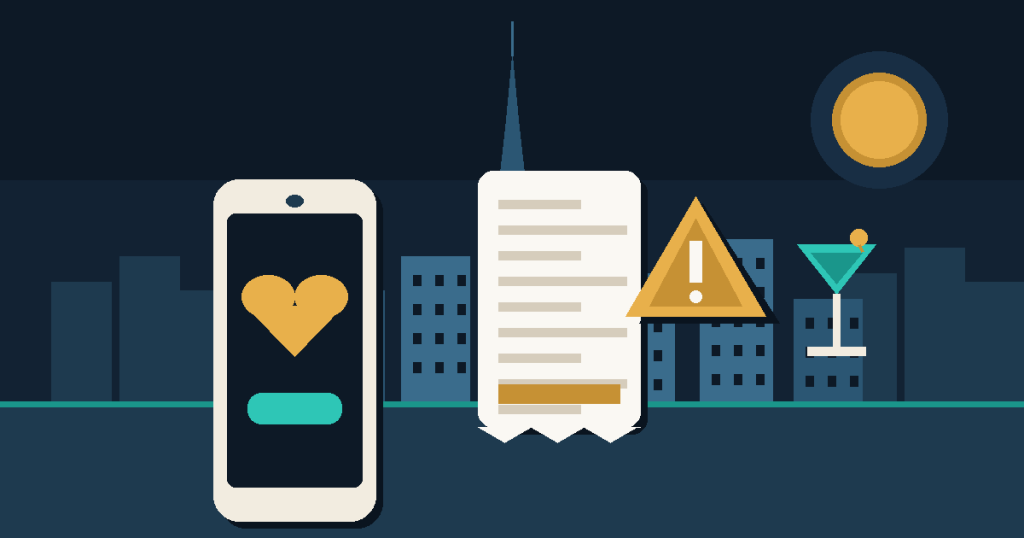
The nightclub bill scam is a coordinated overcharging operation, not a run of bad luck with an expensive date. A profile on a dating app opens a warm, fast-moving conversation and quickly proposes meeting at a named bar or club, always the same handful of venues. Once you arrive, the “date” orders premium bottles, shots, and platters at inflated prices, sometimes signaling staff to keep the drinks coming. At the end, an outsized bill is presented to you, and the pressure to pay begins. Press investigations reported that the women involved receive a cut of the inflated bill, which is the tell that the venue is in on it.
The structure explains why arguing feels futile. Press reporting in Dubai indicated that some venues had contracted outside agencies to place women in clubs to “upsell,” turning ordinary hospitality into an organized racket, and that Dubai Police investigations pointed to roughly six nightclubs and at least two key individuals. Treat those figures as press reporting rather than a confirmed official count, but the pattern is consistent across many victim accounts.
| Red flag | What it signals |
|---|---|
| She insists on one specific bar or club and resists any alternative | The venue is likely the partner in the scheme, not just a preference |
| Rapid escalation to a night out on a first meeting, skipping coffee or a casual daytime plan | The goal is a high-tab environment, not getting to know you |
| She orders bottles, rounds of shots, or platters quickly and encourages you to keep going | The bill is being built deliberately, often at prices far above menu norms |
| The menu has no clear prices, or prices are quoted only verbally | Removes your ability to contest line items later |
| She leaves for the restroom or a call near the end and does not return | The exit is timed so you face the bill alone under staff pressure |
| You are blocked on the app and WhatsApp within hours | Confirms a scripted operation designed to erase the contact trail |
What Actually Happens: The Evening as It Unfolds
The date starts normally. Conversation is easy, she is attentive, and the venue looks legitimate, often a licensed bar in a hotel or a club in a known nightlife strip. Drinks arrive faster than you would order them yourself, and she waves off your attempt to check prices, saying the place is her favorite. Over one to three hours the table fills with bottles and small plates. When you ask for the bill, the number is far beyond what you expected, sometimes several thousand dirhams. In one account reported by Khaleej Times, a diner faced a bill of AED 10,177 in about two and a half hours, with individual shots priced at hundreds of dirhams each.
Then the tone shifts. Your date has often already slipped away, and staff or a “manager” now stand at the table. You are told the bill must be settled before you leave, a card machine appears, and the polite evening becomes a standoff. Some victims report being followed toward the door, others describe being taken to a back office. Because alcohol is involved and you are unsure of the rules, many people freeze. Knowing where you legally stand on drinking in Dubai helps here: being a licensed venue’s customer does not make you liable for a fraudulent or grossly inflated charge, and you are entitled to see exactly what you are being billed for.
What to Do at the Venue Right Now
The scam is engineered to collapse your options at the point you need them. The setting is unfamiliar, you may have been drinking, and the person who ordered most of the tab is gone. Because the venue itself produces the bill, the usual instinct to “ask the manager” leads back to the people running the scheme, and intimidation ranges from blocking the exit to keeping your card or hinting that police involvement will go badly for you. That last threat is largely hollow: refusing to pay a fraudulently inflated bill is not a crime, and Dubai Police treat commercial fraud and coercion as offenses against you.
Your aim at the table is to slow everything down, create a record, and avoid an irreversible payment. Stay calm and polite, because aggression gives staff an excuse to call security on you. Ask for a fully itemized bill in writing and photograph it. Question charges you did not order and prices that do not match any visible menu, and state clearly that you dispute the amount. Never agree to write a security cheque to “guarantee” payment: a cheque given under duress can still be used against you, and the consequences of a bounced cheque in the UAE are severe. If staff refuse to itemize, confine you, or take your card or ID, that is coercion, and it is the moment to involve the police yourself.
Decision point: pay under pressure, or hold your ground and call 999/901?
If you pay to get out safely, that is a legitimate choice when you feel physically unsafe. But pay by card, not cash, and do not sign a blank or open slip. A card payment leaves a paper trail and a possible route to dispute the charge later, whereas cash is almost always gone for good. Photograph the bill and the receipt before you leave.
If you hold your ground, tell staff you are calling Dubai Police to resolve the dispute, then dial 999 if you feel threatened or confined, or 901 for non-emergency help. Calling the police yourself flips the dynamic: the venue that is comfortable intimidating a lone customer is far less comfortable explaining an inflated, unitemized bill to officers.
How to Dispute a Payment You Were Coerced Into Making
If you paid by card, act within hours, not days. Call your bank’s card team, report the transaction as disputed and made under coercion, and formally request a chargeback. Under the Central Bank of the UAE Consumer Protection Regulation and Standards, banks must give you a clear channel to report and dispute transactions, and a chargeback can be initiated in cases involving fraud or a dispute over the goods or services charged. Outcomes are not guaranteed, and card scheme rules generally expect you to attempt to resolve the matter with the merchant first, so document that the venue refused to itemize or correct the bill.
Give the bank everything: the itemized bill and receipt photos, the date, time, and venue, the dating-app conversation and profile, and screenshots showing you were blocked. Ask for the dispute reference and timeline in writing. If the amount is large, expect the bank to scrutinize it closely, and note that heavy disputes can sometimes trigger a temporary hold, in which case our guide on why UAE bank accounts get frozen and how to unfreeze them explains how to respond.
If the bank rejects your dispute or does not resolve it within its own complaint timeline, you can escalate. File a formal complaint with the bank first, wait for its response within the standard window of up to 30 business days, and if you are still unsatisfied, take it to Sanadak, the UAE financial and insurance ombudsman. Submitting a complaint to Sanadak is free for consumers; only an appeal of its decision carries a fee, which is refunded if the appeal succeeds. The route for raising complaints against financial institutions is set out on the official UAE government portal.
How and Where to Report the Scam
Report the scam through two tracks at once: the police, because this is fraud and potential coercion, and your bank, because that is where a coerced payment can still be reversed. The primary police channel in Dubai is the eCrime platform, which takes reports of online fraud for incidents within Dubai and is the correct route for the dating-app side of the scam.
Step 1: File an eCrime report with Dubai Police
Submit a complaint through the Dubai Police eCrime portal or the Dubai Police app. You will typically need a verified UAE Pass account, and you should attach all evidence: the dating-app profile and chat, the itemized bill, the card receipt, and screenshots of being blocked. You receive a case number to track progress. The UAE government portal also explains how to report cybercrimes and stay safe online. If you feel unsafe at any point, call 999; for non-emergency police help use 901.
Step 2: Notify your bank and request a chargeback
Call your card issuer the same night if possible, report the coerced transaction, and formally request a chargeback, quoting the Consumer Protection Standards. Provide the same evidence pack you gave the police and record the dispute reference number.
Step 3: Consider a confidential tip to Al Ameen
Because this scam involves specific venues operating a racket, you can pass information confidentially to Dubai Police through the Al Ameen service on 800 4444, which handles anonymous reports of organized wrongdoing. In Abu Dhabi, the equivalent confidential channel is the Aman service on 800 2626. These are intelligence channels, not a substitute for a formal eCrime report or an emergency call.
Step 4: Preserve every piece of evidence
Do not delete the chat or the app, even after you are blocked. Screenshot the profile, the conversation, the block, the itemized bill, the receipt, and the venue name and time. This evidence is what makes both the police case and the bank dispute work, and it is far harder to reconstruct later.
Realistic Recovery Odds
Be honest with yourself about the numbers. If you paid cash, recovery is unlikely, because there is no transaction to reverse and the “date” has disappeared. If you paid by card and disputed it quickly with strong evidence, your odds improve, though banks weigh whether you authorized the payment at the till, so coercion and a refusal to itemize are the facts you must document. Police action is more likely when your report adds to a pattern against a venue already under scrutiny, which is why reporting matters even when your individual refund is uncertain.
Some victims do reduce the damage in the moment. One diner quoted in press coverage argued a large bill down to AED 800 before paying, simply by refusing the original figure and demanding an itemized breakdown. That is not guaranteed, and it depends on staying calm and non-confrontational, but it shows that the first number presented is often negotiable precisely because it is inflated. Weigh your safety first: no refund is worth a physical confrontation.
How This Differs from Romance and Investment Scams
The nightclub bill scam is a fast, in-person overcharging fraud with a venue as the profit center. It is over in one evening. That makes it different from romance scams and “pig-butchering” investment fraud, where a match builds trust over weeks or months and then extracts money through fake emergencies or a bogus crypto or trading platform. Those long-game frauds are covered in our guide to common UAE scams, and they call for a different defense, mainly never sending money or investing through someone you have only met online.
One overlap is worth flagging. After a bad experience, some victims want to warn others by posting the profile, venue name, or photos publicly. Be careful: UAE law treats naming and shaming, sharing someone’s photos, or public accusations as potential offenses, and you can end up facing a complaint yourself. Read our explainer on UAE social media laws and fines before posting, and route the accusation through eCrime instead.
How to Protect Yourself
Prevention costs nothing and defeats the scam entirely, because it depends on you agreeing to the venue. For a first meeting from any app, choose a neutral, well-known daytime spot such as a cafe or a mall, and pick the place yourself. Be wary of a match who insists on one specific bar or club and resists alternatives. If you do go for drinks, check prices before ordering, order your own rounds, and keep the tab modest. Using reputable, verified platforms reduces exposure to fake profiles, and our overview of the best dating apps in Dubai covers safer options and verification features.
If something feels staged, leave before ordering. Trust the pattern over the person: a genuine date will happily meet for coffee, while a scammer needs you inside a specific high-tab venue. Finally, if you have already been caught in a dispute that escalated, and you are worried it produced a complaint against you, you can independently check your UAE travel ban status online for peace of mind before you travel.
FAQ
Is the Dubai dating-app nightclub bill scam real?
Yes. Multiple press investigations in Dubai have documented the same pattern: a match from Tinder, Bumble, or a similar app steers the date to a specific bar or club, orders expensive drinks, then vanishes and leaves the victim with an inflated bill. According to those reports, bills have ranged from around AED 3,000 to AED 10,000, and the women involved reportedly receive a cut, indicating venue collusion.
What should I do the moment the inflated bill arrives?
Stay calm, ask for a fully itemized bill in writing, and photograph it. Dispute charges you did not order or that exceed the menu. Do not sign a blank slip, hand over a cheque, or pay in cash if you can avoid it. If staff block your exit, take your card or ID, or threaten you, call Dubai Police on 999, or 901 for non-emergency help.
Can I refuse to pay a fraudulent nightclub bill in Dubai?
You are entitled to dispute a bill that is inflated or contains items you did not order, and refusing to pay a fraudulent charge is not itself a crime. The safe way to do it is to stay polite, ask for an itemized bill, and call the police to resolve the dispute rather than walking out during a confrontation. Prioritize your physical safety over the amount.
How do I dispute a card payment I was pressured into making?
Contact your bank’s card team as soon as possible, report the transaction as disputed and made under coercion, and formally request a chargeback under the CBUAE Consumer Protection Standards. Provide the itemized bill, receipt, dating-app chat, and evidence you were blocked. Ask for the dispute reference and timeline in writing. Card outcomes are not guaranteed, so speed and evidence matter.
Where do I report the dating-app nightclub scam?
Report it to Dubai Police through the eCrime platform at ecrime.ae or the Dubai Police app, attaching all your evidence and keeping the case number. Notify your bank in parallel to attempt a chargeback. You can also pass confidential information about the venue to Dubai Police through the Al Ameen service on 800 4444. Call 999 in an emergency.
What is the difference between 999 and 901 in Dubai?
Dial 999 for emergencies, including when you feel physically threatened, confined, or unsafe at the venue. Use 901 for non-emergency police assistance, general help, and inquiries. If the situation at the table turns to intimidation or you are prevented from leaving, treat it as an emergency and call 999.
Will Dubai Police actually act on this kind of scam?
Reporting improves the odds. Press coverage indicates Dubai Police have investigated venues linked to this racket, and a report that adds to an existing pattern against a specific club is more likely to prompt action than an isolated complaint. Even if your individual refund is uncertain, your evidence helps build the case, which is why filing an eCrime report still matters.
What are the realistic chances of getting my money back?
If you paid cash, recovery is unlikely because there is nothing to reverse. If you paid by card and disputed it quickly with strong evidence of coercion, your chances are better, though the bank will assess whether you authorized the payment at the till. Some victims negotiate the bill down on the spot; one reportedly reduced a large tab to AED 800 by demanding an itemized breakdown.
Can I escalate if my bank refuses the chargeback?
Yes. First file a formal complaint with the bank and wait for its response within up to 30 business days. If you remain unsatisfied, escalate to Sanadak, the UAE financial and insurance ombudsman, which handles consumer disputes with licensed institutions. Submitting a complaint to Sanadak is free; only appealing its decision carries a fee, which is refunded if your appeal succeeds.
Is it safe to post the scammer’s profile or the venue online to warn others?
Be cautious. UAE law treats publicly naming, shaming, or sharing someone’s photos or accusations as potential offenses, and you could face a complaint yourself. Instead of posting publicly, report the profile and venue to Dubai Police through eCrime. Review UAE social media laws before sharing anything about the person or the club online.
Official Sources
- Dubai Police — eCrime Platform (report online fraud and cybercrime)
- UAE Government Portal — Cyber Safety and Digital Security
- Al Ameen Service (Dubai Police) — Confidential Reporting
- Central Bank of the UAE — Consumer Protection Regulation and Standards
- Central Bank of the UAE — Consumer Protection
- Sanadak — UAE Financial and Insurance Ombudsman (submit a complaint)
- UAE Government Portal — Raising Complaints Against Financial Institutions
This guide is for informational purposes only and reflects information current as of July 2026. Loss figures and the number of venues involved are drawn from press reports and should be treated as such. UAE laws, procedures, and reporting channels are subject to change, and specific cases turn on individual facts. Verify current requirements with Dubai Police, the Central Bank of the UAE, or a qualified lawyer before acting, and prioritize your personal safety in any confrontation.